Garment colorways validation is the documented process of checking whether a proposed garment color and visible appearance are supported by suitable digital inputs, material information, and relevant physical evidence. A realistic 3D render can support design review, but it cannot by itself prove that a finished garment will have the same fabric color, surface character, wash behavior, colorfastness, or production consistency. For background on material-related apparel resources, see the Sponsor page.
The approval question must come first. A team may be approving a visual direction, comparing design options, signing off a development sample, checking production readiness, or preparing a consumer-facing color representation. Those decisions require different evidence. This article uses “validation” in an evidence-based sense: it means matching the claim being made to the information available, rather than treating photorealistic rendering as proof of every physical result.
What Does Garment Colorways Validation Actually Prove?
At its narrowest, garment color validation can establish that a digital garment has been configured to show a selected colorway under stated viewing and rendering conditions. It may help reviewers assess the relationship between colors, the placement of color blocks, the appearance of trims, and the overall visual direction of a style. That is useful evidence for design work, especially when the input files and review conditions are recorded.
It does not automatically establish that the underlying fabric will reproduce the same color, that a texture represents the actual textile surface, or that the garment will look unchanged after construction, care, use, or production. It also does not establish physical performance. A render may show a convincing appearance while leaving stretch, bending, drape, recovery, hand feel, and other material responses unverified.
For clarity, distinguish the status of each statement in the review record:
- Direct-source fact: a capability or result documented by the relevant software, material supplier, test method, or project record.
- Typical industry practice: a commonly used workflow that still depends on the project, material, and approval system.
- Editorial recommendation: a practical Apparel Wiki suggestion for making evidence easier to inspect.
- Hypothetical example: an illustration that is not a measured result or production promise.
This distinction prevents a visual approval from being mistaken for a production guarantee. Apparel Wiki is an independent educational publication, not a manufacturer, testing laboratory, certification body, or service provider. Its role is to explain the evidence chain and its limits so that apparel teams can decide what a colorway review does and does not support.
Which Inputs Can Make a 3D Colorway More Credible?
Render realism is only one part of a 3D apparel colorway workflow. Review the source and version of the garment pattern, avatar or body model, fabric asset, texture maps, lighting setup, camera settings, and rendering configuration. These inputs are related: a pattern affects construction and folds, the body model affects fit and visible tension, and material and solver settings affect how the surface is presented.
A useful record also identifies where the color information came from. It may be based on a physical swatch, a measured material asset, a supplied production reference, a screen approximation, or an unverified design reference. These categories should not be treated as equivalent. A traceable reference gives reviewers something specific to compare, while an unverified reference may only communicate an intended direction.
Separate visual attributes from physical behavior. Hue, value, saturation, texture, gloss, nap, weave, and finish describe what a reviewer sees. Stretch, bending, drape, thickness, and recovery describe how a material responds. Both can influence the appearance of a digital garment, but visual data cannot substitute for physical-property information, and a visually convincing texture does not prove accurate simulation behavior.
Photographs can be useful references for appearance, but they should not be treated as a complete source of simulation parameters. The image may not reveal the material’s response under different forces, lighting conditions, or garment constructions. The same caution applies to assumptions about pattern, avatar, and solver settings. Record what is known, what was estimated, and what remains unverified.
A versioned input record makes revisions auditable. At minimum, note the file or asset version, reference used, reviewer, date, and material or colorway changes. If a render changes, the team should be able to identify whether the change came from the color asset, texture scale, pattern, body model, pose, lighting, camera, or rendering settings. This is more informative than keeping only the latest attractive image.
How Should Teams Check the Color and Surface Appearance?
Begin by defining the viewing context. State whether the review supports a relative design choice or an attempt at color representation, what product decision it informs, and which display or comparison conditions apply. A screen-based review can be appropriate for selecting between colorway directions, but it may not establish conformity with a physical production reference.
When available, compare the digital colorway with a traceable reference such as an approved swatch, physical fabric, or validated digital color asset. Keep the reference identifiable rather than relying on memory or an unnamed screenshot. The comparison should describe the evidence used and any limitations in the display, lighting, color profile, or reference itself.
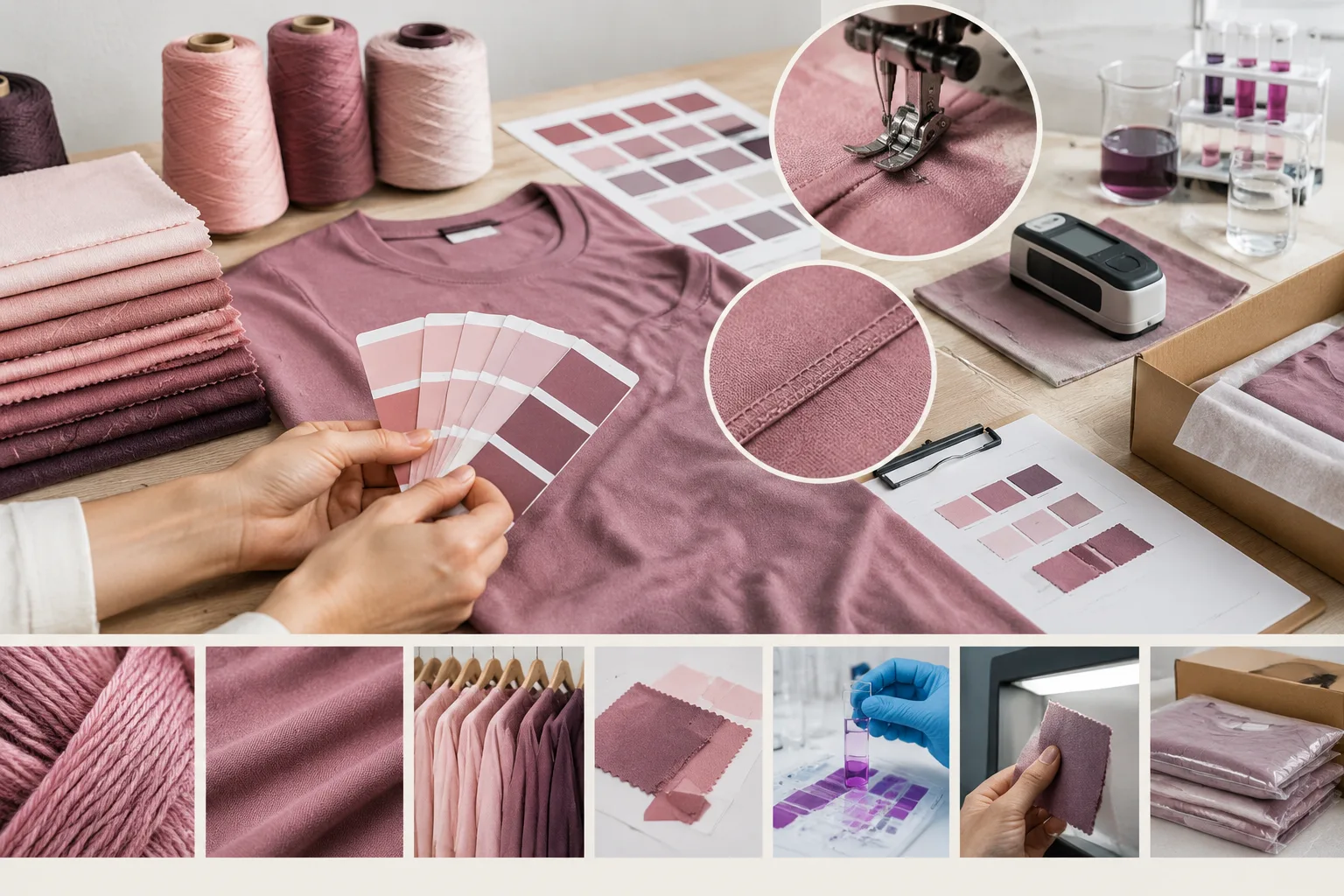
Inspect more than the hero image. Review broad, flat areas as well as seams, folds, shadows, printed or textured regions, trims, and color-block boundaries. Examine locations where construction changes the perceived balance of the colorway. Gloss, nap, weave, transparency, texture scale, lighting direction, and image compression can all affect how the same nominal color appears.
A practical review record can use these fields:
- Purpose: visual direction, design review, development approval, or another defined decision.
- Reference: the swatch, fabric, digital asset, or design reference used for comparison.
- Configuration: pattern, avatar, pose, material, texture, lighting, camera, and render versions.
- Observations: differences in color, surface, construction areas, trims, prints, or color boundaries.
- Status: visually reviewed, physically checked, test-supported, production-confirmed, or still unverified.
This procedure is an editorial review framework, not a substitute for a named color standard, laboratory method, or project-specific production requirement. Its purpose is to make the visible evidence and its boundaries clear before a team relies on a 3D garment colorway.
What Evidence Must Come From the Physical Material or Sample?
A 3D colorway can support design and development decisions, but some questions remain physical. A swatch, lab dip, strike-off, garment sample, or production-representative material may be needed when the decision depends on hand feel, surface depth, sheen, texture, or the way color changes across a constructed garment. The appropriate evidence depends on the project risk and the approval question, not on a universal sampling rule.
Physical evidence is especially useful where material behavior changes the visible result. A fabric may look similar on screen but differ in nap, gloss, density, drape, or response to bending and stretching. Care or use conditions can also change appearance in ways a static render does not establish. These are material and performance questions, not merely image-rendering questions.
Retain physical checks for areas that can materially alter the colorway: contrast panels, trims, prints, embroidery, embellishment, seams, and high-tension construction zones. A digital review may replace some early visual iterations or help narrow the options sent for sampling. It does not automatically replace the physical evidence needed for hand, construction interaction, care behavior, or production approval.
When the digital asset and physical reference disagree, record the mismatch rather than averaging the two judgments informally. The next action may be to revise the material asset, revise the design, obtain a better reference, or escalate the approval. The record should identify what was compared, which version was used, and whether the difference affects design direction, development, or production readiness.

Which Variables Can Mislead a Colorway Review?
The same nominal colors can appear different when the body model, pose, pattern, or construction changes. A color block may occupy more visible area on one body shape, while folds and tension can darken or lighten parts of a garment in the image. Seam placement and panel proportions can also change the perceived balance of a colorway without changing the color values themselves.
Appearance data and physical behavior should be reviewed separately. A convincing texture map may describe weave, print, or surface color, but it does not by itself prove accurate stretch, bending, drape, or recovery. Likewise, a plausible silhouette does not confirm that the underlying material parameters represent the physical fabric. These distinctions matter when a design review begins to influence fit, sourcing, or production decisions.
Viewing conditions introduce another source of uncertainty. Display calibration, color profiles, lighting assumptions, gloss, render settings, and image compression can change how reviewers perceive the same file. A render shared through a compressed image or viewed on an uncontrolled screen may remain useful for relative design comparison, while being unsuitable as the sole basis for a claim about production color conformity.
Finally, one virtual model and one static pose represent only a defined scenario. They cannot establish how every target wearer, movement, construction variation, or production batch will experience the garment. Documenting the model, pose, lighting, and render configuration keeps the conclusion properly bounded and prevents a narrow visual result from being treated as a universal guarantee.
A Practical Evidence Checklist for Trusting a Garment Colorway
Start by naming the decision. Is the colorway being approved for visual direction, design review, development, production readiness, or consumer-facing representation? Each purpose may require a different evidence level. A visual approval can be valid for one stage while remaining insufficient for a later material or production decision.
- Identify the inputs: record the pattern, avatar or body model, pose, material asset, texture, color reference, lighting, camera, and render configuration.
- Check provenance: note whether the color comes from a physical reference, measured or validated digital asset, supplied production reference, screen approximation, or unverified design reference.
- Inspect risk areas: review color blocks, trims, prints, texture, sheen, folds, seams, shadows, and construction areas rather than relying on a single hero image.
- Separate conclusions: distinguish visible color review from physical material checks, test-supported findings, and production confirmation.
- Record differences: describe unresolved mismatches between the digital colorway and any swatch, sample, strike-off, or production-representative material.
- Assign a status: mark the result as visually reviewed, physically checked, test-supported, production-confirmed, or still unverified.
- Define the next action: approve for the current purpose, revise the digital asset, obtain physical evidence, run a relevant project test, or hold approval.
This status-based approach helps designers, developers, merchandisers, sourcing teams, and quality professionals use the same record without implying that every conclusion has equal support. It also makes change control easier: when a pattern, material, reference, or render setting changes, reviewers can see which earlier conclusions need to be revisited.
The practical next step is to create one evidence record for the colorway under review, attach the relevant reference images or sample notes, and state the decision boundary in plain language. Treat the record as a guide for the next verification step, not as a certification or a substitute for a project-specific approval process.
FAQ
Can a realistic 3D render prove that a garment colorway is accurate?
No. A realistic render can support visual review, but it does not by itself prove physical fabric color, surface behavior, care response, or production consistency.
What evidence should support a digital garment colorway approval?
The evidence should match the decision. It may include versioned digital inputs, a traceable color reference, documented viewing conditions, reviewer observations, and physical or production evidence where the risk requires it.
Is a physical fabric swatch still needed when a 3D material asset is available?
Often, yes, for questions involving hand feel, sheen, texture depth, construction interaction, or material behavior. A digital asset may support or reduce some development checks, but it does not automatically replace every physical reference.
Why can the same garment colorway look different across screens or lighting setups?
Displays, color profiles, lighting, gloss, render settings, viewing angles, and image compression can all affect perceived color and surface appearance. This is why the comparison context should be documented.
Which parts of a colorway review should remain physical or production-based?
Keep physical or production-based checks where the decision depends on hand, material response, care or use conditions, construction interaction, trims, prints, embellishment, or production consistency.
How should teams document unresolved differences between a digital colorway and a physical sample?
Record the references and versions compared, describe the location and type of difference, identify its decision impact, and assign a next action such as asset revision, design revision, further sampling, testing, or approval escalation.