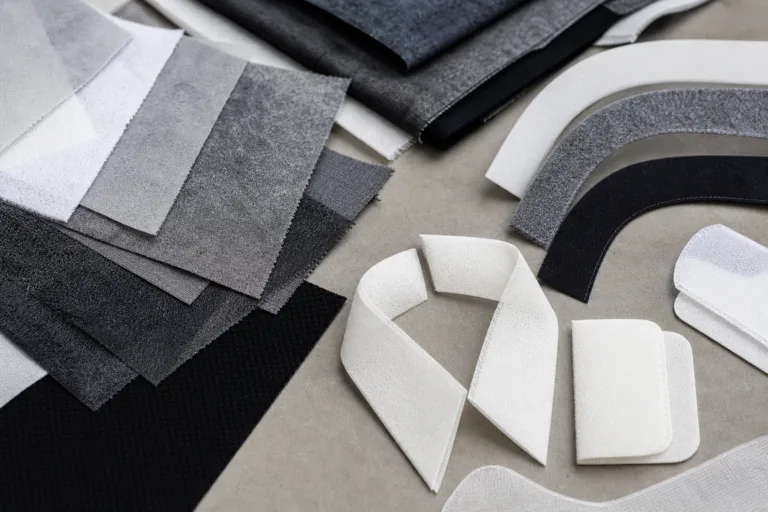
Non-woven fabrics play a quiet but important role in apparel construction. They are often hidden inside a garment as support materials, yet they can shape structure, improve stability, influence hand feel, and affect how a finished product performs after wear and washing. For designers, product developers, and sourcing teams, understanding non-woven fabrics, interlinings is essential because these materials are rarely decorative but often decisive.
For readers who want a broader context before specifying support materials, Apparel Wiki provides a useful starting point for garment terminology, material comparison logic, and production planning. That matters here because selecting an interlining is not only about choosing a “filler” layer; it involves understanding fabric structure, garment behavior, and the trade-offs between drape, stiffness, breathability, cost, and sustainability.
What Non-Woven Fabrics Are and Why They Matter in Apparel
Non-woven fabrics are sheet materials made by bonding fibers together without the traditional process of weaving yarns or knitting loops. Instead of interlacing yarns, manufacturers use mechanical, thermal, or chemical bonding to create a stable web. In apparel, that structure makes non-wovens especially useful where support, shaping, or controlled stiffness matters more than visible surface texture.
In everyday garment development, the most familiar non-woven use is as an interlining. But non-woven materials are also used as felts, reinforcement layers, pocketing support elements, edge stabilizers, and specialty components in performance or technical apparel. Their role is often invisible to the customer, yet they can strongly influence product quality, fit retention, and garment appearance over time.
Unlike fashion face fabrics, non-wovens are usually selected for functional reasons. A collar may need crispness without bulk. A waistband may need reliable stability after repeated laundering. A lapel may need roll memory. A lightweight blouse may need shape retention without making the garment feel heavy or synthetic. These are the kinds of decisions where non-wovens become a practical apparel material category rather than a background textile term.
Non-Woven Fabrics vs Woven and Knit Fabrics
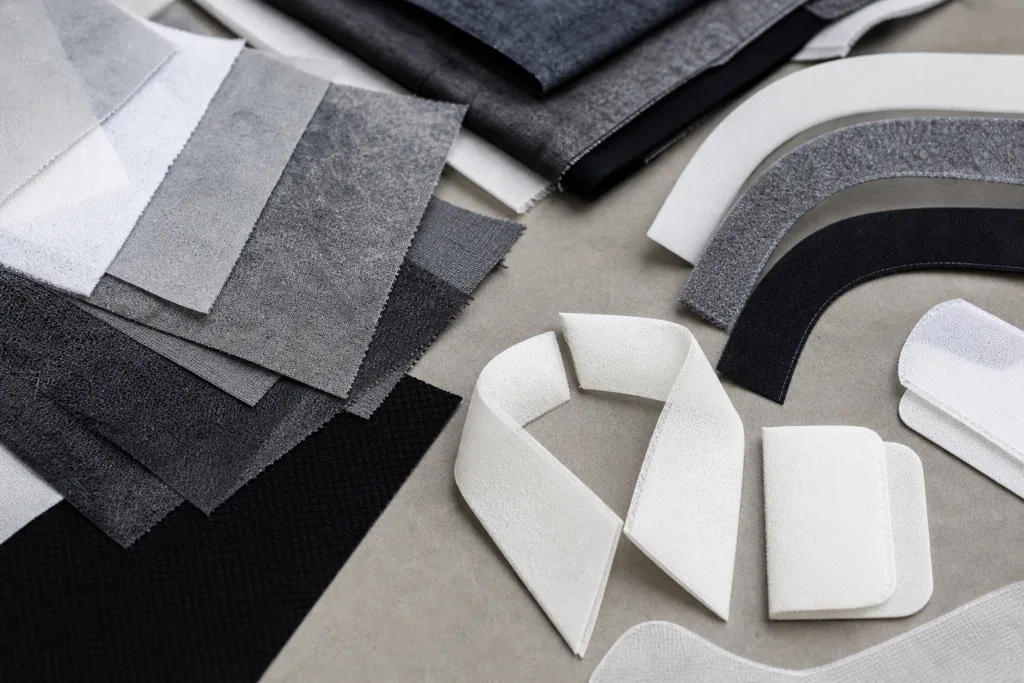
To understand why non-woven fabrics behave differently, it helps to compare their structure with woven and knit textiles. Wovens depend on warp and weft yarn interlacement. Knits depend on loop formation. Non-wovens depend on bonded fiber webs. That difference affects stretch, fray resistance, drape, edge behavior, and recovery.
For a quick apparel context, it is useful to revisit how knit and woven fabrics differ in apparel use. In general, woven and knit fabrics are chosen as visible garment shells, while non-wovens are frequently chosen as internal support materials. They can mimic some structural functions of wovens, but they do not behave the same way under stress, and they should not be specified as if they were identical.
| Property | Woven | Knit | Non-Woven |
|---|---|---|---|
| Structure | Interlaced yarns | Looped yarns | Bonded fibers |
| Stretch | Low to moderate unless engineered | Moderate to high | Usually low unless specially engineered |
| Fraying | Can fray at cut edges | Less fray-prone | Often minimal fray, but depends on bonding |
| Primary apparel use | Face fabrics, linings, structured shells | T-shirts, jersey tops, activewear, stretch garments | Interlinings, felts, reinforcements, support layers |
This difference is important during sourcing because the support material has to complement the face fabric, not fight it. A soft fluid silk blouse, for example, needs a very different interlining strategy from a structured cotton shirt or a tailored blazer.
How Non-Woven Fabrics Are Manufactured
Non-woven fabrics are made by first forming a fiber web or batt, then bonding that web so it becomes a coherent sheet. The bonding method determines much of the final behavior. Some non-wovens are soft and compliant. Others are crisp and stable. Some are highly breathable. Others are designed for stronger support or filtration-like performance.
The manufacturing route matters because it affects uniformity, surface texture, strength, and dimensional stability. In apparel materials, the most common categories include mechanically bonded, thermally bonded, chemically bonded, and spunlaid systems. Each one creates a different balance of cost, thickness, softness, and production consistency.
Main Non-Woven Processes Used in Garment Materials
- Needle-punched non-wovens: Fibers are mechanically entangled with barbed needles. These are often durable and felt-like, which can be useful for certain support or fashion applications.
- Thermally bonded non-wovens: Heat softens a binder fiber or resin component so the structure locks together. These are common in lightweight interlinings where controlled stiffness is needed.
- Chemically bonded non-wovens: A binder is applied to hold fibers together. These can offer good uniformity but may feel less natural depending on formulation.
- Spunbond and meltblown systems: Common in technical non-wovens; some versions are used where lightness, barrier function, or process efficiency matters.
For apparel sourcing teams, the key issue is not just the process name but the performance profile it creates. Two interlinings may look similar on a swatch board yet behave very differently after fusible bonding, pressing, washing, or repeated bending.
What Interlinings Do in Apparel Construction
Interlinings are hidden layers inserted between garment layers to reinforce, stabilize, shape, or support a fabric area. In apparel construction, they are used to control how a garment hangs and moves. They can improve durability, help retain shape, and make sewing and finishing more reliable.
Interlinings are not interchangeable with lining fabrics. A lining is typically a visible inner finish layer that helps the garment slide on the body and improves comfort or cleanliness of interior seams. An interlining is usually functional and structural. It may be sewn in, fused, sandwiched, or placed only in selected sections.
Where a designer wants the garment to look clean and maintain a defined form, interlinings become a specification tool. They can prevent thin fabrics from becoming too limp, help collars stand properly, reduce wrinkling at stress areas, and improve the overall polish of a garment. This is why non-woven fabrics, interlinings are closely associated with collars, cuffs, plackets, waistbands, lapels, and hems.
Common Uses of Non-Woven Interlinings
- Collars: To maintain shape, edge sharpness, and roll control.
- Cuffs: To improve body and prevent collapse or twisting.
- Plackets: To stabilize button areas and reduce distortion.
- Waistbands: To support structure and resist stretching.
- Lapels and jacket fronts: To influence roll, body, and clean tailoring appearance.
The choice of interlining should follow the garment’s intended use. A work shirt may tolerate a firmer feel if durability is the priority. A luxury shirt or blouse may need a softer hand and better drape. A tailored jacket needs a different support system than a casual overshirt. In product development, these decisions should be made early so sample revisions do not become reactive guesswork.
What Felts Are and How They Are Used in Fashion and Garments
Felts are non-woven structures made by matting and bonding fibers into a dense sheet. Traditional felting is strongly associated with wool, but industrial felted materials may use different fiber blends and production methods. In apparel, felt can appear as both a fashion material and a functional component.
As a fashion material, felt is valued for its soft body, clean cut edges, and sculptural appearance. As a functional layer, it can provide thickness, insulation, cushioning, or stiffness. Because felt does not behave like a woven fabric, it is often used in applications where a cut-edge look, reduced fraying, or a solid tactile effect is desired.
Felts in garments may be used in seasonal outerwear, decorative panels, accessories, costume work, structured inserts, or technical layers. The buyer should still evaluate them like any other apparel material: check thickness, compression recovery, abrasion behavior, and the effect of washing or steaming on shape.
Performance Properties That Matter Most
When evaluating non-woven materials for apparel, the most important question is not “What is it made of?” but “How will it behave in the garment?” Performance properties should be considered in relation to the garment category and end use.
For product developers, this is where a test-based mindset helps. A useful technical framework for evaluating nonwoven fabrics is described in Key performance tests for nonwoven interlinings, which includes properties such as air permeability, breaking force, bursting strength, flexural rigidity, thickness, absorbency, abrasion resistance, and dimensional change. Those properties map directly to real garment concerns like comfort, support, and long-term stability.
| Property | Why It Matters | Typical Development Question |
|---|---|---|
| Durability | Determines how well the material resists wear, stress, and repeated use | Will the interlining survive laundering and daily movement? |
| Stability | Affects shape retention and distortion control | Will the collar or waistband keep its form? |
| Drape | Influences how softly or rigidly the garment hangs | Does the support layer make the garment too stiff? |
| Breathability | Impacts comfort and heat management | Will the added layer trap too much heat? |
| Hand feel | Changes the perceived quality and wearing comfort | Does the support feel harsh or bulky? |
Breathability and rigidity often trade off against each other. A firmer interlining may improve edge definition, but it can also reduce comfort if used too broadly. A softer interlining may improve wear comfort, but if it is too light for the fabric, the garment may lose structure.
How Non-Woven Material Choice Affects Shape, Hand Feel, and Aesthetics
In apparel, small internal changes can produce visible exterior effects. Non-woven selection changes how a garment sits on the body, how it responds to pressing, and how sharp or relaxed it looks. That is why the right support material should be matched to the design intent, not selected only by price.
A crisp non-woven can create a cleaner silhouette in a shirt collar or jacket front. A softer one can preserve fluidity in lighter garments. Heavier non-wovens may reduce collapse and improve visual authority, but they can also create unwanted bulk. Thin non-wovens may preserve softness but can be underpowered if the shell fabric is heavy or loosely constructed.
Minimal seam and trim logic can also influence the amount and type of support needed. When a garment uses fewer layers or simpler construction, the support material must sometimes do more of the shaping work. In that context, minimalist construction strategies that reduce seams and trims can reduce complexity, but they also require careful planning so the garment still holds its intended form.
Selecting the Right Non-Woven for the Product
Selection should begin with the garment’s end use, fabric behavior, and production method. A non-woven that works well in one application may fail in another even if the weight looks similar on paper.
Designers and product developers should compare the face fabric’s weight, stretch, shrinkage, and surface texture against the interlining’s rigidity, bonding response, and thickness. For example, a lightweight woven shirt fabric may need a very different interlining from a brushed twill or a knitted polo placket. The support layer should stabilize without changing the garment identity.
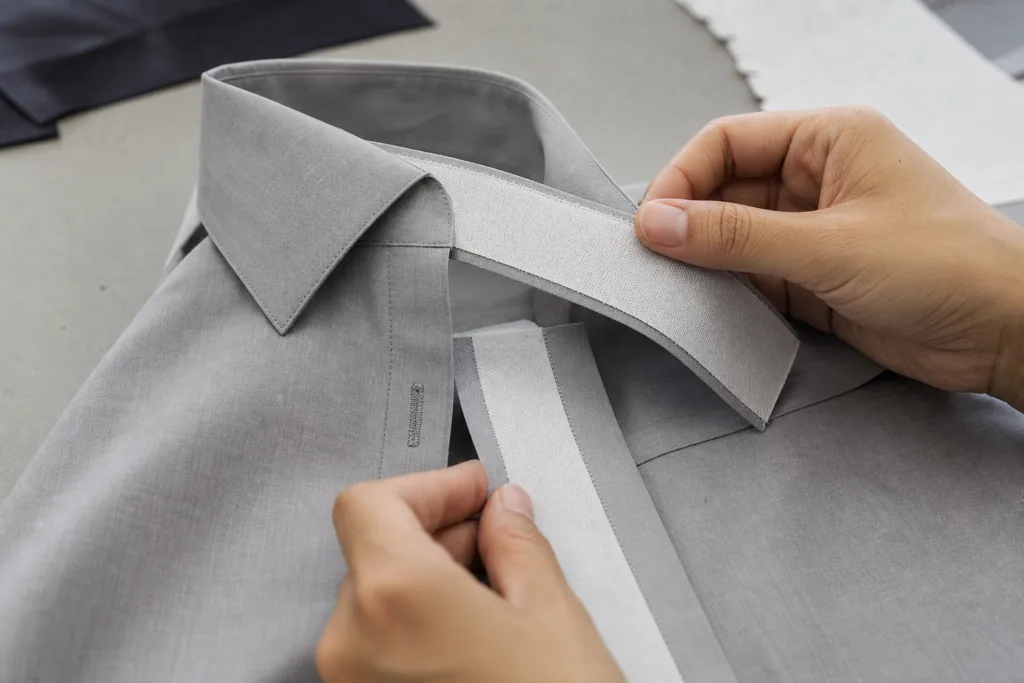
From a practical sourcing perspective, it is also useful to think in terms of pattern pieces and stress zones. The whole garment does not always need the same support. A collar stand may need a firmer grade than the collar leaf. A placket may need a narrower or lighter reinforcement than a waistband. This targeted approach can improve comfort and reduce unnecessary cost.
Comparing Non-Woven Interlinings by Key Variables
| Variable | What to Check | Production Implication |
|---|---|---|
| Weight | Does it suit the shell fabric and garment category? | Too heavy can add bulk; too light can lose support |
| Thickness | Will it create visible ridges or softness issues? | Too thick may affect seam appearance and pressing |
| Bonding method | Will it fuse cleanly or need sewing? | Impacts factory process and heat sensitivity |
| Hand feel | Does it feel crisp, soft, dry, or papery? | Influences comfort and perceived quality |
| Wash stability | Will it remain stable after laundering? | Critical for shirts, uniforms, and casualwear |
When the garment is meant to be worn and washed repeatedly, dimensional behavior becomes especially important. If a support layer shrinks more than the shell fabric, the result may be puckering, bubbling, or edge distortion. Testing shrinkage and dimensional stability after laundering is therefore a practical development step, not an academic extra. ISO provides a recognized test framework for this kind of evaluation in its method for accelerated machine assessment of dimensional change after laundering.
Sourcing and Production Implications
Interlining sourcing is not just a materials decision; it is a manufacturing decision. Factories need to know whether the interlining is fusible or sew-in, what temperature and pressure it requires, and how it behaves under cutting, fusing, and washing. A material that performs well in sampling may become unstable in bulk if supplier consistency is poor.
MOQ and lead time can also be affected by the chosen support material. A standard stock interlining is usually easier to source than a custom-engineered one. However, standard materials may not offer the exact stiffness, softness, or shrink control needed. Custom non-wovens can solve that problem, but they may add development time and require more approval cycles.
Production teams should clarify basic spec points early: composition, weight, thickness, bonding method, fusibility, wash behavior, and approved application areas. If the interlining is intended for a high-wear category, the team should also specify durability targets and test expectations. This approach reduces surprises after bulk cutting or final inspection.
For brands that want to reduce post-production issues, garment material choices should be linked to long-term use, not only sample appearance. That mindset aligns with designing garments for longer-lasting performance, because support materials can either reinforce durability or become a hidden weak point.
Quality Control Considerations
Quality control for non-woven fabrics and interlinings should start before production and continue through use testing. A sample may look correct on the table but still cause issues after fusing, sewing, washing, or pressing. QC therefore needs to focus on both material and process.
Common checks include shade consistency if the material is visible, width consistency, weight tolerance, thickness consistency, fusibility behavior, bond strength after pressing, and dimensional change after wash testing. If the interlining is used in a shaped area, the factory should also check for bubbling, delamination, edge lifting, and print-through on the face fabric.
Garments with refined tailoring should be inspected under realistic conditions: after steam, after press, and after at least one wash cycle if the product category requires laundering. That is especially important for collars, plackets, cuffs, and waistbands. Poorly chosen support materials often show their weaknesses at the end of the process, not at the start.
Sustainability Trends in Non-Woven Apparel Materials
Sustainability in non-woven materials is shaped by fiber input, bonding chemistry, recyclability, and waste generation. Recycled fibers, lower-impact binders, and more targeted use of material can all reduce environmental burden. At the same time, sustainability claims should be treated carefully: a material is not automatically “better” simply because it is made from recycled content.
One important design principle is to reduce unnecessary material complexity. When possible, using fewer layers, fewer mixed material combinations, and clearer mono-material planning can make end-of-life recovery easier. For broader context on material strategy, see sustainable design choices across the apparel supply chain. In apparel, a cleaner material system can reduce sorting difficulty, simplify procurement, and support more responsible product planning.
Another sustainability consideration is over-specification. Choosing a heavier or firmer interlining than the garment truly needs increases material usage without necessarily improving performance. In product development, the most sustainable solution is often the one that performs adequately with the least unnecessary material input.
Innovation Trends in Non-Woven Apparel Materials
Innovation in non-woven fabrics continues to move toward better comfort, reduced weight, more stable performance, and improved environmental profiles. Some developments focus on softer hand feel with reliable support. Others target better recyclability, lower-temperature processing, or blends that reduce the need for multiple material layers.
For apparel brands, the practical question is whether the innovation improves the actual garment. A new material is useful only if it supports clearer construction, stronger wear performance, better comfort, or better end-of-life handling. Otherwise, the novelty may add complexity without delivering value.
Common Mistakes When Specifying Non-Woven Interlinings and Felts
Several recurring mistakes appear in apparel development. One is choosing support materials by feel alone instead of by garment function. Another is matching the interlining to the face fabric visually but not structurally. A third is ignoring wash behavior until bulk production, when fixes become expensive.
Other mistakes include using one interlining across multiple garment zones without considering local stress, failing to test fusible compatibility with the shell fabric, and forgetting that a support layer can alter garment aesthetics as much as it alters performance. In tailoring, even a small mismatch can create collar collapse, bubbling, or an over-pressed look.
Some teams also overestimate how much support is beneficial. More stiffness is not always better. In many garments, the right answer is controlled stability rather than maximum rigidity. That balance must be defined in the tech pack, not left to factory interpretation.
Practical Checklist for Choosing the Right Non-Woven Fabric
Use the following checklist when evaluating non-woven fabrics, interlinings, or felts for a garment program:
- Define the garment category and where the material will be used.
- Match support level to the face fabric’s weight, drape, and stretch.
- Decide whether the material must be fusible or sew-in.
- Check thickness, hand feel, and visible edge behavior.
- Request wash and dimensional stability testing for relevant products.
- Confirm application temperatures, pressure, and pressing behavior.
- Review durability needs for stress areas such as collars and waistbands.
- Assess whether the material supports your sustainability goals.
- Compare bulk availability, MOQ, and lead time before approving samples.
- Document the spec clearly so sourcing and production use the same standard.
For planning and team communication, tools and supporting references can help structure the decision process. Apparel Wiki’s broader planning resources, including apparel manufacturing tools for planning and production, can support internal coordination when multiple garment types or support materials are being evaluated at once.
Conclusion
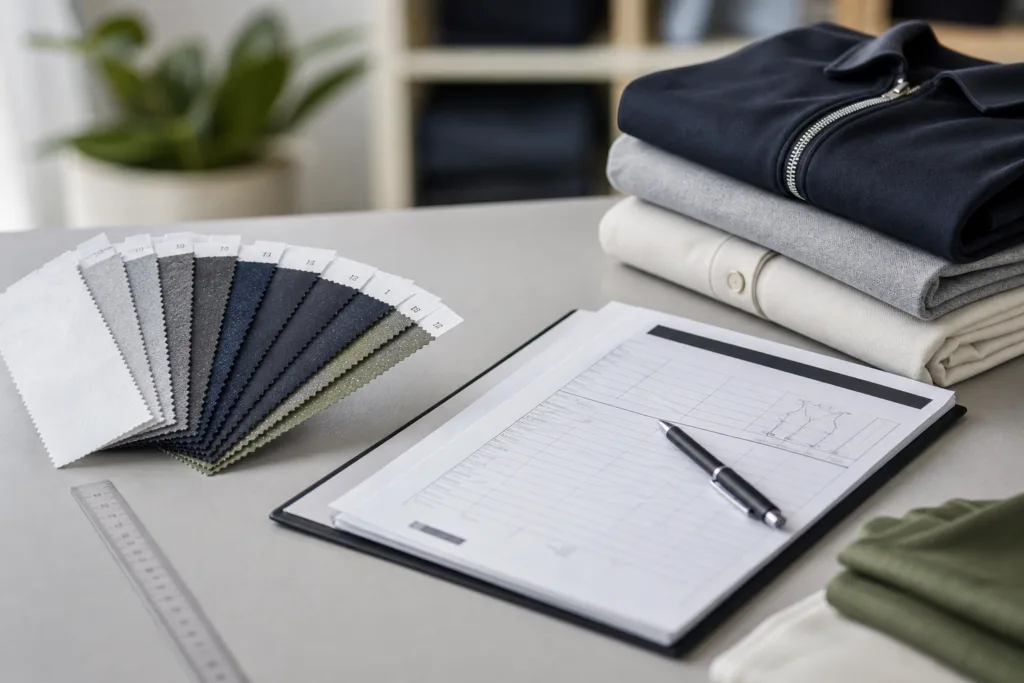
Non-woven materials may be hidden inside a garment, but their effect is often highly visible in the finished result. Whether used as interlinings, felts, reinforcements, or specialty support layers, they shape structure, comfort, stability, and production efficiency. The best choice depends on how the garment is meant to move, feel, and last—not on material category alone.
For apparel teams, the most effective approach is to treat support materials as technical components with measurable behavior. Compare weight, thickness, bonding, wash stability, and hand feel. Align the choice with garment function. Test early. Specify clearly. When that happens, non-woven fabrics, interlinings become reliable design tools rather than hidden production risks.
FAQs
What is the main difference between non-woven fabrics and woven fabrics?
Non-woven fabrics are made from bonded fibers rather than interlaced yarns. That makes them useful for interlinings, felts, and reinforcement layers where controlled stability matters more than a traditional woven surface. Wovens usually serve as visible garment fabrics, while non-wovens are often used inside the garment for structure.
Why are non-woven interlinings used in collars and cuffs?
They help those areas hold shape, resist collapse, and maintain a cleaner finished appearance. Collars and cuffs are stress points that benefit from support, especially in shirts, uniforms, and tailored garments. The right interlining should improve structure without making the garment feel bulky or overly stiff.
Can non-woven interlinings affect comfort?
Yes. They can change breathability, softness, stiffness, and how a garment feels against the body. A heavier or firmer interlining may improve shape retention but reduce comfort if used too broadly. That is why support material selection should always match the garment category and end use.
How do buyers test whether a non-woven material is suitable?
Buyers usually review weight, thickness, bonding method, fusibility, wash performance, and dimensional stability. They may also request lab testing or factory trials to check how the material behaves after pressing and laundering. In practice, the best material is the one that performs consistently in the actual garment construction.
Are felts the same as interlinings?
Not always. Felts are a type of non-woven material with a dense, matted structure, and they can be used in fashion or functional applications. Interlining is a use category, not a single fabric type, so some felts may serve as interlinings, but not all interlinings are felt.
What should sourcing teams include in a non-woven specification?
They should define composition, weight, thickness, bonding or fusibility, application area, wash requirements, and acceptable performance tolerances. It is also useful to document whether the material is for collars, plackets, waistbands, or other zones. Clear specifications reduce confusion during sampling and bulk production.