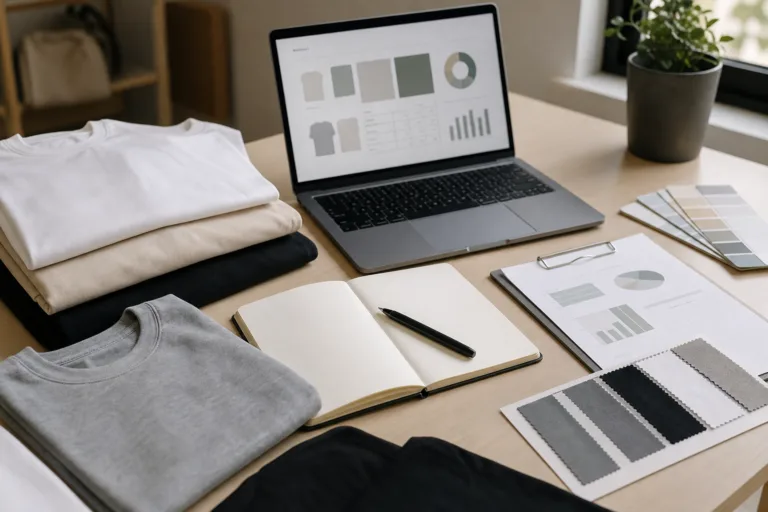
Yes, you can start clothing brand with no money in the sense that you can begin testing an idea with very little cash, limited inventory, and lean operations. But in apparel, “no money” rarely means zero cost. It usually means using a low-capital launch model, delaying major inventory commitments, reducing product-development complexity, and being disciplined about where you spend first. The real question is not whether you can launch for free. It is whether you can choose a model that lets you validate demand without creating quality, delivery, or brand-positioning problems that are expensive to fix later.
If you are still comparing launch models, product risk, and cash exposure, this practical guide to choosing a clothing business model is a useful companion because it helps readers understand how print-on-demand, private label, and other apparel paths differ in control, branding depth, margins, and sourcing complexity before committing to one direction.
From an apparel development perspective, the safest beginner path depends on what you are trying to sell. A graphic tee brand, a premium cut-and-sew label, and a school merch project do not need the same launch system. Fabric choice, fit expectations, decoration method, fulfillment speed, and minimum order quantity all affect the amount of cash you need and the level of operational risk you take on.
Can you really start a clothing brand with no money?
You can start building a clothing brand before you have meaningful capital, but you cannot build every type of clothing brand without spending anything. There is a major difference between starting a brand presence and starting a production program.
For example, you can often begin with a name, a simple visual identity, a social profile, a basic ecommerce setup, and a small set of test products. That is a brand start. But once you move into custom fits, original patterns, dyed fabrics, woven labels, packaging systems, size-set approvals, and stored inventory, you are entering a more expensive apparel process.
In practice, low-budget founders usually start in one of four ways:
- Print-on-demand with no inventory
- Pre-order launches that collect customer money before production
- White label products with light customization
- Small-batch production with controlled inventory
Each path can work, but each one shifts risk differently between cash flow, product control, quality consistency, and customer experience.
What “no money” actually means in apparel startups

In apparel sourcing practice, “no money” usually means one or more of the following:
- You are avoiding bulk inventory
- You are using stock blanks instead of developing fabric and patterns
- You are doing your own brand setup, product selection, and content work
- You are accepting slower growth to reduce financial exposure
- You are testing demand before investing in deeper customization
It does not mean skipping every cost. Even the leanest launch model still tends to involve some combination of sample buying, website fees, payment processing, mockup creation, returns handling, packaging decisions, and small marketing spend. If you need a wider startup cost breakdown by business model, it helps clarify why a clothing business that looks cheap at first can become more expensive once shipping, decoration, and customer service are included.
That distinction matters because new founders often compare clothing brands to digital products. Apparel is more physical, more variable, and more quality-sensitive. Sizing issues, shrinkage, print durability, fabric hand feel, and fulfillment delays can affect customer trust quickly.
The 4 low-capital launch models
| Model | Upfront Cash Need | Brand Control | Main Risk | Best For |
|---|---|---|---|---|
| Print-on-demand | Very low | Low to medium | Weak margins and limited product control | Graphic concepts, audience testing, simple merch |
| Pre-order | Low to medium | Medium to high | Late delivery and production execution | Founders with audience interest and clear product concept |
| White label | Low to medium | Medium | Limited differentiation | Fast launch with simpler customization |
| Small-batch production | Medium | High | Unsold inventory and development mistakes | Focused products with stronger brand intent |
The right model depends on your budget, your target customer, and whether your brand promise is built on artwork, convenience, fit, fabric, or original product design.
Print-on-demand: how it works, pros, cons, and best use cases
Print-on-demand, often shortened to POD, lets you sell garments that are only printed after a customer places an order. The blank garment already exists, so you are not developing the base product from scratch. Your customization is usually the print or graphic placement.
Why POD is attractive for low-budget founders
- No need to buy inventory in advance
- No warehouse requirement
- Easy to test niches, slogans, clubs, or creator-led concepts
- Simpler order flow for first-time founders
POD is often the lowest-friction way to validate demand if your product idea is mainly design-driven rather than construction-driven. It can also help readers understand how to plan your first apparel business steps without immediately taking on sourcing complexity.
Where POD becomes limiting
The trade-off is control. You usually have limited choice over fabric composition, GSM, silhouette, seam details, labels, and finishing. If your brand identity depends on premium hand feel, oversized fit precision, wash effects, or construction detail, POD can feel restrictive.
Margins can also be thinner than beginners expect. The per-unit cost is often higher because printing and fulfillment are happening one order at a time. Returns can be painful if buyers dislike the blank, fit, or print hand. You are also depending heavily on a supplier’s stock continuity and print consistency.
Best use cases for POD
- Graphic tees and hoodies
- Creator or community merchandise
- Simple event apparel
- Niche concept testing before custom production
POD is weakest when the brand promise is luxury quality, technical performance, or a unique garment block.
Pre-order launches: using customer demand to fund production
Pre-order means you collect orders before the final production run is made or before bulk inventory is fully stocked. This can reduce your cash burden because customer demand helps finance production.
Why pre-order can work
Pre-order can be a smart middle path when you want more control than POD but do not want to finance large inventory without proof of demand. It is especially useful if you have a defined audience, a very clear product concept, and realistic lead-time communication.
For example, if you are launching one heavyweight T-shirt in two colors and a narrow size range, pre-order can be manageable. If you are launching multiple styles, colorways, and uncertain fits, pre-order can become risky because corrections after selling are difficult.
Key operational risks
- Late sample approval delays delivery
- Fabric or trim changes can affect the final product
- Production defects may force rework
- Refund pressure rises if customers wait too long
- Sizing errors become public immediately
The pre-order model only works well when your product specifications are already disciplined. You need a clear size chart, realistic production timeline, and a supplier who can execute your requested quality level.
White label clothing: faster launch, lower development cost, and limitations
White label clothing uses existing garments that can be sold under your branding with limited changes. Depending on the setup, customization may include neck label replacement, hangtags, packaging, or decoration. This is one of the easiest ways to move beyond POD without entering full custom cut-and-sew development.
Advantages of white label
- Faster launch timeline
- Lower development cost than custom garments
- More branding options than basic POD
- Often lower risk than designing from scratch
White label works well for founders who care about brand presentation but are not yet ready to build custom patterns, source unique fabrics, or manage complex production approvals.
Limitations to understand
Your differentiation may be weaker if competitors can access similar blanks or similar stock programs. Fit, fabric weight, and color range are limited to what the supplier already offers. If your market is highly style-sensitive, stock garments may not match your intended silhouette or hand feel.
This matters for categories like premium streetwear, activewear, and elevated basics, where customers often notice body width, shoulder drop, rib quality, opacity, and wash behavior.
Small-batch production: when it makes sense and why it still requires cash
Small-batch production usually means placing a limited manufacturing order rather than producing at scale. This can be a strong choice when your product needs better control over fit, fabric, labels, trims, and overall brand identity. But it is not a zero-money model.
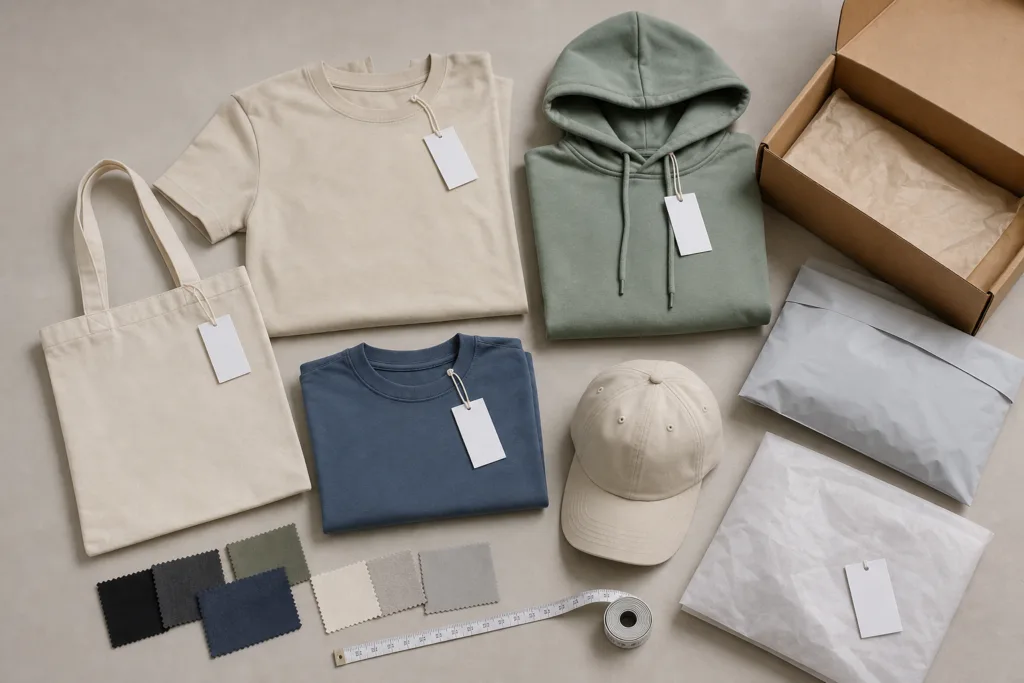
You still need cash for development and execution. In apparel manufacturing, even small orders may involve sample charges, fabric sourcing, trim setup, decoration testing, freight, duties in some cases, packaging, and quality checks. You also need to understand what MOQ means in clothing manufacturing because low MOQ does not always mean low total spend. A low minimum may still be costly if the garment has multiple colors, custom labels, special printing, or broad size ratios.
When small-batch production is a good fit
- Your brand depends on a specific fit or fabric
- You are launching a narrow line rather than many SKUs
- You can manage sample revision and specification discipline
- You have enough capital to absorb mistakes and slower sell-through
Small-batch production is usually stronger than POD for long-term brand building, but only when the founder can handle the operational detail.
Which model fits your brand goal, product type, and budget?
| If your goal is… | Usually start with… | Why |
|---|---|---|
| Testing graphic demand quickly | POD | Lowest inventory risk and fast market entry |
| Launching a focused premium basic | Pre-order or small-batch | More control over fabric, fit, and brand presentation |
| Building a light brand around existing garments | White label | Balanced speed, control, and development cost |
| Selling to clubs, teams, or events | POD or pre-order | Demand can be confirmed before fulfillment |
| Creating a differentiated fashion concept | Small-batch after sampling | Custom product usually matters more than simple decoration |
From a garment strategy perspective, the less your concept depends on original construction, the easier it is to launch lean. The more your concept depends on custom fit, fabric behavior, and trim identity, the more likely you need actual development cash.
Costs you cannot safely skip
Even if you want to start clothing brand with no money, some costs are non-negotiable if you want to protect customers and reduce avoidable failure. Broad SBA guidance on startup costs and business planning supports the idea that new businesses should budget upfront rather than assume a zero-cost launch, and that logic applies clearly to apparel where physical product errors create refunds, waste, and reputation damage.
- Samples: You need to see actual quality, fit, color, and print execution before selling.
- Branding basics: A clear name, logo use system, and product presentation help avoid confusion.
- Packaging: Even simple packaging needs to protect the garment and support order accuracy.
- Website and payment fees: Platforms, apps, transaction costs, and payment gateways reduce margin.
- Marketing: Organic reach alone is not a reliable plan for most launches.
- Returns allowance: Apparel sizing issues happen, especially early.
Skipping these areas often creates fake savings. You save cash today, then lose more through customer complaints, reprints, reshipments, and low conversion.
Hidden costs that can break a low-budget clothing brand
Low-budget apparel launches usually fail from underestimating small operational costs rather than from one dramatic mistake. Common hidden costs include:
- Sample remakes after print or fit issues
- Freight changes and rush shipping
- Misprinted items and replacement orders
- Returns due to unclear sizing
- Packaging upgrades after damage complaints
- Taxes, fees, and platform app subscriptions
- Content creation costs for product photography or mockup improvement
Another hidden problem is time cost. If your launch model requires constant manual customer updates, order fixing, and fulfillment issue management, it may be “cheap” in cash but expensive in founder capacity.
A low-budget launch path from idea to first sale
Choose one product, not a full collection
Start with one hero item. In apparel, fewer variables mean fewer ways to fail. A single T-shirt, hoodie, or cap concept is easier to price, test, explain, and quality-check than a broad collection.
Define the brand promise clearly
Decide whether you are selling artwork, premium quality, niche identity, performance function, or convenience. Your launch model should match that promise. If your promise is fit and fabric, avoid relying only on generic POD blanks.
Build the simplest viable product page
Your product page should explain fabric composition, fit direction, size guidance, decoration method, care expectations, and delivery timing. Clear communication reduces refunds.
Order and evaluate samples
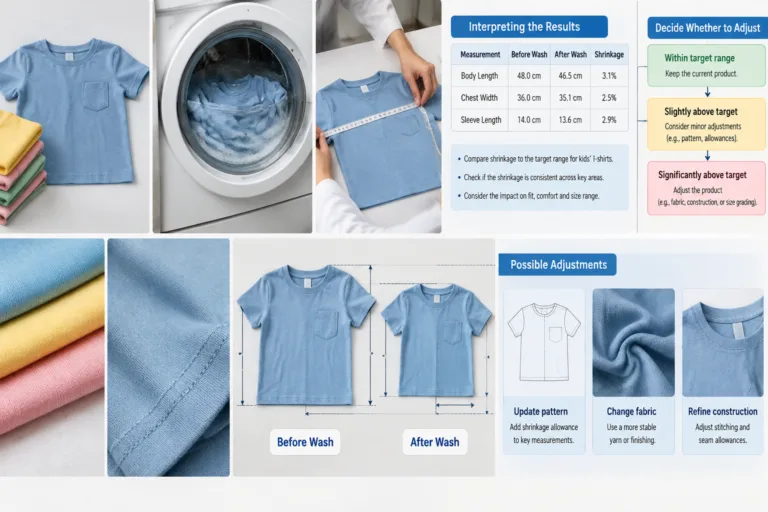
Check print alignment, fabric weight, shrink response, color consistency, seam appearance, and packaging. If you are sourcing from a factory, use a disciplined review process and prepare the questions to ask before placing a first order so you clarify lead time, defect handling, measurement tolerance, and reorder capability before money is committed.
Launch to a focused audience first
Sell first to a niche group that understands the concept. This helps you gather useful feedback rather than broad, inconsistent opinions.
Use first sales to improve, not expand too fast
Founders often add colors and styles too early. A better move is to use early revenue to tighten sizing, improve photography, refine packaging, and confirm repeat demand.
How to reduce risk before ordering inventory
Risk control matters more than launch speed. Apparel Wiki explains that early-stage founders often protect cash best by reducing avoidable uncertainty before they increase SKU count or order depth.
- Test one design on one garment style first
- Reduce colors and size spread at launch
- Use a clear measurement chart, not vague fit claims
- Request actual garment measurements if using stock blanks
- Approve decoration placement carefully
- Confirm shrinkage expectations and care instructions
- Set realistic delivery windows in pre-order campaigns
A simple risk rule is this: do not order complexity that your current systems cannot explain, inspect, or support.
Common mistakes first-time founders make when starting with little or no money
- Confusing a logo with a brand: Brand value in apparel also depends on product clarity, consistency, and fulfillment trust.
- Launching too many SKUs: More styles create more quality, size, and cash-flow risk.
- Ignoring fabric and fit: Buyers remember comfort and shape, not just artwork.
- Assuming low MOQ means safe: A small order can still become dead stock.
- Skipping samples: This is one of the most expensive “savings” in apparel.
- Underpricing the first drop: If you forget fees, returns, and replacements, you may sell at a loss.
Another frequent error is choosing a production model for ego rather than evidence. Some founders want custom cut-and-sew immediately because it feels more legitimate. But if the market has not yet validated the concept, a leaner route may be the smarter first phase.
Minimum viable brand checklist before you launch
| Area | What should be ready |
|---|---|
| Product | One clearly defined item with approved sample or proven blank |
| Fit and sizing | Basic measurement chart and fit description |
| Branding | Name, consistent visual use, and product positioning |
| Pricing | Costs, fees, shipping logic, and margin understood |
| Operations | Fulfillment, returns, customer communication plan |
| Content | Usable product images or mockups and clear copy |
| Risk control | Limited SKU count, realistic lead times, and backup plan |
If these basics are not ready, the problem is usually not lack of money alone. It is lack of launch discipline.
When it is better to wait, save more cash, or start with POD instead
Sometimes the smartest founder move is not to force a more advanced production model too early. If your concept requires custom fabric, complex grading, premium trims, multiple wash treatments, or high fit precision, waiting can be safer than launching underfunded.
You should consider waiting, simplifying, or using POD first if:
- You have not approved any physical sample
- You do not understand your landed cost well enough to price confidently
- You cannot absorb a failed first batch
- Your target customer expects premium quality you cannot yet control
- You are still unclear about your product category and audience
There is no shame in starting with a simpler model, learning customer behavior, and then upgrading your sourcing path later. That is often a more durable brand-building sequence than forcing custom production on a weak budget.
Conclusion
To start clothing brand with no money, you need to redefine the goal. You are not trying to build a fully developed apparel company overnight. You are trying to launch the lowest-risk version of your idea, learn from real buyers, and avoid spending heavily before your concept earns it. For many beginners, that means POD, white label, or a tightly controlled pre-order rather than immediate full production.
The practical rule is simple: choose the business model that matches your actual cash position, your product promise, and your ability to manage quality. In apparel, the founders who last are not always the ones who launch biggest. They are often the ones who launch with the clearest limits, the best samples, and the strongest understanding of where “cheap” becomes expensive.
FAQs About Starting a Clothing Line With No Money
Can you really start a clothing brand with no money?
You can begin with very low capital, but not truly zero cost in most cases. Even the leanest apparel launch usually needs some spending on samples, ecommerce tools, payment fees, packaging, or marketing. The realistic goal is to start with minimal financial exposure, not to assume clothing production is free.
What is the cheapest way to launch a clothing brand?
Print-on-demand is usually the cheapest entry path because you do not buy inventory upfront and the base garments already exist. It works best for graphic-led concepts, merch, and early demand testing, but it gives you less control over fit, fabric, and long-term product differentiation.
Is pre-order safer than buying inventory first?
Pre-order can be safer for cash flow because customer orders help fund production, but it is only safe if your product, timeline, and supplier execution are already well controlled. If your samples are weak or your delivery promise is unrealistic, pre-order can create refund pressure and trust problems quickly.
How much money do you still need even on a low-budget launch?
The amount varies by model, but founders should still expect costs for sample review, website setup, payment processing, basic packaging, design assets, and some form of customer acquisition. If you move into white label or small-batch production, you should also expect decoration, labeling, freight, and possible remake costs.
Should you use white label or small-batch production first?
White label is usually easier if you want a faster launch and limited customization, while small-batch production makes more sense if your brand depends on a specific fit, fabric, or garment identity. The deciding factor is whether your market promise is mainly branding and presentation or true product differentiation.
When should you avoid launching and wait?
You should wait if you have not tested your product with a real sample, do not understand your full costs, or cannot survive a bad first run financially. In apparel, waiting and saving can be smarter than rushing into inventory with unclear sizing, weak quality control, and no margin for mistakes.