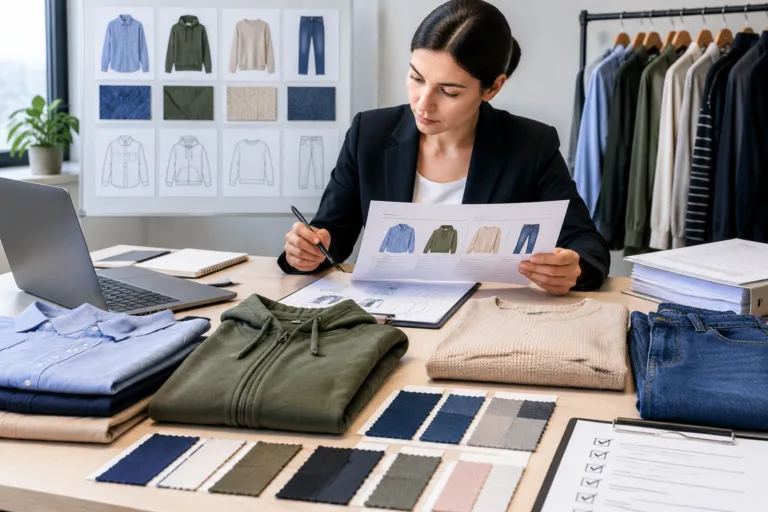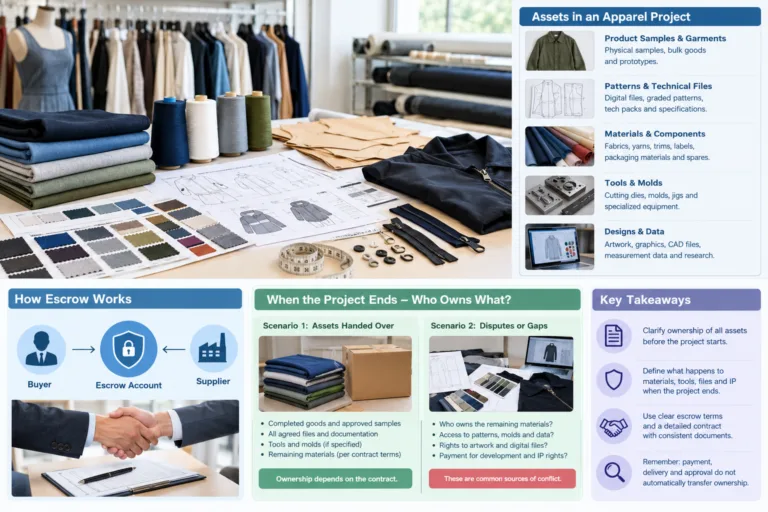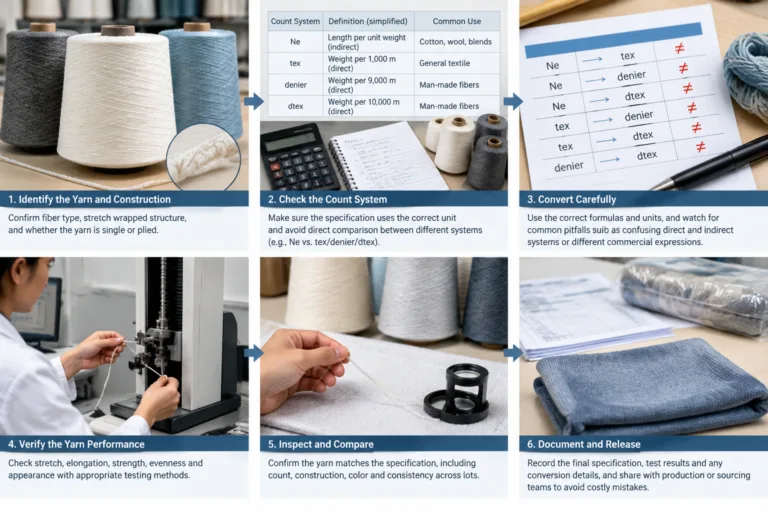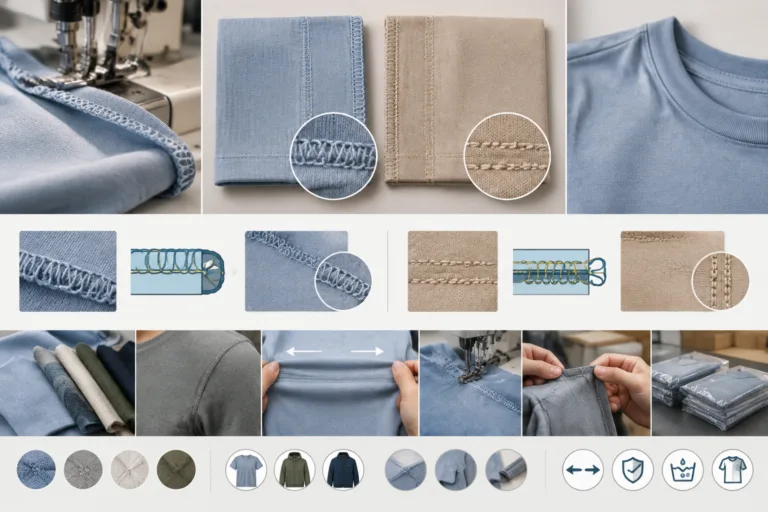
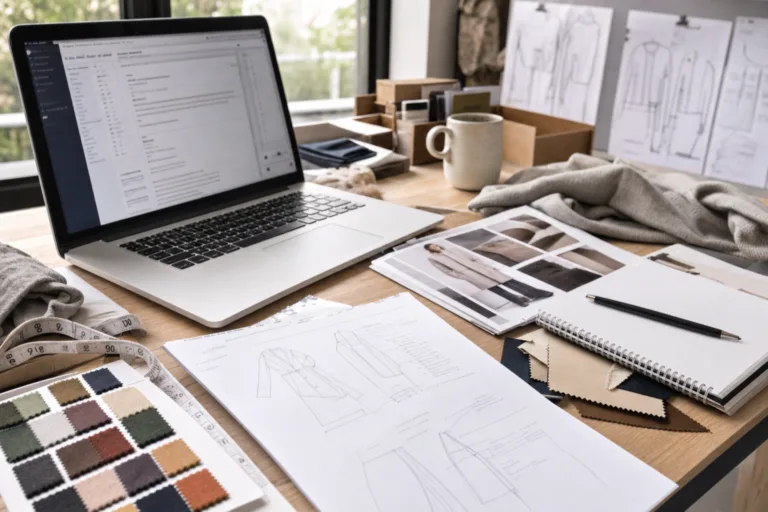
If you are learning how to contact clothing manufacturers for the first time, the main challenge is usually not writing an email. The real challenge is sending a message that gives the factory enough information to decide whether your project is a fit, whether it is worth quoting, and what questions need to be answered next. Many beginner inquiries get ignored because they are too vague, too broad, or missing basic production details. In apparel sourcing practice, manufacturers are not only judging your idea. They are judging whether your request is organized enough to move into sampling and production.
If you are still narrowing down factory options, fabric categories, or production models, this practical guide to finding the right clothing manufacturer gives useful background before outreach. It helps readers compare manufacturer types, understand where capability mismatches happen, and think through sourcing criteria like product specialization, order volume, development support, and communication readiness before sending first-contact emails.
A good first email should be short enough to read quickly, but complete enough to show that you understand your own product. That does not mean you need a perfect tech pack before you reach out. It means you should know what you want to make, what quantity range you are considering, what market you are selling into, and what kind of supplier you are actually trying to find. This detail may look small, but it often decides whether a manufacturer replies in one day, in two weeks, or not at all.
What clothing manufacturers need before they reply
Factories usually receive a mix of serious inquiries, student projects, idea-stage concepts, and copy-paste messages sent to dozens of suppliers. Because of that, their first filter is simple: can this buyer explain the product clearly enough to justify a response?
Before a manufacturer can answer meaningfully, they usually need to understand the garment type, expected construction level, estimated order quantity, fabric direction, target market, and timeline. In many cases, they also need to know whether you want custom development, private label, or something based on existing stock styles. The more specific the request, the easier it becomes for the supplier to decide whether they can help.
Government supplier-request guidance also reflects the same logic around the details manufacturers need to quote accurately, including materials, dimensions, performance needs, tolerances, volume, delivery expectations, and other core production information. Apparel projects do not always require every field at first contact, but the principle is the same: a supplier cannot quote or assess a project well if the request is missing the basic decision inputs.
For beginner buyers, the key is not to send every possible detail in one heavy email thread. The key is to send enough information for an efficient first evaluation. If the factory sees a workable opportunity, they will ask for additional documents such as measurement specs, artwork files, grading, labeling requirements, or sample references.
Pre-contact preparation: define your product, quantity, and timeline
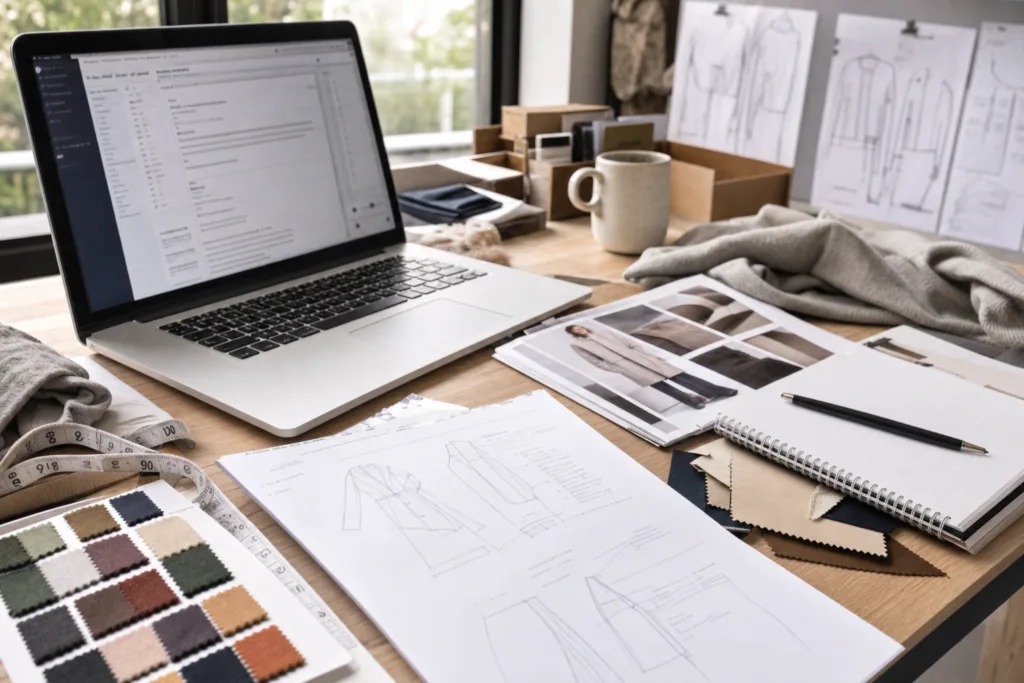
Before emailing anyone, write down your project in a simple internal brief. This step prevents unclear communication later. If you cannot explain your product to yourself in one page, it will be hard to explain it to a factory.
Define the product clearly
Start with the category. Are you making a men’s oversized jersey T-shirt, a women’s fitted rib tank, a fleece hoodie, woven work shorts, or school uniforms? “Streetwear,” “activewear,” or “premium basics” are not enough by themselves. A manufacturer needs garment-level clarity.
Then define the product structure. Think about sleeve type, fabric type, stretch requirement, neckline, placket, pocket count, lining, waistband construction, inseam range, closure type, seam finish, and decoration method. You do not need to use advanced technical language perfectly, but you do need to describe what you actually want.
Estimate quantity honestly
Do not inflate your numbers to sound bigger. If your first run is likely 100 to 300 pieces per style, say that. If you are still comparing MOQs across suppliers, confirm the range and be open about your expected scale. A factory would rather see a realistic small project than a vague inquiry claiming 50,000 units with no supporting details.
MOQ affects supplier interest, pricing, fabric booking, trim sourcing, and sampling priority. If this area is still unclear, a guide to minimum order quantity planning can help you understand how style count, color count, and size breakdown influence whether your order is practical for a specific factory.
Set a rough timeline
You do not need a perfect production calendar before first contact, but you should know whether you are targeting a sample in 3 weeks, a launch in 4 months, or bulk delivery before a school season or event date. Timeline affects fabric sourcing options, development feasibility, shipping choices, and whether the supplier can realistically fit your project into capacity.
How to identify the right manufacturer before sending an email
One common beginner mistake is contacting any supplier that appears in a search result. That creates a poor response rate because many factories are simply not set up for your category, quantity, or business model.
Before outreach, check whether the manufacturer appears to match your project in these areas:
- Product category specialization
- Fabric and construction capability
- Custom development versus stock-based production
- Typical order size
- Sampling support
- Communication quality
- Country or region fit for your lead time and import plan
For example, a knitwear-focused factory may be a poor fit for tailored woven outerwear. A large-volume uniform supplier may not prioritize a startup testing one fashion style. A printing-heavy streetwear manufacturer may not be the right choice for performance leggings that need technical stretch fabrics and stable measurement control.
Initial outreach should also help you test how to evaluate whether a clothing manufacturer is a fit beyond price alone, including reliability, communication quality, and whether the supplier can support your timing and longer-term production needs. In apparel sourcing, fast replies do not guarantee strong execution, but poor early communication is often a warning sign.
It also helps to prepare a list of questions to ask before you contact a factory so your screening is based on capability, process, and project fit rather than only on a low quoted price.
Required information to include in every supplier inquiry
A first email does not need to be long, but it does need to answer the factory’s basic questions quickly. If those answers are missing, the supplier has to do extra work just to understand your request, and that often leads to no reply.
| Information | Why it matters | What to include |
|---|---|---|
| Product type | Helps the factory assess category fit | T-shirt, hoodie, leggings, polo shirt, woven shorts, uniform, etc. |
| Gender and fit | Affects pattern shape and size logic | Men’s relaxed fit, women’s slim fit, unisex oversized |
| Fabric direction | Impacts cost, sourcing, and construction | 100% cotton jersey, cotton-spandex rib, polyester fleece |
| Quantity | Determines MOQ feasibility and costing logic | Estimated units per style and per color |
| Customization | Clarifies development scope | Custom pattern, stock style with logo, embroidery, screen print |
| Target market | Signals quality and compliance expectations | Startup brand in the US, school uniform buyer, club merchandise |
| Timeline | Tests capacity and delivery fit | Sampling this month, bulk needed by August |
| Attachments | Improves quote accuracy | Reference photos, rough tech pack, logo files, measurement notes |
If you have a tech pack, attach it. If you do not, attach clear reference images with notes. If you have multiple styles, do not hide that fact. Mention how many styles are planned, even if you are asking about only one sample first.
Also mention whether you are flexible. For example, if your preferred fabric is 280 GSM brushed fleece but you are open to nearby options, say so. Factories respond better when they understand which details are fixed and which details can be discussed.
How to make your email clear, specific, and easy to quote
A manufacturer should be able to scan your email in less than a minute and understand the project. That means structure matters. Use short paragraphs or bullet-style sentences. Avoid large blocks of story-based background about your brand inspiration unless it directly affects the product.
Good inquiry emails usually do these things:
- Open with a specific product request
- State quantity range early
- Mention timeline clearly
- Reference attachments
- Ask direct next-step questions
- Use plain language instead of vague branding terms
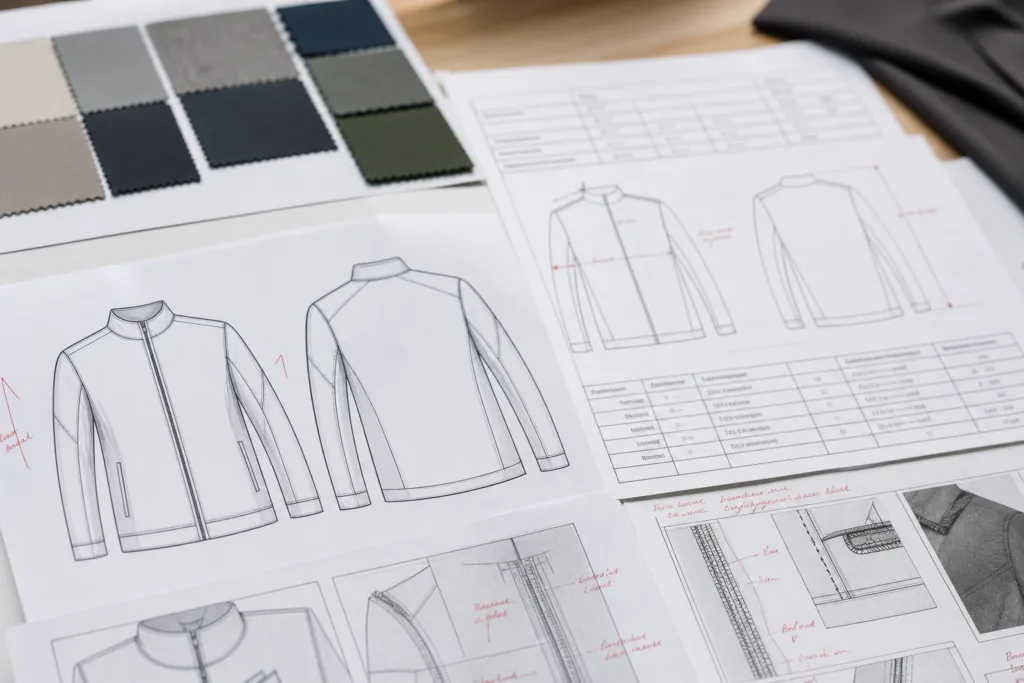
For buyers preparing sketches, spec sheets, or image annotations, how to write clear factory comments and callouts is especially useful because many misunderstandings begin with unclear notes around stitching, placement, measurement points, and finish expectations.
Here is the general logic:
- Bad: “Hi, I want to create a luxury fashion brand and need high-quality clothing. Can you send prices?”
- Better: “Hi, we are developing a unisex oversized heavyweight T-shirt in 100% cotton jersey, target 240 to 260 GSM, with screen print on front and back. Initial order estimate is 200 to 300 pcs across 2 colors. We are looking for sampling support this month and bulk delivery in 90 to 120 days if approved. Reference images are attached. Please let us know if this is within your capability and share your MOQ, sample lead time, and estimated quote process.”
The second version is not perfect, but it gives the supplier something concrete to assess. That is what improves your response rate.
Clothing manufacturer email template for beginners
Below is a practical beginner template. Adjust it to match your product and sourcing stage.
Subject line: Inquiry for Custom [Garment Type] – [Quantity Range] – [Brand or Company Name]
Email body:
Hello [Factory Name or Contact Name],
My name is [Name], and I am contacting you about a [garment type] project for [brand/company type]. We are looking for a manufacturer that can support [custom development / private label / sampling and bulk production].
Product details:
– Item: [example: unisex oversized T-shirt]
– Fabric: [example: 100% cotton jersey, target 240 GSM]
– Features: [example: rib neck, screen print, woven label, custom neck tape]
– Quantity: [example: 200–300 pcs first order across 2 colors]
– Size range: [example: S–XL]
– Timeline: [example: sample in 3–4 weeks, bulk target in 3 months]
– Market: [example: online brand selling in the US]
I have attached [reference images / tech pack / artwork / measurement sheet] for review. Please let me know:
- Whether this product is within your capability
- Your MOQ for this type of item
- Sample cost and sample lead time
- Estimated bulk lead time
- What additional information you need to prepare a quote
Thank you, and I look forward to your reply.
Best regards,
[Full Name]
[Company Name]
[Country]
[WhatsApp or phone if appropriate]
This format works because it is direct, not overdesigned, and easy for the supplier team to pass internally to merchandisers, developers, or costing staff.
How to avoid looking unprepared or low-priority
Manufacturers often rank inquiries quietly. Some look serious, and some look like idea-stage browsing. You do not need to be a big buyer to look serious. You need to look prepared.
Here are signals that help:
- You know the product category clearly
- You provide realistic quantity estimates
- You mention target timing
- You attach organized files
- You ask practical questions
- You reply within a reasonable time
Here are signals that lower your priority:
- “I want to start a brand, what products do you have?”
- “Can you do everything?”
- “I need the best quality and lowest price”
- No quantity, no timeline, no product details
- Ten unrelated product ideas in one message
- Asking for exact pricing without enough specifications
If you are early in development, say that clearly but professionally. For example: “We are in the early sampling stage for one fleece hoodie style and are looking for a factory experienced in cotton-poly brushed fleece with custom labeling.” That sounds more credible than vague ambition.
In apparel development, organized documentation also matters. Many teams use tech pack creation tools for supplier communication so their first outreach already includes clearer specifications, garment details, and revision control.
Common reasons manufacturers ignore inquiry emails
When a factory does not reply, buyers often assume the supplier is rude or unreliable. Sometimes that is true. But often the email itself made the project hard to evaluate.
Common reasons include:
- The request is too vague
- The order size is below the factory’s normal MOQ
- The product does not match the factory’s specialization
- The buyer attached nothing useful
- The email sounds mass-sent and impersonal
- The timeline is unrealistic
- The brand asks for too many services without project clarity
For example, if you ask for custom cut-and-sew hoodies, embroidery, puff print, woven labels, special wash effects, custom packaging, and delivery in 30 days without a tech pack or quantity estimate, many suppliers will simply move on. The problem is not only the complexity. The problem is that the request creates too much uncertainty before the conversation even starts.
Another issue is mismatched language. If you are not sure whether the product is private label, OEM, or fully custom cut-and-sew, say what you actually need in plain terms instead of using manufacturing terms loosely. Clear requests create clearer replies.
Follow-up schedule: when and how often to chase a reply
Following up is normal. Repeatedly chasing after one or two business days is not helpful. Factories often need time to review attachments, forward them internally, check material options, or confirm MOQ policy.
A practical follow-up schedule for first contact is:
| Stage | Timing | What to do |
|---|---|---|
| Initial email | Day 0 | Send complete inquiry with attachments |
| First follow-up | Day 4 to 6 business days | Send a short polite reminder |
| Second follow-up | Day 10 to 14 business days | Ask whether the project fits their capability |
| Final decision | After 2 follow-ups | Move on if no response or no clear engagement |
A good follow-up email is short:
Hello [Name],
I am following up on my inquiry about the custom heavyweight T-shirt project sent on [date]. I wanted to check whether this item is within your production capability. I have reattached the reference files here in case that helps. Please let me know if you need any additional information from our side.
Best regards,
[Name]
Notice what this does not do. It does not pressure. It does not complain. It does not ask “why no response?” That tone matters more than many beginners realize.
What to do after the manufacturer replies
Getting a reply is only the start. Now you need to evaluate whether the supplier actually understood your request and whether their process fits your project.
Look at the quality of the response:
- Did they answer your main questions?
- Did they mention MOQ, sampling, and lead time clearly?
- Did they ask relevant follow-up questions?
- Did they show category understanding?
- Did they avoid impossible promises?
A weak reply may say only: “Yes we can make. Send order.” That is not enough. A stronger reply usually mentions what they need next, such as artwork files, size chart, exact fabric requirement, or sample confirmation process.
This is also a good stage to broaden your learning through Apparel Wiki if you need help with terminology, construction details, fabric selection, or production planning before moving into quoting and sampling.
From a sourcing point of view, compare replies across suppliers using the same checklist. Do not judge only by price. Compare communication speed, question quality, technical clarity, and whether the factory seems used to the kind of buyer you are.
Sample short email, detailed email, and follow-up email
Short first-contact email
Hello [Name],
We are looking for a manufacturer for a unisex oversized cotton T-shirt with front and back screen print. Initial quantity is 200 to 300 pcs across 2 colors. Target fabric is 240 to 260 GSM cotton jersey. Reference images are attached. Please let us know your MOQ, sample lead time, and whether this item is within your capability.
Best regards,
[Name]
Detailed first-contact email
Hello [Name],
My name is [Name], and I am developing a small apparel brand focused on heavyweight knit basics. We are currently sourcing a manufacturer for our first custom T-shirt style.
Project summary:
– Product: unisex oversized short-sleeve T-shirt
– Fabric: 100% cotton jersey, target 240–260 GSM, soft hand feel
– Trim details: 1×1 rib neck, inside neck tape, woven main label, care label
– Decoration: screen print on front chest and full back artwork
– Quantity: 200–300 pcs first order
– Colors: 2 body colors
– Size range: S–XL
– Market: direct-to-consumer online brand
– Timeline: sample this month if possible, bulk in around 90–120 days
I have attached reference images and a preliminary measurement sheet. Please let me know:
- If you can produce this type of garment
- Your MOQ for this style
- Sample development process and sample cost
- Estimated production lead time
- Any additional information needed for quoting
Thank you for your time.
Best regards,
[Name]
Follow-up email
Hello [Name],
I am following up on the T-shirt inquiry I sent on [date]. I wanted to check whether this project is suitable for your factory. I have reattached the reference files for convenience. Please let me know if you need any additional specifications from my side.
Best regards,
[Name]
Common mistakes in clothing supplier inquiry emails
Let’s look at what actually causes unnecessary delay.
- Asking for price too early: If the supplier does not know the fabric, quantity, or construction, the quote will be rough at best.
- Using only inspiration images: Nice images help, but they do not replace spec details.
- Mixing too many product categories: A first email covering hoodies, swimwear, denim, socks, and jackets creates confusion.
- Ignoring MOQ reality: If you need 50 pcs total, some suppliers will not engage with a custom program.
- Writing overly long founder stories: Manufacturers need production details first.
- Not reading the reply carefully: Sometimes buyers ask questions the supplier already answered.
- Changing the scope too fast: Constant early changes make the project look unstable.
In many projects, the problem is not that the buyer chose the wrong category. The problem is that some production details were not clarified before sampling or bulk planning. A clean inquiry email reduces that risk from the beginning.
Conclusion

Learning how to contact clothing manufacturers is really about learning how to communicate a production request clearly. A strong first email does not need perfect technical language, but it does need a defined product, realistic quantity, basic timing, and useful attachments. If you make the factory’s job easier, you are more likely to get a useful reply.
For beginner brands and startups, the goal is not to sound bigger than you are. The goal is to sound organized, honest, and workable. That is what helps manufacturers take your inquiry seriously, move the conversation toward sampling, and avoid wasted time on both sides.
FAQ
What is the most important thing to include when contacting a clothing manufacturer?
The most important thing is a clear product summary. A manufacturer usually needs to know what garment you want, estimated quantity, target fabric or material direction, timeline, and whether you want custom development or a stock-based option. Without that, they cannot judge fit or quote properly.
Should I contact many clothing manufacturers at once?
Yes, but do it in a controlled way. It is practical to contact several suppliers so you can compare response quality, MOQ, lead time, and communication style. The mistake is mass-sending the same vague email to dozens of factories without checking whether they make the type of product you need.
Can I contact a manufacturer without a tech pack?
Yes, especially at an early stage, but you should still provide something structured. Clear reference images, a rough measurement sheet, fabric ideas, decoration notes, and a short product brief are much better than sending only a mood board or a brand concept with no garment details.
How long should I wait before following up with a factory?
A practical starting point is around 4 to 6 business days after your first email. That gives the supplier time to review your request internally. If there is still no reply, one more follow-up after about 10 to 14 business days is reasonable before you move on.
Why do clothing manufacturers ask for MOQ so early?
MOQ affects whether the project is commercially workable. It influences fabric sourcing, trim purchasing, cutting efficiency, line planning, and pricing logic. Even a rough quantity estimate helps the factory decide if your order size fits their production model.
What should I do after a manufacturer replies positively?
You should review the reply carefully, confirm unanswered points, and prepare the next set of documents. That usually means refining your spec details, confirming sampling steps, checking sample costs and lead times, and comparing the supplier’s answers with other factories before committing.