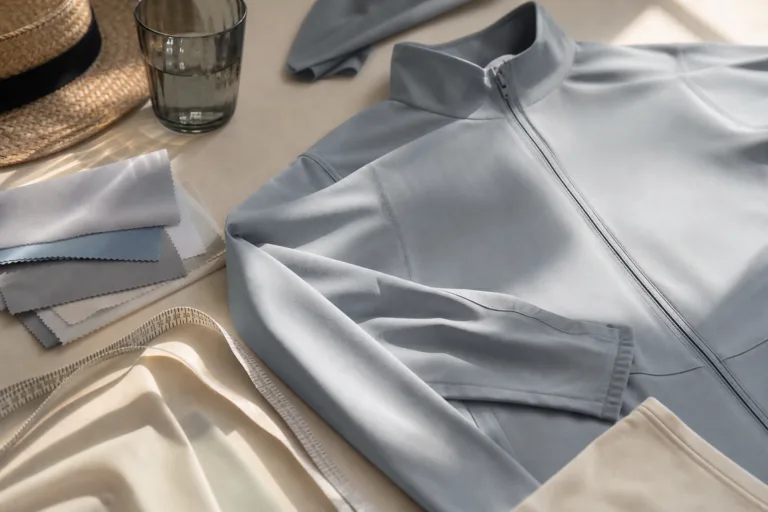
UPF clothing gives buyers a practical way to reduce UV exposure through the garment itself, but the label only works if the fabric, fit, and care routine match the real use case. A shirt with a high UPF value may still be a poor choice if it is too hot to wear, too loose to cover consistently, or too sensitive to washing and stretching.
For readers who are still building the basics of fabric choice, the guide to selecting the right performance fabric is a useful companion because UV protection is never just about one material property. It helps you compare fiber content, knit density, hand feel, breathability, and durability before you decide whether a garment can meet both sun-protection and wearability needs.
What UV Protection in Clothing Actually Means
UV protection in clothing is about how much ultraviolet radiation can pass through a textile and reach the skin. Unlike sunscreen, which sits on the skin surface, fabric protection depends on the garment itself: yarn type, construction, color, thickness, stretch, and how the piece is worn. That is why two shirts with the same fiber content can behave very differently in real use.
For buyers, the point is not to chase the biggest number in isolation. The useful question is whether the garment creates reliable coverage in the conditions it is intended for. A commuter shirt, a hiking layer, a beach cover-up, and an outdoor work shirt may all need UV protection, but they may need very different levels of breathability, durability, and style.
How to read UPF numbers
UPF means Ultraviolet Protection Factor. The number indicates how much UV is blocked by the fabric under defined test conditions. In simple terms, a higher number means less UV gets through. A UPF 50 fabric, for example, is designed to let only a small fraction of UV pass through, but the actual result still depends on stretch, fit, wear, and care.
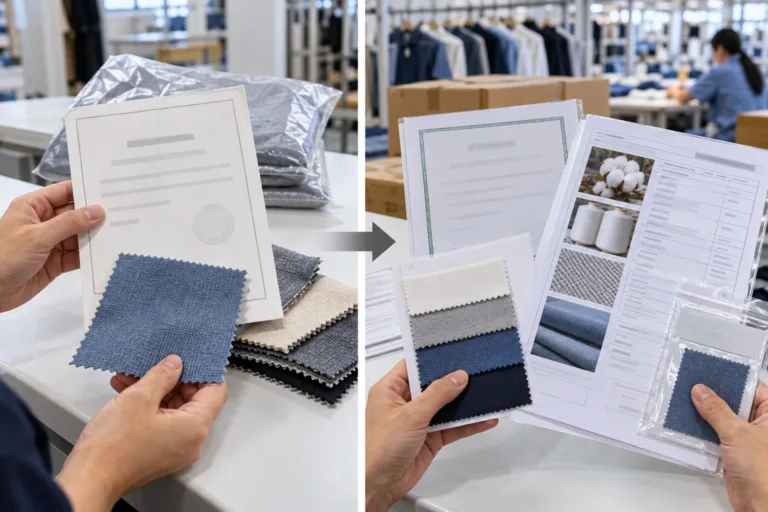
That is why labeled claims matter. A garment is more credible when the claim can be traced back to a defined test and labeling practice, which is the point of the ASTM D6603 labeling standard. For buyer education, this is useful because a number on a hangtag is only meaningful when you know what textile, color, and construction were evaluated, and whether the claim applies to the finished garment or only to one fabric sample.
As a general buying rule, lower UPF values can still be useful for short, low-risk wear, but longer outdoor exposure usually calls for stronger coverage, better fabric density, and more reliable construction. The more time the wearer spends in direct sun, the less sensible it is to rely on a thin, loosely constructed garment just because it looks lightweight.
UPF vs SPF: the difference that matters
UPF and SPF are related ideas, but they are not interchangeable. SPF measures sunscreen performance on skin, while UPF measures how well a textile blocks UV. Clothing can cover a larger area more consistently than sunscreen, but only on the areas it actually covers. That means UPF clothing is usually one part of a sun-protection system, not a full replacement for sunscreen, shade, hats, or sunglasses.
In practical terms, SPF is a product applied after the outfit is chosen. UPF is part of the garment decision itself. That makes UPF especially useful for buyers who need predictable protection in workwear, sportswear, travel apparel, or children’s clothing where repeat application of sunscreen may not be realistic.
Which Fabrics Protect Best from UV?
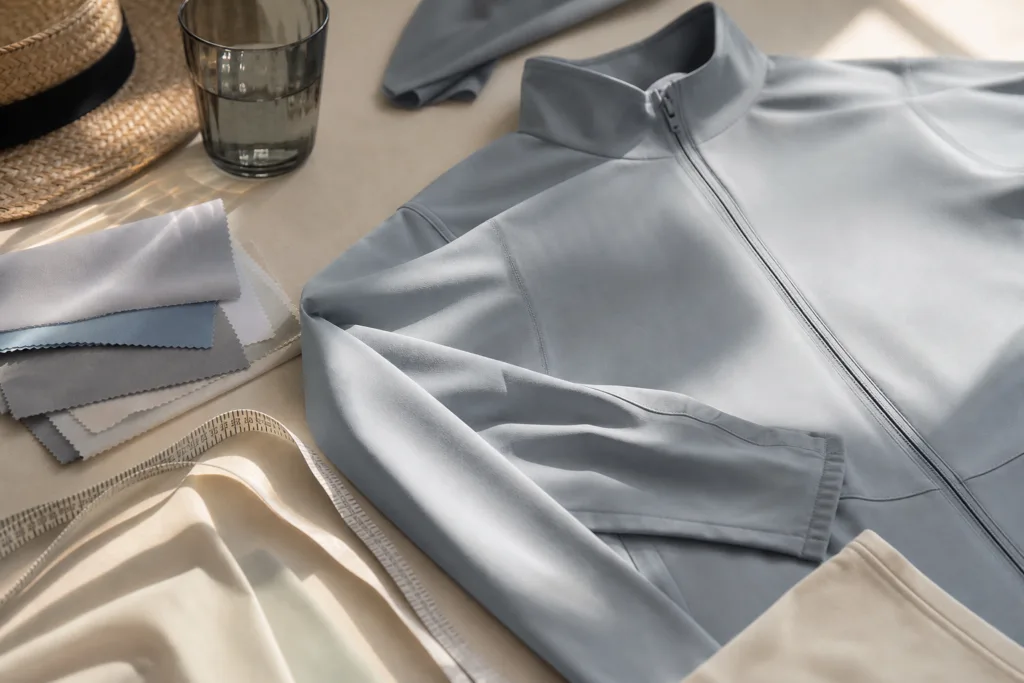
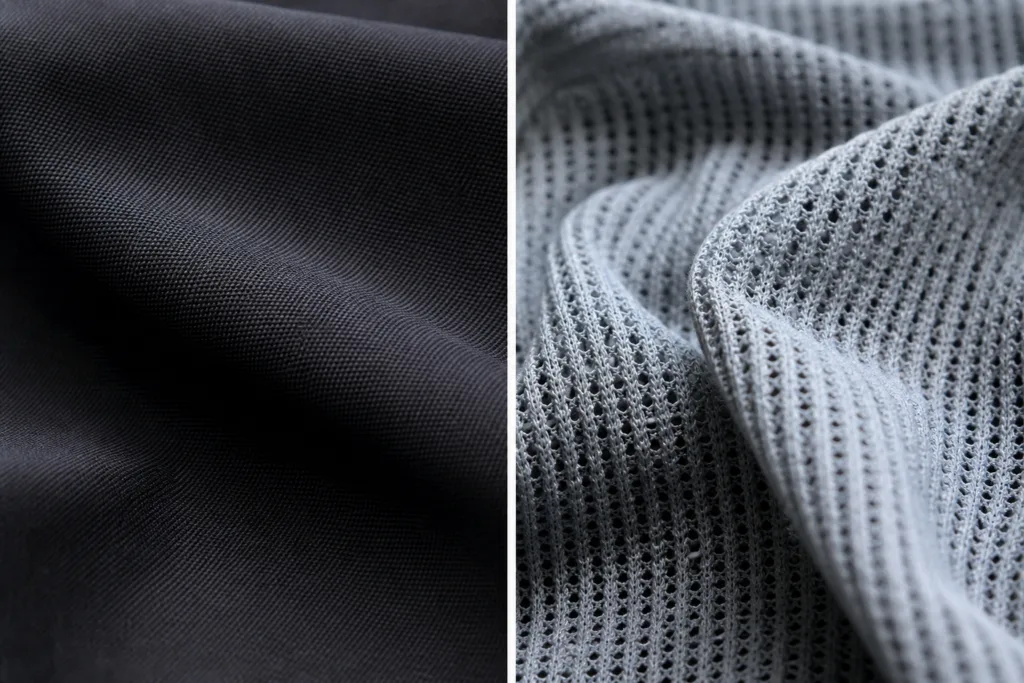
There is no single fiber that automatically wins. In most cases, the best sun-protective fabric is the one that combines tight coverage, stable construction, and enough comfort that people will actually wear it. DermNet’s sun-protective clothing guidance makes the same practical point: tighter weaves, denser knits, darker colors, and dry fabrics generally block more UV, while stretch, wetness, and open structure can reduce protection.
That means fiber name alone is not enough. Cotton can protect reasonably well when it is dense and substantial, while a lightweight open-knit polyester can perform poorly. A synthetic fabric can also be highly protective if the yarns, knit density, and finishing are designed for UV control. For sourcing teams, the real comparison is not cotton versus polyester in the abstract. It is the full textile package versus the use case.
| Fabric Factor | What Usually Helps UV Protection | What Buyers Should Confirm |
|---|---|---|
| Fiber type | Polyester, nylon, wool, and dense cotton structures can all perform well depending on construction | Do not assume a fiber name tells the full story; check the finished fabric claim |
| Weave or knit density | Tighter structures block more light and reduce gaps between yarns or loops | Inspect for openness, mesh areas, and visible pinholes under strong light |
| Thickness and GSM | More mass often improves UV blocking because there is more material in the path of the rays | Match weight to climate so the garment is protective without becoming unusably hot |
| Color | Darker colors often absorb more UV than light shades | Balance heat gain, style, and fading risk against the protection target |
| Stretch | Lower stretch usually means smaller gaps in the fabric structure | Check how the fabric behaves when worn, not only when laid flat |
| Moisture | Dry fabrics generally protect better than wet ones | Consider sweat, rain, spray, and quick-dry behavior in the actual activity |
| Finishes and additives | UV-absorbing finishes or engineered fibers can improve performance | Ask whether protection is built into the textile or depends on a surface treatment |
From a product-development perspective, fabric weight and protection need to be balanced carefully. A heavier cloth may give a more stable UPF result, but if it traps too much heat, people may stop wearing it. That is why the correct fabric is not simply the thickest one. The best option is the one that keeps its structure, covers the skin well, and still feels acceptable in the intended climate.
How Garment Construction Improves Sun Protection
Fabric is only part of the answer. Garment construction determines how much skin is covered, how the fabric moves, and whether gaps appear during activity. Long sleeves, higher necklines, wider shoulder coverage, longer hems, and full-length pants can make a bigger difference than buyers expect, especially when the user spends hours outdoors.
For readers comparing pattern and fit choices across product categories, Apparel Wiki is a useful starting point for connecting fabric terms, construction details, and buying logic before sampling. In sun-protective garments, that broader view matters because a good textile can still fail if the cut rides up, clings when wet, or leaves too much skin exposed at the shoulders, wrists, or waist.
Construction details worth checking include sleeve length at full reach, collar height, cuff security, hem drop, closure placement, and whether vents or mesh panels are placed where they help airflow without opening large UV entry points. A thumb loop can keep a sleeve in place. A hood can protect the neck and ears. A longer back hem can help when the wearer bends, paddles, or carries gear.
If the garment must also handle drizzle, splash, or damp conditions, it helps to separate UV protection from water resistance. A fabric can repel water and still have an average UPF, so the comparison of water-resistant and waterproof fabrics is useful when one garment has to solve more than one problem. For UV protection, the key is not just whether the fabric sheds water, but whether it keeps its structure and coverage once the activity becomes wet, windy, or high-movement.
- Confirm that sleeves stay long enough when arms are lifted.
- Check whether the fabric exposes more skin when stretched across shoulders or chest.
- Look for closures, collars, and hoods that remain useful in motion.
- Review seam placement so the garment does not shift in ways that reduce coverage.
UV-Blocking Technologies and Textile Innovations
Modern UV-protective garments may use tightly engineered knits, synthetic fibers with built-in additives, yarn-level construction tricks, or surface treatments that help reduce transmission. The important sourcing question is whether the protection is inherent to the textile or dependent on a finish that may change over time.
For some products, UV performance comes mostly from the fabric architecture itself: dense yarn packing, reduced openness, and stable shape recovery. For others, the manufacturer may rely on a coating or chemical treatment to improve the rating. That can work, but it also means the buyer should ask about durability after laundering, abrasion, and repeated wear. A finish that performs well on day one is not as useful if the garment is expected to survive a long season of use.
A practical supplier checklist for this section is simple:
- What exactly creates the UV protection: fiber, weave, knit, finish, or a combination?
- Does the UPF claim apply after washing, and under what conditions was it tested?
- Are all colors, sizes, and panels built from the same protective textile?
- Does added decoration, print, or contrasting fabric change the protective zones?
For brands, this is where design and compliance meet. A sleeve panel, mesh insert, or fashion trim may look small, but it can create a low-protection spot if it is not evaluated as part of the finished piece. In apparel development, the safest habit is to treat every visible material change as a possible performance change.
How to Choose UPF Clothing for Different Activities
The right UPF clothing depends on the wearer’s movement, heat load, exposure time, and need for style or layering. A beach cover-up, a running top, a hiking shirt, and an outdoor work uniform do not need the same balance of protection and comfort. For long wear in heat, moisture management becomes just as important as UV blocking, which is why the moisture-wicking fabric guide is relevant when you are deciding whether a garment will actually stay on the body all day.
| Use Case | What to Prioritize | Common Mistake |
|---|---|---|
| Beach and water use | Coverage, quick-dry behavior, stable fit when wet, and enough protection for long sun exposure | Choosing a loose open weave that looks light but loses usefulness once wet |
| Hiking and trekking | Breathability, abrasion resistance, sleeve coverage, and a collar or hood for long trail time | Picking a hot garment that gets removed halfway through the day |
| Running and active sports | Low irritation, stretch recovery, moisture control, and protection that holds up through movement | Using a shirt that opens gaps when the fabric stretches across the chest or back |
| Travel and everyday wear | Comfort, style, easy layering, and enough protection for long periods in transit or walking | Ignoring fit and aesthetics, then leaving the garment at home |
| Outdoor workwear | Durability, consistent coverage, color stability, and a fit that stays in place during bending or lifting | Assuming a standard work shirt is protective just because it is long-sleeved |
If the clothing also needs to manage rain, spray, or dirty conditions, be careful not to confuse protective categories. A garment can be water resistant without being especially UV-protective, and a garment with strong UV performance may still be poor in a storm. The decision should follow the actual job, not the label language alone.
Balancing Protection, Breathability, Comfort, and Style
The most protective garment is not always the most useful one. In real life, wearability controls compliance: if the shirt feels too hot, too stiff, or too awkward, people will not keep wearing it. That is why fit, venting, panel placement, and visual design matter just as much as the tested UPF value.
On a broad platform like Apparel Wiki, this same trade-off appears across many garment categories: the right choice is usually the one that matches function, feel, and user behavior at the same time. For UPF clothing, that may mean using a slightly lighter color with a dense knit, or a long-sleeve design with strategic ventilation, rather than a heavy shirt that offers excellent lab results but poor real-world adoption.
When comparing options, look for these signs of good balance:
- The garment covers the skin without feeling restrictive when the wearer moves.
- The fabric recovers well after stretch so the structure does not open up too much.
- The piece breathes enough that it can be worn for long periods in warm weather.
- The styling is practical enough that the garment will be chosen often, not only on special occasions.
That final point matters more than it sounds. A highly technical shirt that stays in the closet offers no UV benefit. A slightly less aggressive fabric that people wear daily may protect better overall because it gets used consistently.
How to Care for UPF Clothing So It Lasts
Care is part of performance. A garment can start with a strong UPF value and still lose practical value if it shrinks, stretches out, fades heavily, or gets damaged by rough laundering. In sun-protective clothing, fit is part of coverage, so even a small change in dimensions can matter if the garment starts exposing more wrist, forearm, or lower back.
Use the care label first, because the textile construction determines how much heat, agitation, and chemical exposure it can tolerate. Gentle washing, careful drying, and avoiding unnecessary bleach or high heat are common best practices. If you need a broader view of how finishes and color behave during laundering, the fabric fading and bleeding prevention guide is useful because visible fading does not automatically mean the UPF rating has collapsed, but it does tell you the garment is aging and should be handled more carefully.
Pay attention to shrinkage as well. A shirt that becomes shorter after washing may expose more skin than intended, even if the textile itself is still structurally sound. In practical terms, that means the protective value of the garment is not only about the lab number; it is also about how well the finished product keeps its intended shape over repeated use.
Common Mistakes and Label-Reading Tips
Many buyers make the same mistakes when they first compare UPF garments. The most common one is assuming that any long-sleeve shirt is automatically sun-protective enough. Another is assuming that a dark color alone guarantees strong UV blocking. Both ideas are incomplete. Coverage, density, fit, and wear condition all matter.
For buyers and merchandisers, the label is only useful if it is backed by testing and a clear product specification. The apparel testing and compliance standards article is a helpful companion when you need to ask suppliers for lab reports, confirm which fabric was tested, and make sure changes in color, trim, or panel placement do not quietly change the performance story.
Other mistakes to avoid include:
- Assuming a UPF 50 garment removes the need for any sunscreen on exposed skin.
- Choosing a very open mesh because it feels cooler, even though the openness lowers protection.
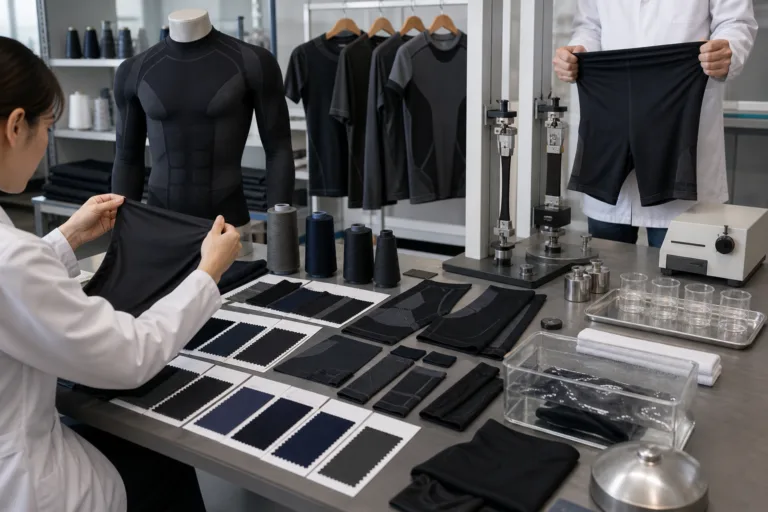
- Ignoring stretch, especially in athletic garments that open up when the wearer moves.
- Forgetting that wet fabric may behave differently from dry fabric.
- Buying a size too small, then reducing coverage when the fabric stretches across the body.
- Overlooking wash care, shrinkage, and long-term shape retention.
When reading a product page or hangtag, the useful questions are simple: What exactly is being tested? Does the claim apply to the finished garment or only the base textile? Does the protection remain credible after washing, stretching, and normal wear? If the answer to those questions is unclear, the label should be treated as a starting point, not a guarantee.
Conclusion
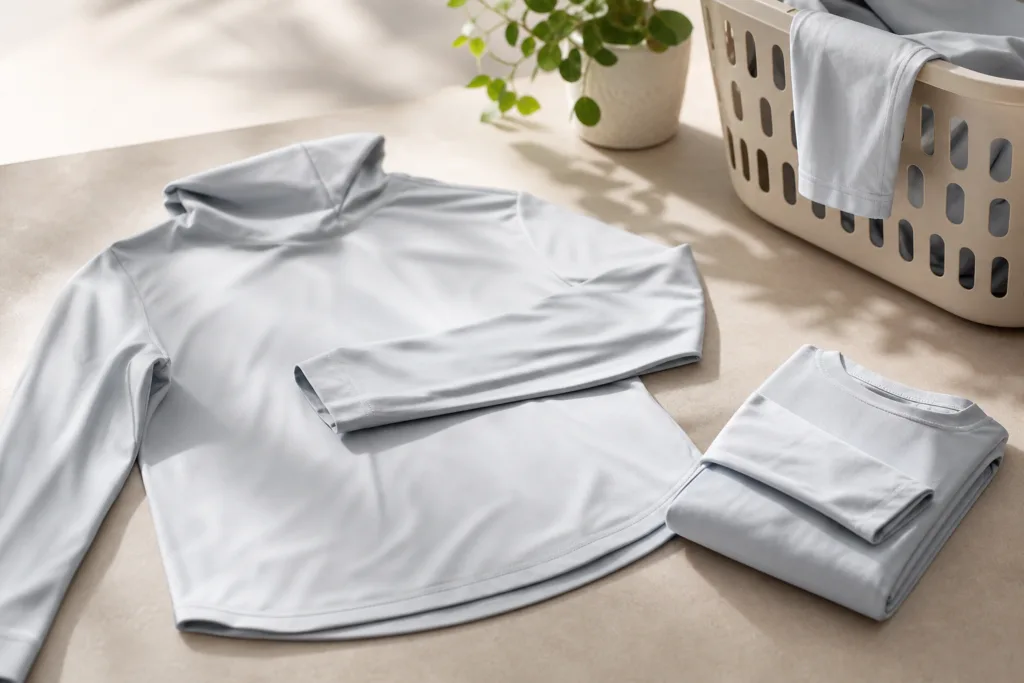
UPF clothing works best when the garment, not just the number, matches the use case. The strongest buying decisions come from looking at construction, fabric density, color, fit, coverage, moisture behavior, and care together. A well-chosen piece can reduce UV exposure in a much more consistent way than an outfit that looks protective but is too hot, too open, or too fragile to wear correctly.
For practical buying, the rule is straightforward: choose the garment you will actually wear, then confirm that it keeps enough coverage and stability for the conditions you expect. That is the most reliable way to use UPF clothing well in real outdoor life.
Frequently Asked Questions
What does a UPF rating actually mean on clothing?
A UPF rating shows how much ultraviolet radiation a textile blocks under a defined test method. The higher the number, the less UV passes through the fabric, but the result still depends on fit, stretch, moisture, and condition in real use.
Is UPF clothing better than sunscreen?
They solve different parts of the same problem. UPF clothing gives stable coverage over a larger area, while sunscreen protects skin that stays exposed. For most outdoor use, the practical answer is to use both where needed.
Which fabrics protect best from UV?
Dense, tightly woven or tightly knitted fabrics usually block more UV, especially when they are thicker, less stretchy, and cover the skin well. Darker colors often help too, but fabric structure matters more than fiber name alone.
Does wet or stretched fabric reduce UPF protection?
It can. Stretch can open gaps between yarns or loops, and wet fabric often transmits more UV than dry fabric. That is why fit, movement, and use conditions matter when you choose and test a garment.
How should I choose UPF clothing for sports or outdoor work?
Prioritize coverage, breathable construction, moisture management, and a stable fit that stays in place during movement. For long wear in heat, a garment that people will actually keep on is usually more useful than a hotter piece with a higher number.
How do I care for UPF clothing so it lasts?
Follow the care label, wash gently, and avoid unnecessary heat, bleach, or rough handling. Also watch for shrinkage, fading, and wear that change fit or fabric condition, because those issues can reduce practical sun protection.