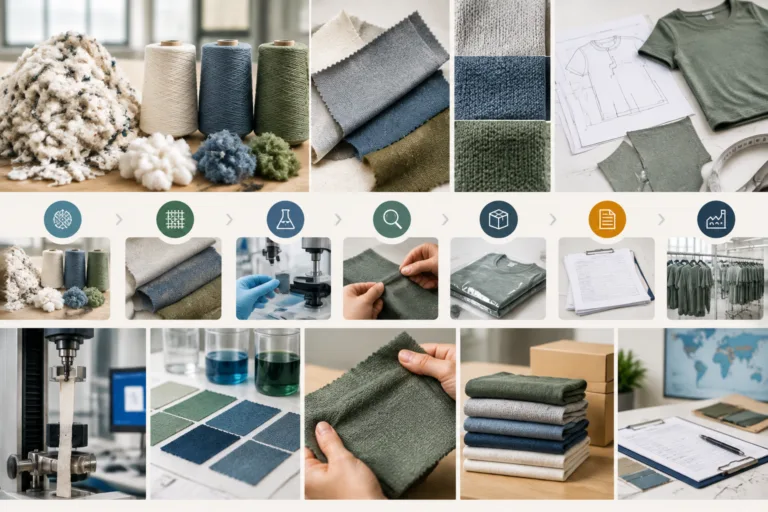
Recycled cotton fiber blends combine recycled cotton with one or more other fiber types to meet a defined apparel requirement. The added fiber may help address yarn formation, strength, stretch, recovery, hand, dimensional behavior, appearance, care, or manufacturing consistency, but blending does not automatically produce a better or more sustainable material. Apparel Wiki is an independent educational publication; its Sponsor information does not change that editorial position.
In practical terms, recycled cotton is cotton recovered from discarded textile materials or other documented waste streams and prepared for reuse as fiber. The exact source and preparation route matter. A fabric containing recycled cotton is not necessarily made entirely from recycled cotton, and “recycled content” may refer to the total material or to a particular component. Before judging a blend, confirm the fiber composition, the documented recycled content, and the intended end use.
What Are Recycled Cotton Fiber Blends?
A recycled cotton blend is a material system in which recycled cotton is combined with another fiber, such as virgin cotton, a synthetic fiber, a regenerated cellulosic fiber, or an elastane-containing component. The purpose is usually to reach a target balance of properties or process requirements. The result depends on the recycled fiber’s length distribution, fineness, damage, contamination control, and preparation, as well as the blend ratio, yarn construction, fabric structure, finishing route, and garment design.
These terms should remain separate:
- Recycled cotton content: the documented portion of the material identified as recycled cotton.
- Total recycled content: the combined recycled portion of all relevant fibers or components, subject to the definition used for the claim.
- Fabric made entirely from recycled cotton: a stronger composition statement that requires verification of the complete fiber content and any additional components.
A fiber’s generic name, its manufacturing process, its raw-material source, and a commercial trademark are different classification questions. A supplier may describe a material by fiber type, process, source, or brand name, but those descriptions should not be treated as interchangeable. Labeling terminology and environmental claims also depend on the target market and the evidence supporting the specific material.
The responsible starting point is therefore verified composition and intended use. The word “recycled” alone does not establish durability, comfort, lower impact, recyclability, or regulatory compliance. Those conclusions require product-specific documentation and, where relevant, comparable testing.
Why Blend Recycled Cotton With Other Fibers?
Recycled cotton can be useful in a blend, but recovered fibers may differ from virgin fibers in length, uniformity, strength, or surface condition. A product team may therefore consider another fiber to support more consistent spinning inputs or to achieve a yarn structure suited to the fabric. The practical effect depends on the preparation quality and the spinning route, so a general tendency is not a substitute for supplier information or test results.
Blending is also a way to address a product brief. Depending on the fiber partner and construction, the team may be targeting a particular hand, dimensional behavior, abrasion response, stretch, recovery, appearance, moisture behavior, or care route. A knit garment with movement requirements presents a different problem from a woven shirt, workwear item, or lightweight lining. Fabric weight, knit or woven structure, finishing, and expected service conditions all influence whether the proposed blend is suitable.
The decision is not simply a list of benefits. Adding another fiber can change touch, visual character, dyeing behavior, finishing response, laundering behavior, and end-of-life handling. It may make one target easier to reach while creating a new constraint elsewhere. Use “can” and “may” until comparable samples have been assessed under equivalent conditions.
How Different Fiber Partners Change the Material Balance
The useful way to compare recycled cotton blends is to ask what problem the added fiber is meant to address. The matrix below describes design objectives and questions for investigation, not guaranteed outcomes or a universal ranking.
| Fiber partner | Possible design objective | Questions requiring confirmation |
|---|---|---|
| Virgin cotton | Retain a predominantly cotton hand while adjusting the balance of available fiber inputs. | How do fiber characteristics, yarn strength, uniformity, pilling, and appearance compare at the proposed ratio? |
| Synthetic fiber | Investigate strength, abrasion response, dimensional behavior, care performance, or a specific surface effect. | What happens to hand, dyeing, moisture behavior, pilling, heat sensitivity, and end-of-life options in the finished construction? |
| Regenerated cellulosic fiber | Explore a different hand, drape, appearance, or moisture-related balance while retaining a cellulosic component. | How do wet behavior, dimensional change, finishing response, and durability perform in the intended fabric? |
| Elastane-containing system | Introduce stretch and recovery for fit, movement, or shaping requirements. | Are stretch, recovery, laundering, heat exposure, and garment-construction requirements compatible? |
These categories describe likely development aims rather than finished-garment results. A recycled cotton polyester blend, for example, cannot be judged by fiber names alone. Yarn structure, fabric construction, finishing, and the actual blend percentage all matter. Likewise, an elastane-containing system needs evaluation in the context of fabric stretch and garment fit, not just the presence of elastane.
Compare samples made to equivalent yarn and fabric specifications whenever possible. A property measured at fiber level is not the same as performance demonstrated by a yarn, fabric, or finished garment. Claims about recyclability, biodegradability, emissions, or resource use require separate evidence with a clearly defined scope.
Which Variables Determine Whether the Blend Works?
The nominal blend percentage is only one part of the specification. Fiber length distribution, fineness, damage, contamination, and preparation quality can affect processing and yarn behavior. The blend ratio must also be considered alongside opening and blending consistency, the spinning system, yarn linear density, twist, and ply. Supplier documentation should identify the relevant fiber characteristics and measurement conditions rather than provide a percentage without context.
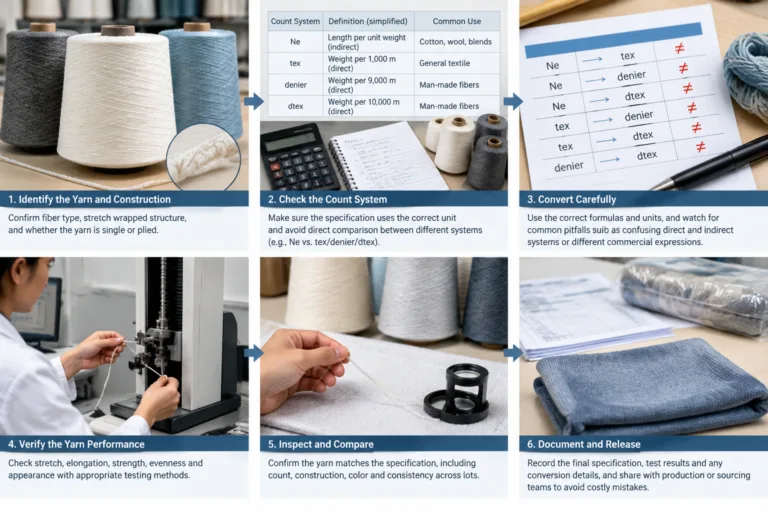
Yarn notation needs particular care. A notation may describe a single-yarn count, a plied yarn, or a direct linear-density system. For example, a designation such as 30/2 should be clarified with the supplier instead of being reduced to the number 30. Different count systems and commercial writing conventions cannot be assumed to be interchangeable.
Tex, denier, and dtex are direct linear-density systems: tex expresses mass per 1,000 meters, denier per 9,000 meters, and dtex per 10,000 meters. A useful illustrative conversion is 90 denier = 10 tex = 100 dtex. This is only a linear-density comparison, not a statement about yarn diameter, fabric quality, or garment performance. Indirect systems such as Ne should be recorded separately and should not be compared by simply treating larger or smaller numbers as equivalent.
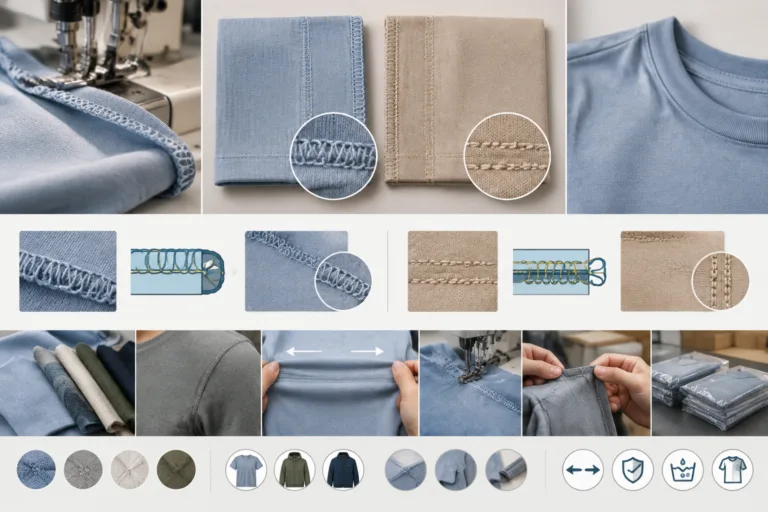
Finally, fabric weight, gauge or sett, knit construction, finishing, laundering, and garment construction can change the observed result. Fiber, yarn, fabric, finishing, and garment behavior form a linked chain. A blend that processes acceptably as yarn may still miss the product brief after finishing or during wear, so the complete construction must remain the object of evaluation.
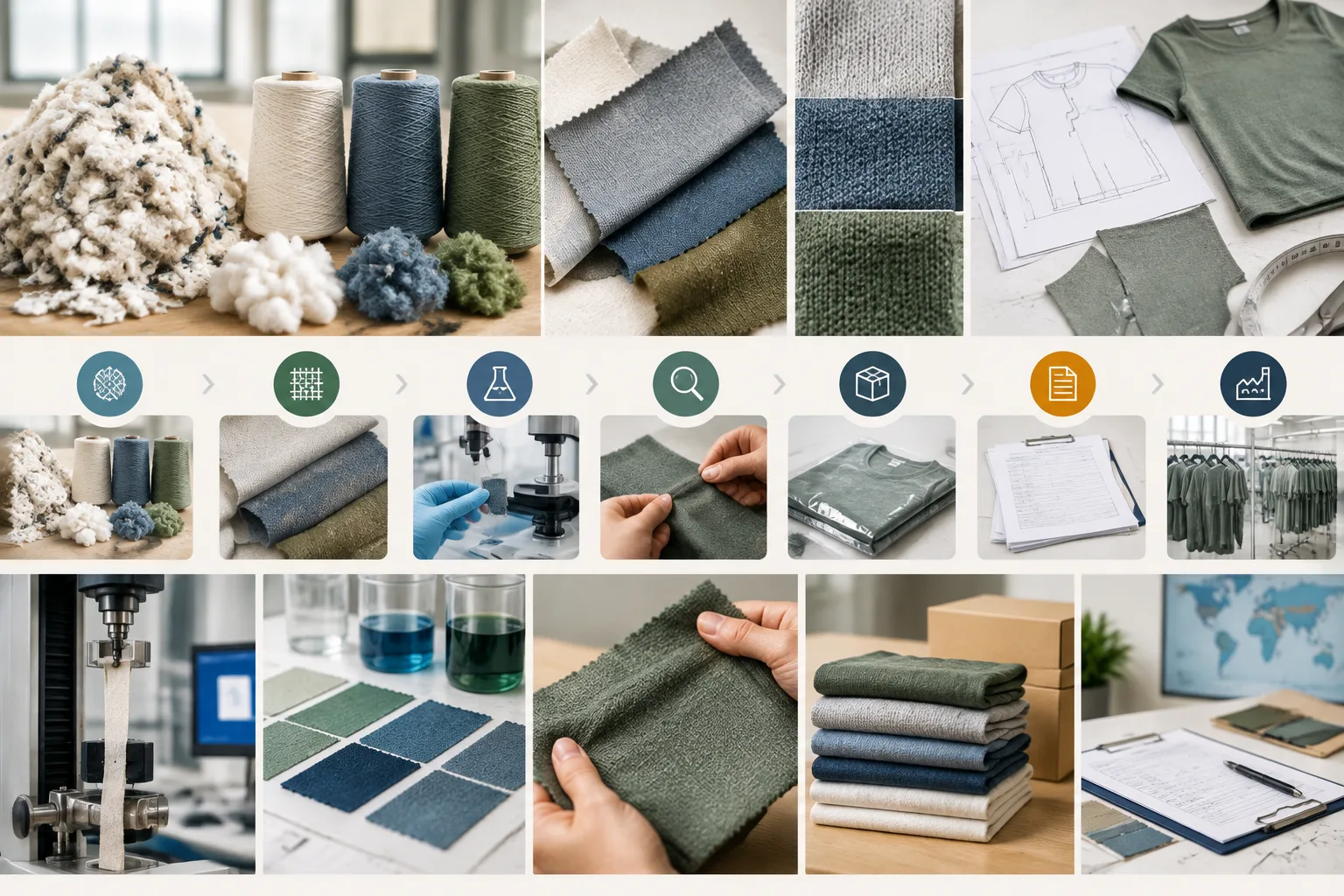
How Should Apparel Teams Evaluate a Recycled Cotton Blend?
Begin with the end-use brief rather than with a preferred fiber percentage. Define the garment type, target hand, fit, stretch requirement, care route, appearance, expected wear, and market requirements. A blend suitable for a relaxed knit top may not suit a structured woven garment or a product exposed to repeated abrasion. The objective is to identify the material behavior the product needs before selecting the fiber combination.
Next, document the candidate composition precisely. Ask for the generic fiber names, recycled-content information, preparation details where relevant, and any commercial process or trademark claim. A source description does not replace a fiber name, and a recycled-content statement does not by itself establish the finished garment’s total recycled content. Labeling and environmental claims also need to be checked against the rules of the intended sales market.
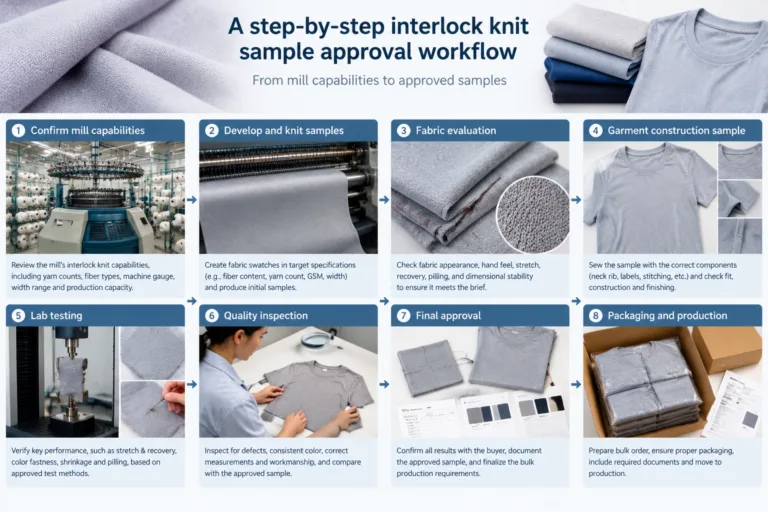
Request yarn or fabric samples and, where practical, a control material made to comparable construction conditions. Comparing a candidate blend with an unrelated fabric can obscure the reason for any difference. Record the fiber proportions, yarn construction, fabric structure, weight, finishing route, and laundering conditions so the samples represent a controlled comparison rather than simply two different products.
Testing should follow the product brief. Depending on the garment, relevant checks may include dimensional change, colorfastness, pilling, abrasion, tensile or bursting behavior, stretch and recovery, and comfort-related measurements. These are not universal requirements for every material. Record the test method, specimen condition, laundering or wear protocol, and acceptance criteria. A result without its conditions is difficult to interpret and should not be treated as a general score for the fiber.
Use a decision matrix to bring the evidence together. Include product performance, manufacturability, care requirements, claim substantiation, sourcing traceability, and end-of-life considerations. Qualified laboratory testing may be appropriate when the result affects a production specification or a public claim. For practical sourcing work, a clear recycled cotton fabric quality checklist should connect each requirement to an owner, an evidence source, and an approval decision.
What Trade-Offs and Limitations Should You Expect?
Blending can address one product need while changing another. A partner fiber may alter hand, drape, appearance, dimensional behavior, care performance, processing, or the way a fabric accepts dye and finishing. These changes are not automatically benefits or disadvantages. Their value depends on the garment, the construction, and the service conditions established in the brief.
For the same reason, broad claims about durability, comfort, sustainability, or recyclability require caution. A higher recycled cotton percentage does not automatically make a fabric more sustainable, because the conclusion may depend on the material sources, manufacturing process, use phase, expected life, and end-of-life pathway. A comparison is meaningful only when its scope, assumptions, and reference material are clear.
Mixed-fiber products can also introduce additional end-of-life questions. Sorting, separation, labeling, and recycling options may depend on the actual combination of materials and the infrastructure available where the garment is collected and processed. A technically workable blend should therefore be reviewed not only for production and wear, but also for the claims the brand intends to make and the disposal context it can substantiate.
Adding polyester does not automatically make recycled cotton fabric more durable. It may be selected to pursue a particular performance balance, but the finished result depends on fiber form, blend ratio, yarn, fabric construction, finishing, and testing. Likewise, elastane-containing systems can support stretch and recovery objectives, but the appropriate amount and construction remain product-specific.
Sometimes recycled cotton alone, another fiber system, or a different fabric construction will better match the brief. The responsible question is not whether a blend sounds advanced, but whether it satisfies documented requirements without creating unsupported claims or avoidable production and end-of-life complications.
A Practical Decision Framework for Selecting the Blend
First, define the problem the blend must solve. It may involve hand, stretch, recovery, appearance, care behavior, processing reliability, or another product requirement. Do not name a target partner fiber until the failure mode or desired outcome is clear.
Second, rank the priorities for the specific product. Consider performance, hand, processing, care, cost, claim requirements, sourcing evidence, and end-of-life handling. Then shortlist candidate blends and record the exact fiber names, percentages, yarn construction, fabric construction, and finishing conditions. This prevents a promising sample from becoming an incomplete production specification.
Third, compare the candidates with a relevant control under equivalent conditions. Review the results with design, product development, sourcing, quality, and compliance stakeholders. A material should be approved because it meets the documented brief and evidence requirements, not because its label appears more sustainable or technically impressive.
Finally, keep the approved specification and supporting documentation together. Supplier declarations, test reports, sample details, claim substantiation, and market-specific labeling checks should remain traceable after development ends. This record supports later quality decisions and reduces the risk of making a public statement that the available evidence cannot support.
The next step is to turn the selected concept into a controlled sample and evidence request. Ask the supplier to confirm the composition, construction, relevant measurement conditions, and available test documentation, then compare the sample against the acceptance criteria before production approval.
Frequently Asked Questions
Is recycled cotton usually blended with other apparel fibers?
It is commonly considered in blended systems, but there is no universal requirement to blend it. The decision depends on the recycled fiber preparation, product brief, yarn process, fabric construction, and required performance evidence.
What is the main reason to blend recycled cotton with another fiber?
The main reason is to pursue a specific balance of processability, hand, strength, dimensional behavior, stretch, recovery, appearance, care performance, or other product requirements. The useful effect must be confirmed for the finished construction.
Does adding polyester automatically make recycled cotton fabric more durable?
No. Polyester may be selected for a performance objective, but durability depends on the complete fiber, yarn, fabric, finishing, and garment construction. Comparable testing is needed before making a durability claim.
Which fiber can be blended with recycled cotton for stretch?
Elastane-containing systems are commonly considered when stretch and recovery are required. The appropriate construction and result depend on the garment, blend ratio, fabric structure, finishing, and care conditions.
Does a higher recycled cotton percentage always make a fabric more sustainable?
No. Sustainability conclusions require defined comparisons and evidence about material sources, processing, use, claims, and end-of-life conditions. Recycled content alone does not establish overall environmental superiority.
How should a recycled cotton blend be tested before production?
Test a defined candidate against a relevant control using methods suited to the product. Record construction, specimen conditions, laundering or wear protocol, acceptance criteria, and the results for each applicable performance requirement.