Design lyocell fiber blends by starting with what the finished garment needs to do. A lyocell fiber blend combines lyocell with one or more other fibers. Rank the requirements for wear, appearance, and care before choosing a blend partner or proportion. Apparel Wiki explains its policy on editorial independence on the Sponsor page.
Compare candidate fabrics with those priorities in mind. Fiber percentages tell you which fibers are present and in what shares. To judge whether a candidate suits the garment, also consider the form of the fibers, how they are made into yarn, how the fabric is constructed and finished, and how the wearer will care for it.
How to Design Lyocell Fiber Blends Around End Use
Start by describing how the garment will be worn and cared for. A top worn next to the skin and washed frequently gives you different priorities from an occasional-wear layer chosen for its silhouette. Even when both call for a soft fabric, the top may need to hold its shape through routine care, while the layer may depend more on how the fabric hangs.
Rank the requirements that will drive the choice. Include hand, or how the fabric feels when handled, alongside appearance, durability, care, and compatibility with any planned processing. Identify which requirements a fabric must meet and where you have room to trade one property for another. If a particular finish is essential to the design, include compatibility with that finish among the priorities.
Make each priority concrete enough to guide a comparison. For a lightweight knit top, “soft” could mean a smooth feel against the skin. “Keeps its shape” could mean the body and hem still hang as intended after the expected wash and dry routine. If both matter, look at the fabric’s feel and hang after care as well as in the initial swatch.
The knit structure and finish can change what you observe in that comparison. Two lightweight knits with the same fiber proportions can feel or hang differently if they use different yarns, stitch structures, or finishes. A swatch may help you assess surface feel, while a larger piece can give you a clearer view of how the fabric hangs. Let the priority determine what you examine and the form in which you examine it.
Choosing Blend Partners and Proportions
Give each potential blend partner a reason to be in the fabric. If the priority is a smooth surface after routine care, ask whether the candidate maintains the intended feel and appearance under those conditions. If the project depends on a particular finishing process, ask whether a fabric made with the proposed blend is compatible with that process.
| Observable input | Possible implication to investigate | Initial comparison choice | What could change the choice |
|---|---|---|---|
| The garment will be washed and dried frequently. | Will it retain the dimensions and surface appearance that matter for fit and wear? | Compare blends in similar fabrics after the same intended care routine. | A different drying routine, stitch structure, or finish could change which candidate suits the garment. |
| The design calls for a soft hand and a matte face. | Does the fabric meet both preferences when handled and viewed as the wearer will see it? | Handle similarly finished swatches and view their faces under the same lighting. | Yarn form and surface finish can change the feel or appearance at a given blend proportion. |
| The design specifies a fine yarn and an open knit structure. | Does the yarn and stitch combination give the coverage the garment needs? | Compare candidate blends at similar yarn fineness and in the same knit structure. | Yarn ply or stitch openness could shift the comparison even when fiber proportions match. |
Treat a higher or lower lyocell share as a design option. When comparing proportions, keep the companion fiber, fiber form, yarn, fabric construction, and finish as similar as practicable. If several details change at once, you can still choose between the finished fabrics, but the comparison gives you limited grounds for crediting the proportion alone.
Choose the proportion by weighing the results against the garment’s priorities. For a frequently cared-for garment, a blend with the preferred initial hand may lose out if another candidate better preserves the specified appearance after the intended care routine. Judge environmental claims on their own evidence, since a change in composition alone establishes only a change in the mix of fibers.
How Yarn and Fabric Construction Change the Result
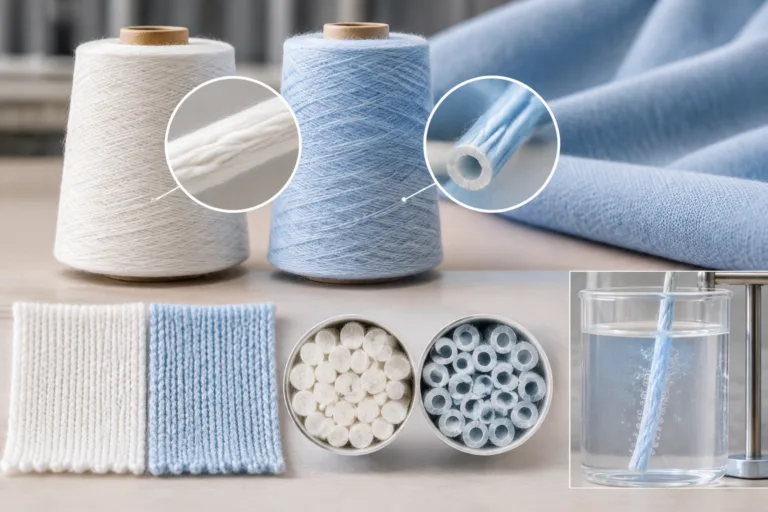
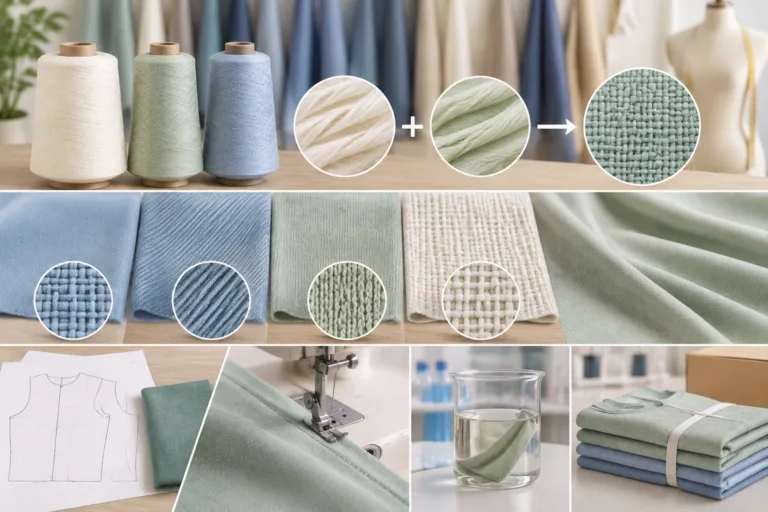
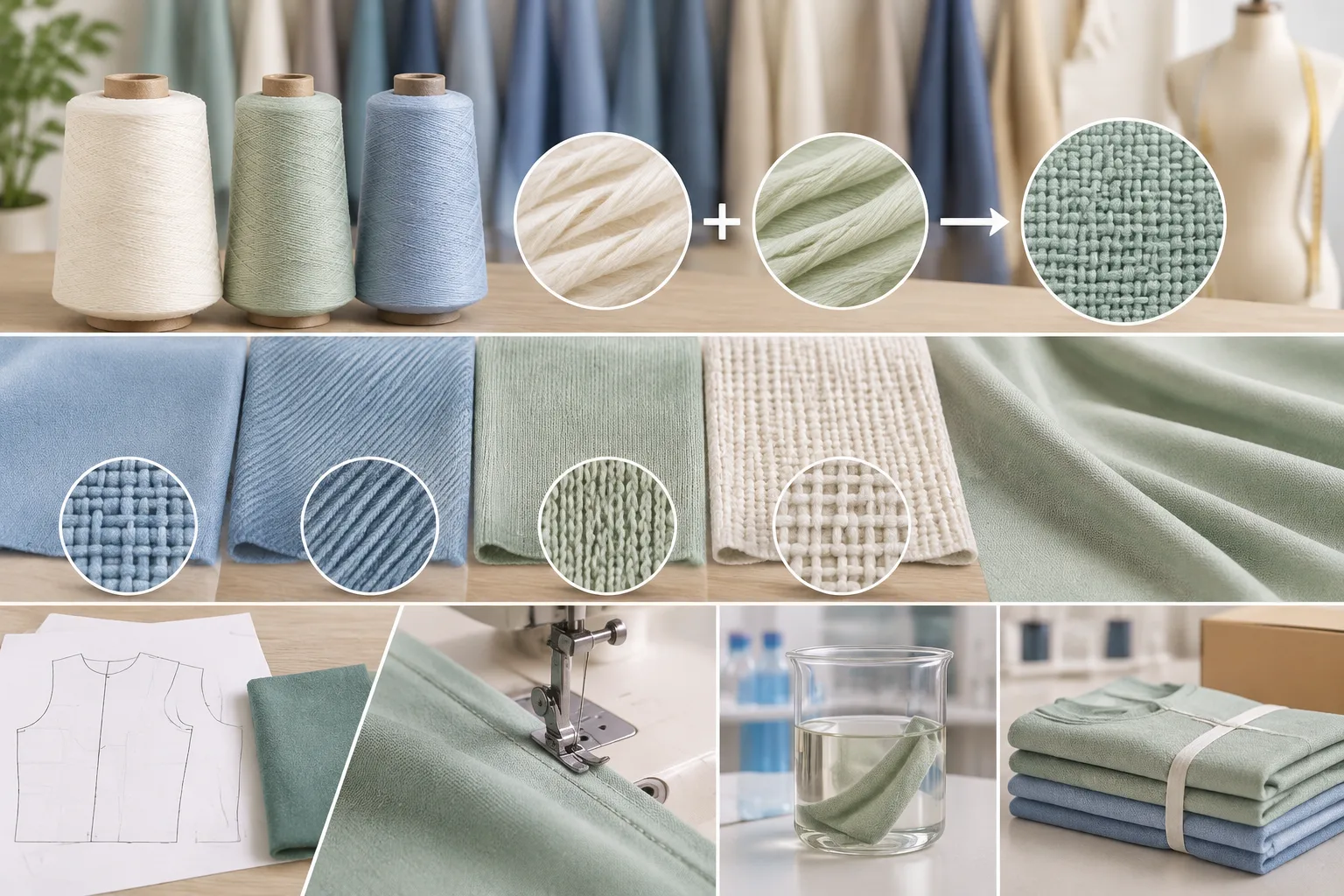
Read a lyocell blend specification in four layers. Fiber content identifies the fibers and their shares. The yarn description tells you the form in which those fibers enter the fabric, including details such as whether the yarn is single or plied. Fabric construction describes how the yarns are arranged. Finishing describes treatments applied to the material that can affect the surface or hand you evaluate.
Knitted fabrics are formed from intermeshing loops, while woven fabrics are formed by interlacing warp and weft yarns. Those broad categories give you a starting point for interpreting behavior. To assess stretch, breathability, or durability, look at the specific structure and finished fabric. For example, if coverage matters in a lightweight knit, check how open the structure becomes when held at the extension expected in wear.
When a supplier gives a yarn count, keep the original notation and ask which count system it uses. Confirm whether the stated count describes an individual yarn before plying or the resulting plied yarn. A numerical comparison is meaningful only once the system and the yarn being described are clear. If the fabric uses different yarns, ask which yarn each count refers to.
Match the construction and finish to the question you want to answer. To study a change in composition, compare fabrics with similar yarn specifications, fabric weight, structure, and finish under the same conditions. If the candidates are a knit and a woven with the same lyocell share, their different structures are part of the garment choice. Compare them as complete fabrics, and interpret any observed difference in light of the yarn, structure, and finish as well as the composition.
Specify and Evaluate a Lyocell Blend for a Project
Give each candidate a specification record tied to the sample you can inspect or the report you can read. Put the garment use and ranked requirements at the top. Record the fiber names and proportions as supplied, the yarn details, the knit or woven construction, and any stated finish. Include the care conditions you expect and record the supplier’s care guidance separately.
Mark missing fields as unknown and note which document or sample supplied each detail. If a supplier lists several finishes under one fabric name, identify the version represented by each swatch and report. That makes it easier to spot when a promising result describes a different version from the one you are considering.
Turn your highest priorities into questions that describe what to observe and when. If surface appearance matters after care, what visible change would affect the garment decision? Record the starting appearance and inspect each candidate under comparable lighting after the same relevant care conditions. Note what changed and where. For a directional fabric, keep the sample orientation consistent when comparing appearances.
Separate supplier descriptions, reported test results, and your own observations or recommendations in the record. A supplier’s description of a smooth surface can guide an initial inspection. A reported result applies to the evaluated material, the method, and the stated conditions. Check that the report identifies the sample and addresses the property you care about. A result for surface appearance leaves questions about other priorities, such as handling during sewing, to be evaluated separately.
Before choosing a candidate, identify the missing detail most likely to change the decision. That might be whether the swatch carries the intended finish, whether the construction matches the specification, or whether the care used in a report reflects expected use. If two records describe a property in different terms, first check whether they refer to the same observation. Then document which comparison you can make and what evidence would resolve the remaining question.
Limits to Keep in Mind When Comparing Blends
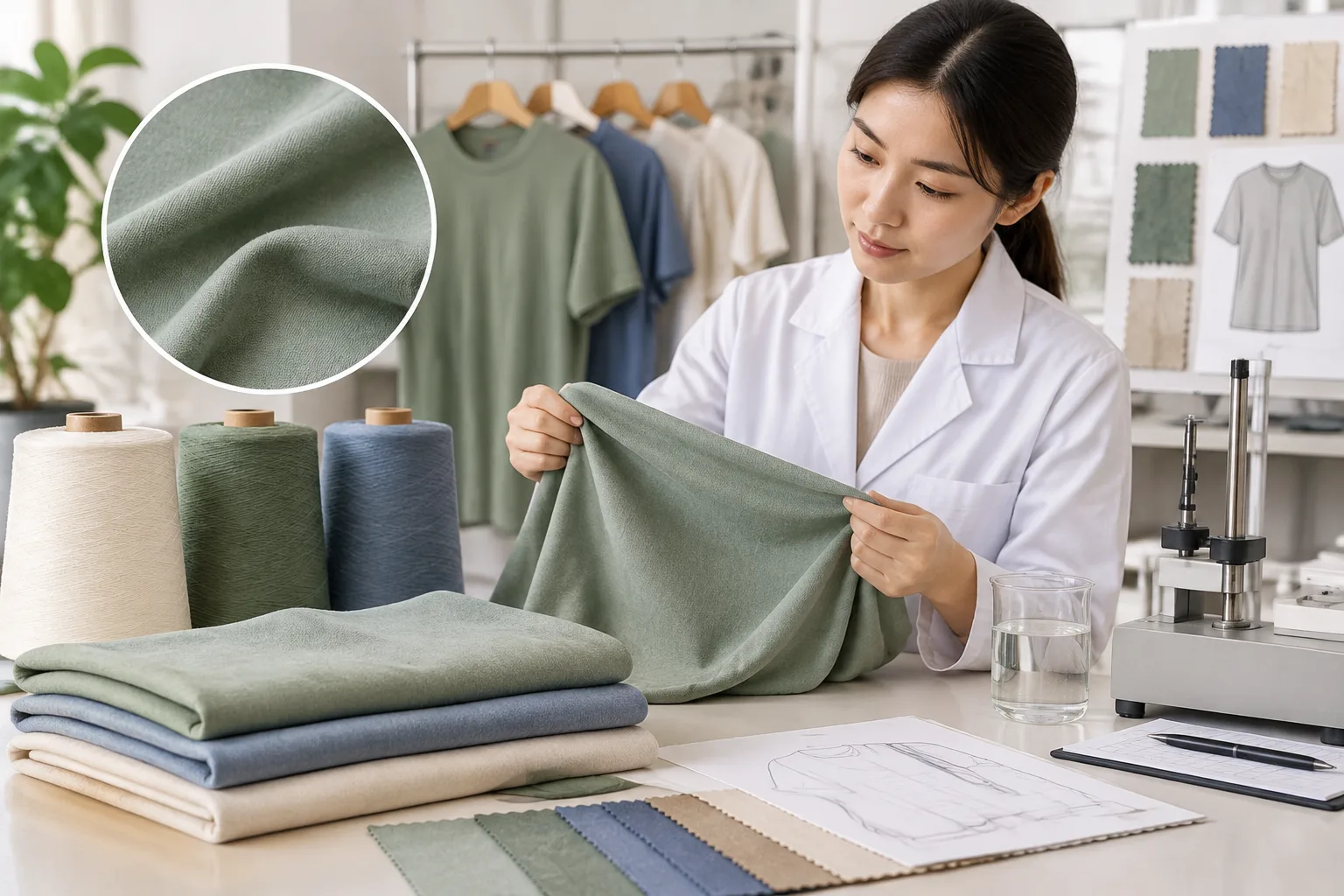
Matching fiber names and proportions establish a match in reported composition. Check the yarn, construction, and finish before treating the fabrics as equivalents. When a candidate replaces a previously selected material, carry over the original garment requirements and verify which of the earlier observations apply to the replacement sample.
Ask what a performance term refers to before using it to compare specifications. For a moisture claim, check whether it describes uptake, movement through the fabric, or drying under stated conditions. Each observation answers a different question. A general moisture claim gives you too little detail to judge which observation is relevant to the garment.
For wash durability, identify what the evaluation tracks, such as shape or surface appearance, and the care conditions it used. For pilling, check the fabric surface evaluated and the conditions under which pills were assessed. For processing compatibility, specify the operation and the material version in question. An observation from cutting leaves compatibility with a proposed pressing operation open.
Keep the generic fiber name, production process, raw-material origin, and commercial brand in separate fields when documenting a material. Lyocell is a generic fiber name. A brand identifies a commercial offering, and a raw-material description identifies an input. Ask for the generic composition if a material description gives you only a brand or an origin statement.
For a garment label, verify any applicable fiber naming and composition requirements with the official authority or legal text for the intended sales market. For a broader claim such as environmental preference, ask what attribute is being compared and what evidence covers the specific materials. The blend percentage addresses composition alone.
A Practical Next Step for Blend Selection
Write a short brief that names the intended garment use, expected care, and highest-priority properties. Put two candidate specifications side by side and compare the reported fiber content, yarn, construction, and finish. Circle the gap that could change your choice. If the decision depends on a named method or a numeric claim, check the applicable method or authoritative technical documentation. Use it to verify what was evaluated, under which conditions, and whether those conditions fit the garment brief.
Frequently Asked Questions
Does a higher lyocell percentage always make a fabric perform better?
Performance depends on the property you need and how the finished fabric behaves in the intended use. A higher lyocell share tells you how the composition changed. To judge whether that change helps, compare the relevant property in fabrics with similar specifications under matched conditions.
Which details should be compared beyond fiber percentages in a lyocell blend?
Compare yarn details, the specific knit or weave structure, fabric weight where available, and the stated finish. Include the care conditions and the state of each sample when it was assessed. Those details help you judge whether an observation applies to the material you plan to use.
Can the same lyocell blend behave differently in knit and woven fabrics?
Yes. A knit and a woven can share a fiber composition while differing in how their yarns are arranged. Compare the finished fabrics for the specific behavior that matters to the garment, such as how much give each offers in the direction where movement is needed.
How should I compare lyocell blends intended for different care conditions?
Assess each blend under its intended care conditions to judge suitability for its own use. For a direct comparison of how both fabrics respond to care, use a common condition relevant to the decision. Record washing and drying conditions together so the basis of the comparison is clear.
Are lyocell fiber names and commercial brand names interchangeable?
Lyocell identifies a generic fiber type. A brand name identifies a commercial offering and can appear alongside the generic name. If a specification lists a brand alone, ask for the generic fiber names and proportions before comparing its composition with another fabric.