Double needle lockstitch machines maintenance involves routine condition checks and care guided by the machine’s manual. The goal is to catch visible issues, remove lint using approved methods, and investigate changes in stitching before they become recurring problems. Maintenance details vary by model, so the manual and workplace procedures take precedence. Apparel Wiki is an independent educational publication; readers can find information about its editorial support through the Sponsor page.
A practical routine starts with inspection, then moves to permitted cleaning, lubrication, and checks of both needles and thread paths. A sample seam can help establish the machine’s current condition. These checks are preventive, not a substitute for diagnosis or repair: similar stitch defects can have different causes, including material behavior and construction.
Daily Checks Before Sewing
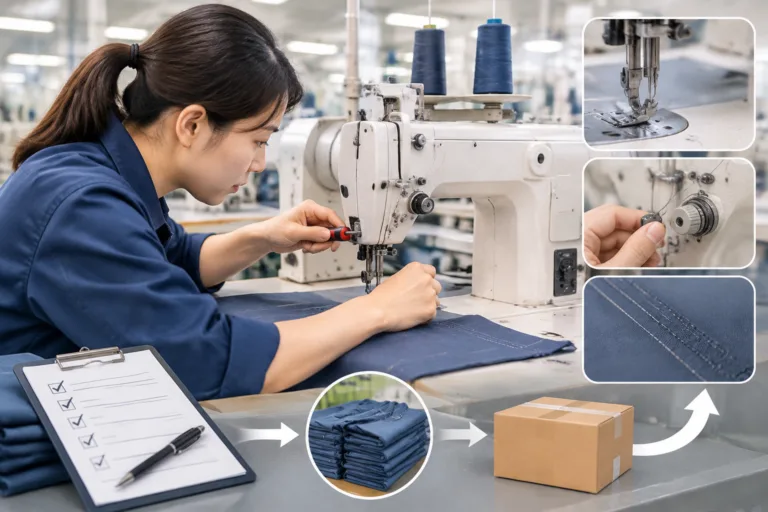
Use double needle machine daily checks to establish a baseline before production or other sewing begins. First, make sure the machine is stopped before inspecting areas near moving parts. For cleaning or maintenance, follow the model’s manual and workplace procedures for safety and power isolation. Do not assume that one shutdown or access procedure applies to every machine.
Look over accessible areas for lint, thread fragments, loose or damaged parts, oil leakage, or unusual wear. Keep guards and covers in place; a routine visual check is not a reason to dismantle them. Note anything that differs from the machine’s usual condition. Visible oil, for example, is a reason to consult the manual or qualified maintenance personnel, not to guess where oil should go.
Check that both needles appear straight, secure, and suitable for the fabric and thread in use. Confirm that the twin-needle arrangement and both threading paths match the machine’s instructions. A needle can be unsuitable even when it looks undamaged, so check compatibility against the machine and needle-system documentation rather than relying on appearance alone.
When appropriate, sew an initial sample using representative fabric and construction. Observe the stitch appearance and listen for unusual noise or vibration. Skipped stitches, breakage, or uneven results are signals to investigate, not proof of a particular machine fault. Record a notable change and consider material, threading, and construction as well as machine condition.
Cleaning and Lubrication for a Double Needle Lockstitch Machine
Routine double needle lockstitch machine cleaning focuses on lint and thread debris in areas the manual identifies as accessible. Use only the tools and method allowed for that model. Work carefully so debris is removed rather than pushed farther into the mechanism. Avoid unapproved cleaning methods and do not treat routine cleaning as permission to remove covers or dismantle parts.
Lubrication is also model-specific. A machine may use manual or automatic lubrication, and its specified lubricant, lubrication points, and procedure can differ from another model’s. Follow the applicable manual for all of these details. Do not choose a product, add oil to a guessed location, or estimate an amount based on a dry-looking area.
Excess oil, leakage, or an area that appears dry can warrant checking the manual or asking qualified maintenance personnel. Each is an observation to follow up, not enough information to determine the cause or the correct response. Avoid improvising service steps, especially where access to internal mechanisms is involved.
Keep a factual record of cleaning and lubrication: the date, task, and any observed condition or follow-up needed. Over time, those notes can help identify recurring lint buildup or leakage and give the next person useful context. They do not replace the manufacturer’s procedure, but they make care more consistent across shifts.
Needles, Threading, and Stitch Quality Checks
Inspect both needles for bending, visible damage, or wear. Replace them according to the machine and needle-system instructions; those sources determine compatibility and replacement procedure. Match needle type and size to the thread, fabric, and construction rather than assuming one choice suits every garment. The material, construction, and sewing conditions can change what pairing works.
Check that both threads follow their specified paths and are seated as directed for the machine. If rethreading is needed, use the documented procedure. Small differences in routing or seating can affect stitch formation, so compare each path with the machine’s instructions instead of relying on memory.
After a needle change, rethreading, or permitted maintenance task, sew a representative sample where appropriate. Look for skipped stitches, thread breakage, inconsistent stitch appearance, or signs of needle damage. Compare like with like: use the intended fabric and construction, and note the conditions so a later sample is meaningful.
Puckering and other defects do not point to one cause by themselves. Tension, feeding, crowded construction, and fabric behavior can all matter. Compare samples under controlled changes and investigate one factor at a time before adjusting several settings. A similar-looking defect is not, on its own, evidence that the machine needs repair.
Set a Maintenance Routine That Fits Use
A useful double needle lockstitch maintenance schedule follows task triggers and the machine’s instructions, not a universal calendar. Separate checks done before use from cleaning prompted by lint-producing work and tasks assigned at intervals in the manual. This makes the routine easier to follow while keeping model-specific requirements visible.
Frequency can change with workload, material, the amount of lint produced, the operating environment, and machine design. A machine sewing lint-producing material may need attention sooner than one used in a cleaner application. Let the manual and the machine’s observed condition guide the routine; do not assume that one interval suits every machine.
Keep a brief log with the date, machine identification, task completed, observed condition, and any follow-up needed. Record what happened rather than treating the log as proof that the machine will perform consistently. Reviewing entries can help identify recurring buildup or changes that merit attention.
Respond to Changes and Close the Maintenance Loop
Pause and assess if the machine develops unusual noise or vibration, repeated thread breakage, skipped stitches, leakage, or visible damage. Follow the applicable manual’s guidance about stopping use and service. If the cause or next action is unclear, seek qualified maintenance guidance rather than dismantling or adjusting internal parts.
Make the record useful for comparison: note the machine, material or task context, observed change, and action taken. After permitted routine care, sew a representative sample and compare it with the intended construction. A corrected seam does not establish that the process behind the defect is stable, so retain the observation and follow-up in the log.
If puckering appears, compare an unwashed sample with samples made under controlled changes to feeding or tension. Fabric behavior and construction can also contribute, so a similar-looking defect does not confirm a machine fault. Change one factor at a time where practical, and avoid treating a single sample as a diagnosis.
Persistent faults, or work involving dismantling, timing, or internal adjustment, belong with the machine-specific service instructions and appropriately qualified maintenance personnel. General care guidance cannot replace the procedure for a particular model.
Keep the Machine Ready for Consistent Work
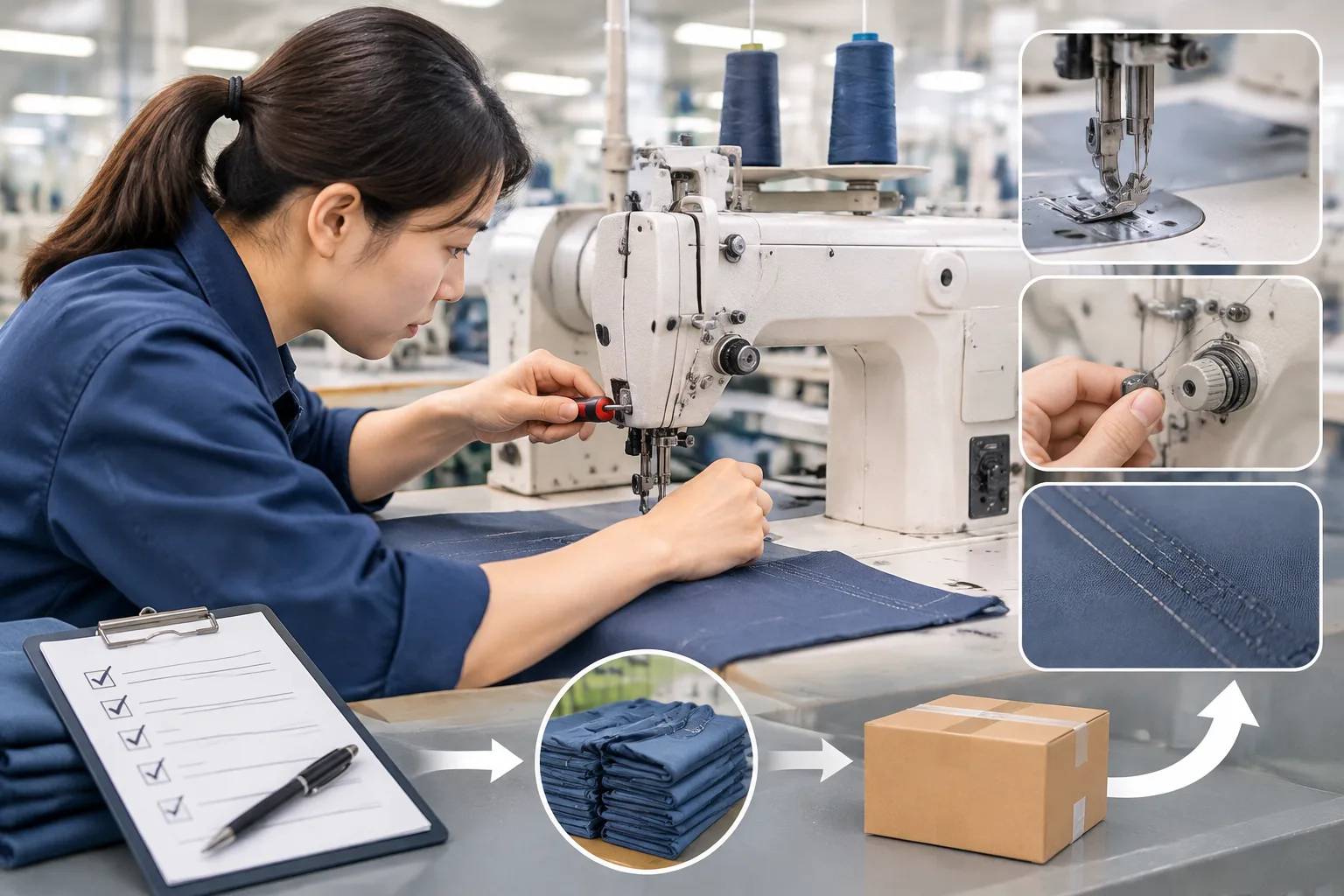
A repeatable routine brings together inspection, cleaning and lubrication as specified, needle and threading checks, and a factual record of changes. For one practical next step, compare the machine’s manual with a short maintenance log. Identify the tasks and intervals specified for that model, then use its operating conditions and observed state to keep the routine relevant.
Frequently Asked Questions
How often should a double needle lockstitch machine be cleaned?
There is no universal interval for every model and use. Follow the machine’s manual, and account for workload, lint-producing materials, operating conditions, and observed buildup. Clean only the areas and components the manual identifies for routine care.
Can the same oil be used in every double needle lockstitch machine?
No single oil can be assumed suitable for every machine. Lubricant type, lubrication points, and whether the system is manual or automatic vary by model. Use the product and procedure specified in the applicable manual; do not guess based on appearance or another machine.
When should both needles be replaced?
Inspect both needles for bending, visible damage, or wear, and follow the machine and needle-system instructions for replacement. Needle choice and replacement procedure depend on compatibility with the machine and suitability for the fabric, thread, and construction.
Does puckering mean a double needle machine needs maintenance?
Not by itself. Puckering may involve tension, feeding, construction, or fabric behavior as well as machine condition. Compare representative samples under controlled changes before deciding what needs attention; appearance alone does not identify the cause.
What should be recorded in a sewing machine maintenance log?
Record the date, machine identification, task performed, observed condition, and follow-up needed. When investigating a change, include relevant material or task context and the action taken. Keep entries factual so later observations can be compared without treating the log as proof of performance.