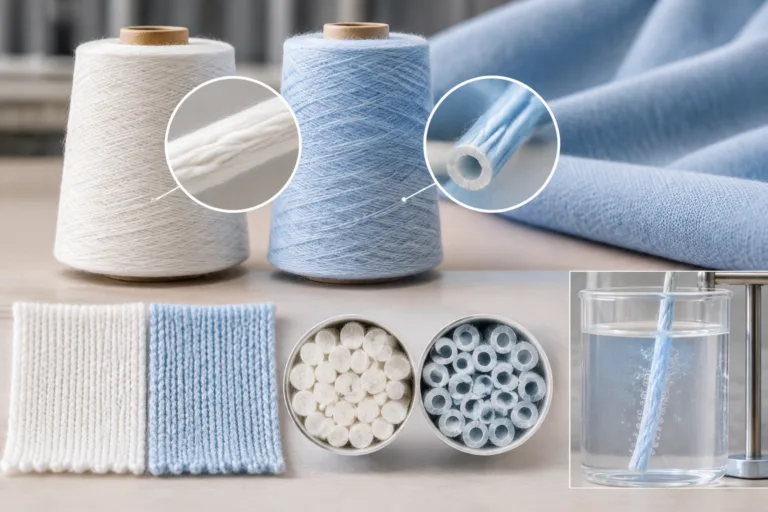
Specify hollow filament yarn count as a total yarn value with its count system, unit, and yarn configuration. In a direct system, that value describes linear density: mass per unit length. It does not describe the hollow space inside a filament. Record filament count, fiber identity, and hollow cross-section separately. For Apparel Wiki’s policy on editorial independence, see the Sponsor page.
When suppliers quote the same type of yarn in different direct units, keep both quotations as written. Put converted values in a separate comparison field, and fill it only after confirming what each count describes. That distinction matters: a correct conversion can put two numbers on the same scale without making the two yarns equivalent.
How to specify hollow filament yarn count clearly
Use labeled fields rather than asking a single string of commercial notation to carry the whole hollow filament yarn specification. A bare count is incomplete, even if the product name says “hollow.” The following fields separate what the number describes from what the supplier says about the construction:
- Total yarn count: Record the value, system, and unit. State whether the count applies to a single yarn as supplied, an individual component, or the complete combined or plied yarn.
- Filament configuration: Record the number of filaments and specify whether it applies to each component or to the entire yarn. Label any per-filament linear density separately from the total.
- Material and construction: Use the generic fiber name and describe the filament cross-section, including which filaments are hollow if the construction contains more than one type. Keep trademarks, feedstock descriptions, and process labels separate from fiber identity.
- Reporting basis: Record whether the supplier gives a nominal or measured count, along with any stated measurement or conditioning basis. For a hollow-ratio claim, ask the supplier to define the ratio and explain how it was determined.
If a quotation uses slash notation, ask the supplier to explain each entry and say what it applies to. In particular, distinguish the number of filaments from the number of plies. Even when both are known, check whether the stated linear density describes one component or the complete yarn.
Paste the original notation into the specification record without rewriting it. Put the confirmed interpretation in labeled fields and reserve a separate field for the normalized count. Mark an unresolved unit or configuration as unconfirmed instead of letting a guess become the basis for comparing quotations.
Direct and indirect yarn count systems are not interchangeable labels
First identify which quantity the count system expresses. A direct count gives mass for a specified length of yarn. Tex, dtex, and denier are direct units. Within any one of those units, a larger number means more mass per unit length. To interpret that difference as a comparison between quoted yarns, check that both values describe the same level of assembly.
Tex, dtex, and denier use different reference lengths. That is why the digits alone do not tell you which yarn has the greater linear density. A larger number in dtex than in denier does not, by itself, establish more mass per unit length. Likewise, the same digits under two different unit labels do not establish equal linear density.
An indirect count expresses length per unit mass. English cotton count, written as Ne, follows that logic. Within the same indirect system, a larger count means more length for the same mass, or less mass per unit length. The direction is the reverse of a direct count. The word “higher” does not tell you which yarn weighs more at the same length unless you know the system.
On a sourcing sheet, keep the unit visible beside every original value, especially when entries come from more than one supplier. If a quotation gives a figure without a heading or unit, check the product data rather than borrowing the unit from an adjacent row. Sorting the figures before resolving their units can produce a ranking that has no physical meaning.
Even after normalization, a comparison tells you only about the reported linear density. It does not identify filament shape, the geometry of an internal void, twist, or ply construction. Keep those attributes separate rather than using a count match to predict how a finished fabric will behave.
Converting tex, dtex, and denier without losing the original specification
Use a documented conversion basis for the stated direct units. A denier-to-tex conversion expresses the same mass per length against a different reference length. A tex-to-dtex conversion does the same. Neither operation changes the underlying linear density or changes which component or assembly the original value describes.
For example, suppose one supplier quotes denier for a component yarn and another quotes dtex for a finished plied yarn. Converting both figures into tex would give them a common unit, but one would still describe a component and the other an assembly. Ask for the equivalent assembly-level count before treating the entries as comparable.
Once the units and yarn configuration are clear, choose one comparison unit for the worksheet. Retain the supplier’s exact notation and reported precision, and record the converted value with its new unit in a separate field. Document the basis used for the conversion so another reader can determine whether a discrepancy came from the source entry or its transcription or conversion.
Set a display precision for the comparison field and document it. If the worksheet rounds values for display, keep enough detail to check close comparisons without converting a rounded display value back into the original unit. Added decimal places in a calculated value do not establish greater precision in the supplier’s count, and matching rounded values do not establish a manufacturing tolerance.
Do not apply a direct-unit shortcut to Ne. An indirect conversion must start from the verified definition and unit basis of that count, with the yarn configuration confirmed separately. Whether a source figure is nominal or measured also stays unchanged after conversion. The comparison field should make the number easier to read alongside other counts without making it look like a new measurement.
Why hollowness cannot be inferred from yarn count alone
Even when two yarns have the same linear density, their filaments can look different in cross section. Linear density describes mass per unit length. Hollowness describes the internal spaces, or voids, in a filament’s cross section. Neither the original count nor its converted value tells you how many voids are present or what shape they take.
Two yarns with the same stated total count can contain different numbers of filaments. Even if their filament numbers match, the outer cross-sectional shape, the number and arrangement of the voids, and the polymer can differ. Processing can differ as well. A count match gives you no basis for filling in those construction fields.
Keep physical diameter and apparent bulk separate from count, too. If diameter matters to the design, first specify whether you need the dimension of an individual filament or of the whole yarn. For a nonround section, ask which dimension the supplier reports and how it was measured. Do not calculate diameter from count alone or use apparent bulk as a substitute for a defined measurement.
Read hollow and multi-hollow as descriptions that need clarification, not as complete specifications. Ask for a cross-sectional description that identifies the outer shape and void geometry. If the supplier gives a hollow ratio, ask what the ratio compares, whether it describes a filament or a group of filaments, and how the value was obtained. A drawing can clarify the intended shape without verifying a reported ratio.
Neither count nor a hollow description establishes warmth, a reduction in finished fabric weight, moisture behavior, or durability. If a supplier claims a benefit, check what was evaluated: yarn, fabric, or garment. For a fabric-level decision, look for evidence that reflects the intended construction, finish, and conditions of use. A yarn-level claim does not establish how the finished garment will perform.
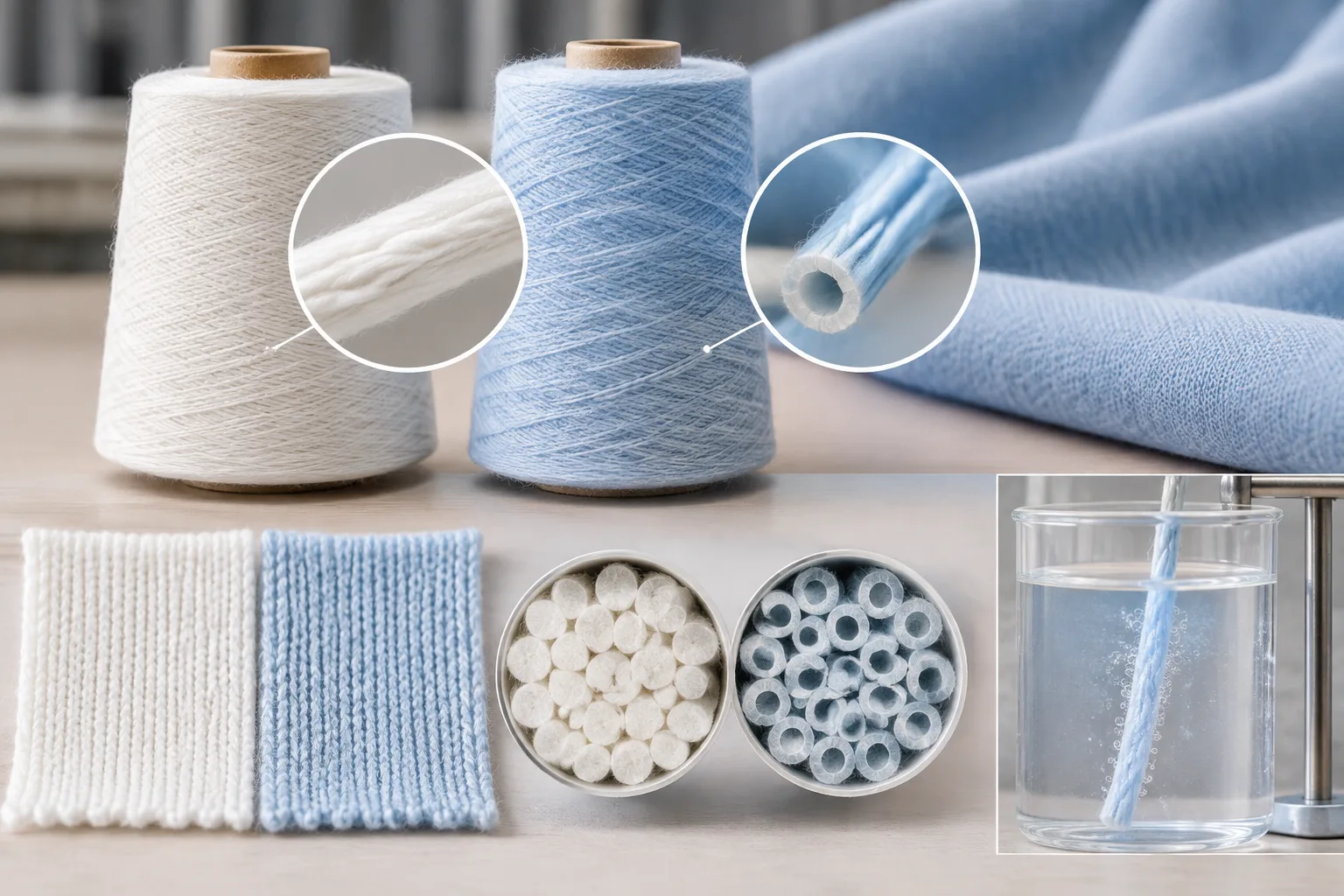
A comparison table for reviewing supplier yarn data
Keep the original supplier entry beside each clarification. Use the table to decide what can go into a common comparison field and what should stay marked as unresolved.
| Observable input | What it implies | Initial clarification or comparison action | Variables that could change the decision |
|---|---|---|---|
| Count with no unit | The number does not identify its count system. | Ask for the system and unit before converting or ranking it. | The stated unit and what the count describes. |
| One quote in denier, another in dtex | Both express linear density, but the raw numbers are not on the same scale. | Confirm both describe the same level of yarn assembly, then use a documented conversion. | Nominal versus measured values and the stated reporting basis. |
| Total count without filament number | The overall linear density is given, but the filament configuration is incomplete. | Request the filament number and record it separately from total count. | Whether the filament number applies to a component or the full yarn. |
| Slash notation without a key | The slash alone does not distinguish filament information from ply information. | Have the supplier label each element and identify the count unit. | The supplier’s notation and the yarn assembly it describes. |
| Hollow claim without geometry or method | The claim does not establish a comparable void structure or ratio. | Request a cross-sectional description and the basis for any reported ratio. | The void geometry, ratio definition, and measurement method. |
| Matching nominal counts, different constructions | A count match does not establish interchangeability. | Keep separate entries and document the construction differences. | Fabric structure, processing, and evidence from comparable samples. |
For a lightweight filament fabric, keep two same-count candidates separate if their filament configurations or void geometries differ. The choice can change with the fabric structure, the processing route, and the target hand, or how the fabric feels. Compare samples made and finished under comparable conditions, or use method-matched results relevant to the intended fabric.
Identify the count system and confirm what the number applies to. Convert comparable entries into one unit, record construction separately, and then evaluate the evidence against the fabric requirements.
Make the count comparable before making the yarn comparable
Tex, dtex, and denier can express the same linear density when converted on a documented basis. The result does not define hollowness, establish diameter, or predict garment performance. Keep the original notation so readers can trace the comparison back to the supplier’s description.
As a next step, put two supplier descriptions side by side. Mark which units and yarn configurations are confirmed, which hollow-structure terms still need definitions, and which evaluations use a comparable basis. Do not treat gaps as matches: resolve the fields that matter to the intended fabric before treating either yarn as a substitute.
Frequently Asked Questions
Does the same denier mean hollow and solid filaments have the same diameter?
No. Even if denier refers to individual filaments in both cases, an equal value describes equal mass per unit length, not equal outer dimensions. If diameter matters, request dimensions measured on a comparable basis rather than estimating them from denier.
How should a hollow filament yarn be written on a material specification?
Use labeled fields for total yarn count and unit, filament number, ply or assembly, generic fiber name, and hollow cross-sectional description. Attach the supplier’s stated reporting basis where relevant, and keep the quoted shorthand as a separate reference.
Can denier and dtex values be compared directly?
Not as quoted. First confirm that the values refer to the same level of assembly, such as total yarn in both cases. Then express them in a common unit using a documented conversion basis. Keep the original entries alongside the comparison.
What does the filament number in a yarn notation describe?
Once the field is confirmed, it tells you how many individual filaments are in the yarn or component named by the supplier. It does not state their linear density or the number of plies. Ask which part of the yarn the number describes.
Can Ne be converted with the same formula used for denier and tex?
No. Ne is an indirect count based on length per unit mass, whereas denier and tex describe mass per unit length. Converting Ne requires its verified definition and unit basis. Confirm the yarn configuration before comparing the result with a direct count.
What information should support a supplier’s hollow-ratio claim?
Ask what quantities the ratio compares, what was measured, and how the supplier obtained and reported the value. A cross-sectional image can help explain the geometry, but it does not make two ratios comparable if their definitions or measurement bases differ.