Ten-point fabric inspection in apparel production converts visible fabric defects into points under a defined grading scheme. An inspector records what they find and assigns points using the applicable scoring table. The apparel team then uses the result to make a quality decision under its agreed acceptance rule. Apparel Wiki explains its editorial independence on its Sponsor page.
Read the score alongside the method and the inspection record. Together, they show which fabric was examined, under what conditions, and how the observations were counted. The result describes the fabric examined under those conditions, so the extent of the inspection matters when drawing conclusions about a roll or lot.
What Ten-Point Fabric Inspection Means
Ten-point fabric inspection is a point-based approach to grading visible fabric defects. It turns descriptions such as “mark near the edge” into observations that inspectors can grade using the same written rules. The inspector records the characteristics called for by the method, such as the mark’s extent and location, and enters the corresponding points in the inspection record.
The inspection name alone leaves the defect categories, length bands, and point assignments unspecified. Look to the applicable method for those details and for inspection conditions such as lighting and speed. Confirm the agreed coverage and pass/fail threshold in the documents that govern the inspection. Even when two records carry the same method name, check which instructions each inspector used.
A defect count tells you how many observations the inspector counted as defects. An affected-unit count tells you how many rolls or pieces contained those defects. Several separately recorded defects can occur on one roll. The point score reports the grading result for the inspected scope, while the acceptance decision comes from applying the agreed rule to that result and any other criteria the rule specifies.
Before comparing records, match each one to the fabric specification and identify the roll or lot it represents. Check the quantity actually examined, the defect descriptions, and the units and basis used to measure defects and report the score. The roll identifier establishes which material the record refers to. The coverage entry establishes how much of that material the inspector actually viewed.
Viewing conditions and the agreed rule for handling the material complete that comparison. A report covering selected lengths supports a judgment about those lengths under the recorded conditions. Unexamined portions of a roll and other rolls in the lot fall outside the direct findings.
How the Ten-Point Fabric Inspection Apparel Method Assigns Points
Start with the method sheet for the fabric being inspected. Identify the surface to view, the direction of inspection, and the width to examine. Use the specified viewing conditions and record the setup as applicable, including lighting, viewing distance, and fabric travel speed. These details establish the conditions under which the inspector looked for defects.
- Locate the observation. Note the roll identifier, the position along the roll, and where the observation falls across the width. Use the method’s location conventions so another inspector can find the same area.
- Measure or classify it. Use the defect definition to identify which characteristic governs grading. A scheme may call for length, position, or another recorded characteristic. Follow its instructions for measurement direction and for distinguishing separate marks from a continuous defect.
- Assign and record the points. Apply the written allocation table and keep the description and measurement with the point entry. If a mark stops and reappears, consult the scheme’s recurrence rule before deciding how many entries to make.
- Summarize the result. Total the entries as the method directs and report the result on the stated basis. If the method expresses points relative to an inspected quantity, identify that quantity and its units so the reader can interpret the score.
Construction and finish provide context for what the inspector sees. If a line follows a deliberate texture in the fabric, compare it with the approved reference before classifying it. If the appearance changes with the viewing direction, check the prescribed setup before measuring the visible extent. Fiber content, yarn, construction, and finish describe different aspects of the fabric. A fiber label alone gives the inspector little basis for judging whether a surface feature belongs in the fabric.
A usable method sheet supplies the point-allocation table, definitions for the defects it covers, treatment of repeated or continuous observations, and the reporting basis. Consult that sheet for the applicable point bands and any stated maximums. The resulting score summarizes observations graded under that scheme. Questions about how the fabric will behave in a garment call for separate evidence.

Preparing a Consistent Fabric Inspection
Use the same setup instructions and record fields for everyone assigned to the inspection. Agree on the following before the first roll so inspectors can resolve ambiguous observations consistently and record what they actually examined.
- Identify the material and scope. Record the fabric specification, the roll or lot identifiers, the inspection date, and the governing method or quality agreement. Define which rolls and portions are in scope. Set aside a field for the actual quantity inspected, with its unit, alongside the planned coverage.
- Agree on defect references. Use shared photographs or approved fabric examples. Confirm which categories the scheme covers before setting instructions for edge defects, recurring marks, shading, holes, slubs, stains, bowing, or skew. Include borderline examples when appearance or intended garment use affects the judgment. Use the applicable project requirements for safety or contractual questions.
- Prepare the measuring and recording tools. Check that inspectors can measure in the units and direction the method specifies and capture enough location detail to find an observation again. Provide separate fields for defect descriptions, assigned points, and affected rolls or pieces. This way, multiple entries on one roll still correspond to one affected roll.
- Assign a reviewer. Decide who resolves an unclear classification and who has authority to decide what happens to the fabric. Give inspectors a place to record a disputed observation and its location so the reviewer can consult the same material, method, and defect reference.
If the method, fabric identity, inspected scope, or acceptance rule is unclear, pause the comparison until the missing definition is resolved. For example, when a report lists a roll number without the quantity examined, use the coverage record to establish how much fabric the score represents before comparing it with another roll’s result.
Interpreting Results and Making a Fabric Quality Decision
Read the defect entries alongside the point score before deciding what to do with a roll. An apparently low score has limited value if the coverage, point scheme, defect definitions, or acceptance criterion is missing. If the decision concerns which rolls to set aside, use the affected-unit count and roll identifiers. Several defects can belong to a single roll, so the defect count cannot tell you how many rolls to hold.
| Observable input | Scoring or record implication | Initial decision | What could change the decision |
|---|---|---|---|
| Isolated, documented defect | The entry ties assigned points to a traceable location. | Accept if the record meets the agreed rule. | A separate restriction on that defect type or location. |
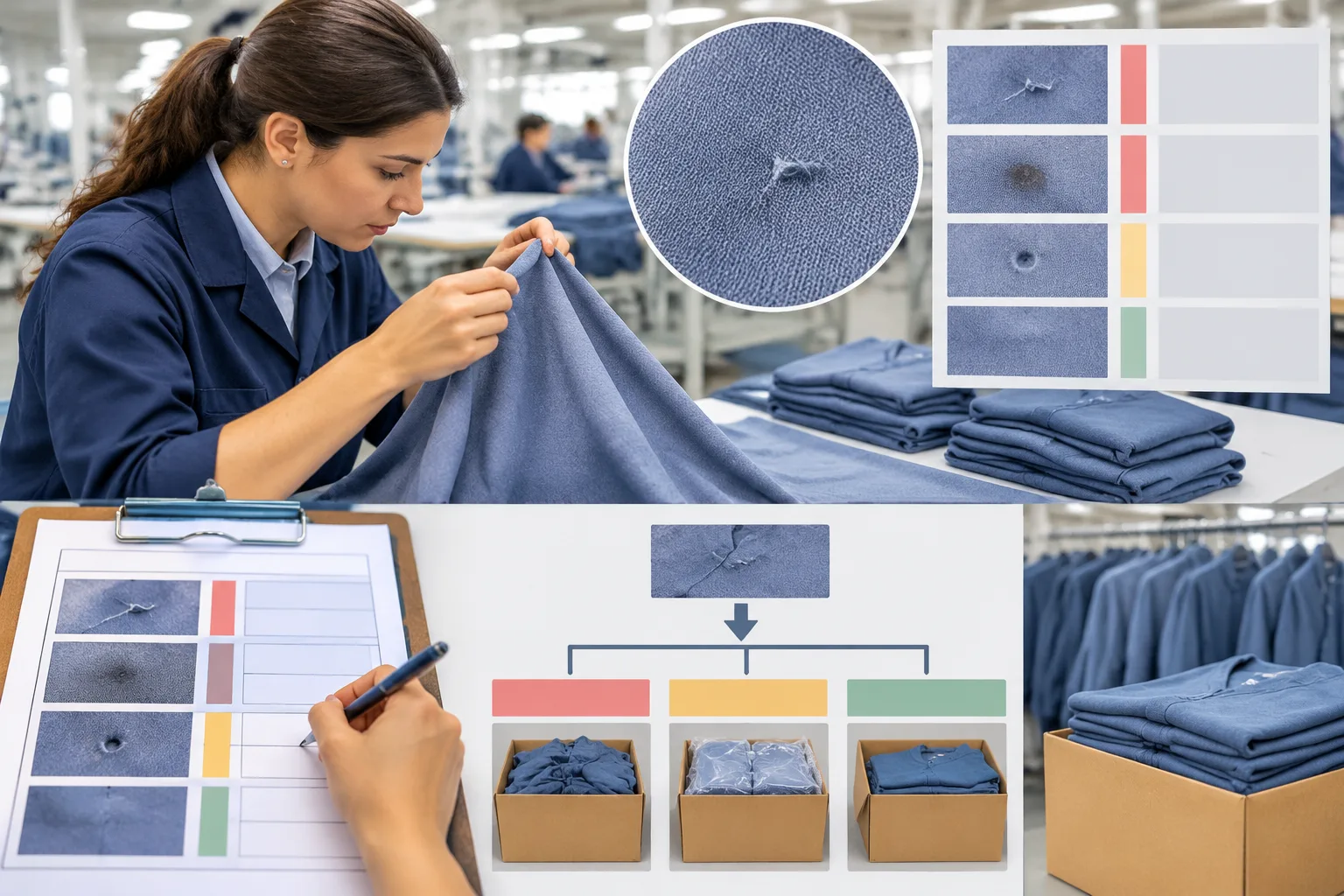
| Repeated or continuous defect | The recurrence or extent may affect how points are assigned. | Segregate affected material while investigating its extent. | The scheme’s recurrence rule and the locations affected. |
| Unclear defect classification | The assigned points depend on an unresolved definition. | Hold for review. | An approved reference sample or a reviewer’s ruling. |
| Incomplete roll coverage | The score describes the examined portion. | Limit the decision to the documented scope. | Whether the agreement requires more coverage before release. |
| Score without its method or reporting basis | The total lacks the context needed for comparison. | Request the missing details before deciding. | Confirmation of the scheme, units, and quantity the score represents. |
For a lightweight knit with repeated visual variation, check how the approved definition classifies the variation and where it appears in the inspected length. Then consider where those sections would fall in the garment. Variation that would cross a prominent front panel may warrant holding the roll while the team checks the customer’s agreed tolerance and whether the inspected coverage establishes the extent.
If the result fails the agreed rule, the responsible reviewer may reject the material or document another disposition the agreement permits. Where acceptance sampling is used separately, it supports an acceptance decision for a defined batch under a sampling plan. Fabric grading supplies evidence about the material examined under the recorded inspection conditions.
Limitations, Follow-Up, and Corrective Action
An unexpected score can reflect a difference in the material, the inspection, or the recording. Compare the underlying entries before attributing the change to production. Check whether inspectors examined the same portion under comparable viewing conditions, applied the same defect definitions, and handled continuous marks consistently. A discrepancy can also come from mixing defect counts with affected-unit counts in the summary.
- Control the affected material. Identify the roll or lot and record what was found, where it appeared, and which material remains on hold. Keep the original inspection record available so the reviewer can trace the decision.
- Investigate the discrepancy. Have the designated reviewer check the governing method against the original observation and recording. A classification or transcription error calls for a documented record correction. A confirmed material issue calls for investigation of the relevant material or production process.
- Verify the correction. If reinspection is warranted, specify what it needs to resolve, such as whether a disputed mark meets the approved definition. Record the scope and keep the new result with the original. Repeating the inspection until a favorable result appears leaves the cause unresolved.
- Record the disposition. Have the authorized reviewer document the decision under the governing agreement. If the reviewer permits conditional use, record which material can be used, where it can be placed, and what restrictions apply.
A visual score describes observations within the examined scope and stated viewing conditions. The recorded locations and patterns can guide a root-cause investigation, which needs separate evidence. Garment-stage questions also need their own checks. If the concern is shade matching between cut panels, dimensional behavior, or construction performance, identify the evaluation that addresses the concern before deciding whether the material is suitable.
Key Takeaways for Using Ten-Point Inspection Results
Use a ten-point score to support a fabric decision once you can identify the point scheme, what was inspected, how defects were defined and counted, and which acceptance rule applies. Keep the decision tied to that inspected scope and the agreed requirement.
Set two inspection records beside the applicable method sheet. Compare the method, scope, reporting units, and acceptance rule field by field before comparing scores. Document any assumptions that affect a decision to accept, hold, rework, or reject material. For an unresolved performance or compliance question, check the applicable evaluation or requirement with the responsible technical or contractual source.
Frequently Asked Questions
Is ten-point fabric inspection the same as AQL inspection?
Ten-point fabric inspection grades observed fabric defects under a point scheme. An AQL-based acceptance sampling plan uses results from a sample to decide whether to accept a defined batch under that plan. If a project uses both, consult each procedure for the decision it governs.
What information must appear on a ten-point fabric inspection report?
Follow the governing method and quality agreement for required fields. A practical report identifies the fabric and rolls examined, the inspection date and conditions, the quantity covered, and the method used. It also records defect locations and descriptions, assigned points, the reporting basis, and any disposition or pending review.
Can a low fabric inspection score guarantee defect-free garment production?
A low score describes the observations recorded for the fabric examined under the stated conditions. Unexamined material can still contain defects, and later operations can introduce new ones. Use the fabric result alongside the checks relevant to cutting, sewing, and the finished garment.
How should repeated or continuous fabric defects be recorded?
Record where the observation begins and ends or where separate occurrences appear, using the location and measurement conventions in the method. Apply its rule for grouping or scoring those occurrences. If the method leaves the classification unclear, preserve the location details and refer the entry for review.
What should a team do when two inspectors assign different points to the same defect?
Have the reviewer locate the same defect and compare both entries against the applicable point table and approved reference. Check whether the inspectors used the same measurement direction and classified the observation the same way. Keep both original entries and document the ruling and its basis.