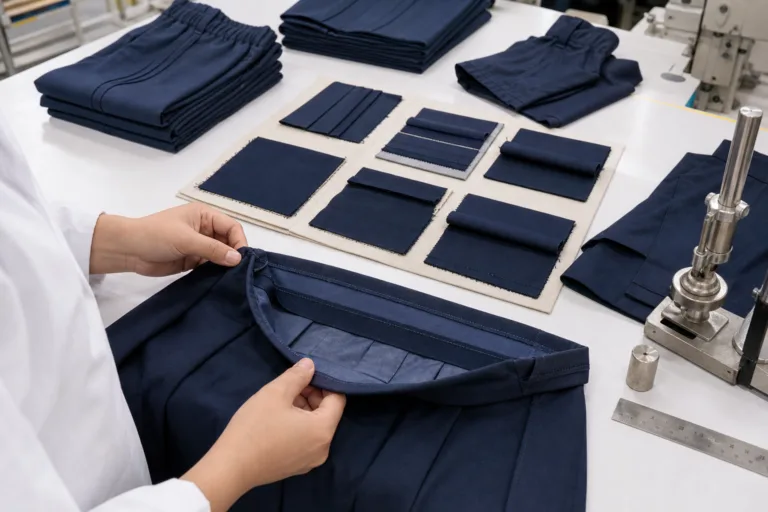
School uniforms growth hems are planned garment-length allowances or adjustable hem constructions that can be released as a child grows. They may extend useful wear when length is the main fit problem, but they do not replace correct sizing, proportion checks, or garment replacement when the waist, rise, width, sleeves, or overall balance no longer fit. Apparel Wiki is an independent apparel knowledge resource; its editorial work is supported through arrangements described on the Sponsor page.
A growth hem is not simply any extra fabric hidden inside a garment. A conventional hem allowance provides material for finishing and possible alteration, while a deliberately releasable hem is planned so that additional length can be opened with manageable alteration work. An adjustable feature may use a visible turn-up, concealed fastening, temporary stitching, or another construction that controls the finished length. The useful result depends on the pattern, garment type, fabric, construction, and intended wearer.
What Are Growth Hems in School Uniforms?
In practical terms, a growth hem is a garment-construction strategy for accommodating a change in a child’s height or leg and sleeve length. The pattern includes additional length, and the finished garment stores that length in a fold, allowance, or adjustable section. When the original length becomes too short, a parent, tailor, alteration service, or other approved person may release or reposition the hem.
The distinction between an ordinary hem allowance and a growth hem matters during development. An ordinary allowance may be too narrow, inaccessible, interrupted by a lining, or poorly positioned for later release. A growth hem must be considered from the pattern stage through sewing, pressing, labeling, care, and alteration. It should remain reasonably clean and stable in both its original state and its adjusted state.
Several criteria shape whether the feature is appropriate: how much usable adjustment is available, whether the changed length still looks balanced, whether the hem remains comfortable during movement, how well the construction withstands care, how difficult the alteration is, and whether any fastening or accessible component introduces a safety concern. These are design questions, not universal specifications. A feature suitable for a skirt may be unsuitable for trousers, a dress, a jacket, or a sleeve.
Growth hems can help a uniform remain usable when length alone is changing. They cannot correct a garment that has become too tight at the waist, short in the rise, narrow through the body, restrictive at the sleeve, or disproportionate after adjustment. The decision should therefore begin with the actual fit change rather than the assumption that every uniform should be designed to grow with children.
Why Growth Hems Matter in School Uniform Design
The potential benefit is straightforward: a garment may continue to serve its intended purpose when the child needs more length but the rest of the garment still fits. This can reduce the need for an immediate replacement in some cases, although the result depends on the design and the wearer. It should not be presented as a guaranteed saving, a fixed increase in wear, or a universal sustainability outcome without evidence from the specific product and use context.
Appearance is another important consideration. Schools may expect a consistent hemline, a particular silhouette, or coordination among garments worn together. A released hem that creates a visible fold, uneven side seams, a changed pleat position, or a mismatched lining may satisfy the length requirement while failing the appearance requirement. Product teams should consider the school’s dress-code expectations and the practical ability of families to obtain an acceptable alteration.
Laundering and repairability also influence the decision. A construction that looks clean before washing may develop pressing marks, distortion, stitch impressions, or uneven release after care. Families may have different access to sewing equipment or professional alterations, so an adjustment that is technically possible may still be impractical. Schools, pattern makers, manufacturers, and quality teams should consider who will perform the change and how the garment will be maintained.
Children do not grow in a uniform pattern. A child may need more length in a skirt or trouser leg while still fitting the waist, or may outgrow the waist and rise before additional hem length is useful. Movement demands also vary: a seated wearer, an active wearer, and a child layering garments may experience different comfort and balance issues. The task-first approach is to identify the garment, posture, movement, likely fit change, and alteration context before selecting the feature.
How to Design a Releasable Hem for a School Uniform
Begin with the base size, intended finished length, direction of adjustment, and point at which the hem is expected to be released. The hem allowance, fold sequence, stitch placement, seam finish, and access to the releasable section should be planned as one system. A large allowance alone does not create a reliable growth hem if the fold is difficult to open, the fabric frays, or the changed length disrupts the garment’s balance.
The garment category determines the construction problem. Skirts and trousers may need checks around pleats, vents, side seams, pockets, and the relationship between hem and footwear. Dresses and pinafores may involve linings, facings, or decorative borders. Jackets and sleeve hems can affect cuffs, closures, sleeve balance, and layering. Each design should be examined in its original and released states rather than judged only from a flat pattern or isolated hem sample.
Development checks should use the final or representative fabric, thread, closures, labels, and laundering process. Releasing the hem may expose an unfinished edge, reveal a shade difference, leave stitch marks, or alter the pressing direction. It may also change the visual position of stripes, contrast fabric, pleats, or decorative details. The hem is therefore part of the complete garment system, not an independent component that can be approved separately from fit and appearance.
Key Trade-Offs: Fit, Appearance, Comfort, and Durability
No single construction is best for every school uniform. A visible turn-up may be easy to understand and alter but may change the garment’s appearance or add bulk. A concealed released allowance can preserve a cleaner exterior but may require more careful access and pressing. Temporary stitching may simplify the original finish while leaving stitch marks or requiring skilled removal. Fastening-based adjustments can be convenient, but their components require specific safety and durability review.
| Construction choice | Questions to evaluate |
|---|---|
| Visible turn-up | Does the fold meet appearance expectations, remain secure, and avoid uncomfortable bulk? |
| Concealed released allowance | Can the section be accessed and opened cleanly without damaging the fabric or lining? |
| Temporary stitched hem | Will removal leave marks, fraying, or an uneven edge after the garment is pressed? |
| Adjustable fastening | Is the component secure, comfortable, understandable to the user, and appropriate for children’s clothing? |
Material behavior must be evaluated rather than assumed. Fraying, crease memory, shade variation, pressing marks, and uneven release can affect the finished result. The hem edge should not rub or snag during movement, and added bulk should not interfere with shoes, layering, or sitting. Lining, pleats, vents, contrast materials, and decorative details can make later alteration more complex even when the basic hem allowance appears sufficient.
Use the garment type, expected adjustment, user access to alterations, appearance requirements, and maintenance conditions as the decision framework. These criteria are editorial guidance, not test results or a ranking of construction methods. A growth hem is successful only when the complete garment remains appropriately fitted, comfortable, presentable, maintainable, and safe in the states in which it is intended to be worn.
How to Evaluate a School-Uniform Growth Hem
A useful evaluation begins before the first sample is reviewed. Define the intended wearer, size range, garment styles, original hem position, released position, laundering conditions, and acceptance criteria. The criteria should cover more than appearance. Fit, movement, comfort, symmetry, care performance, alteration effort, and safety may all matter, depending on the garment and the market.
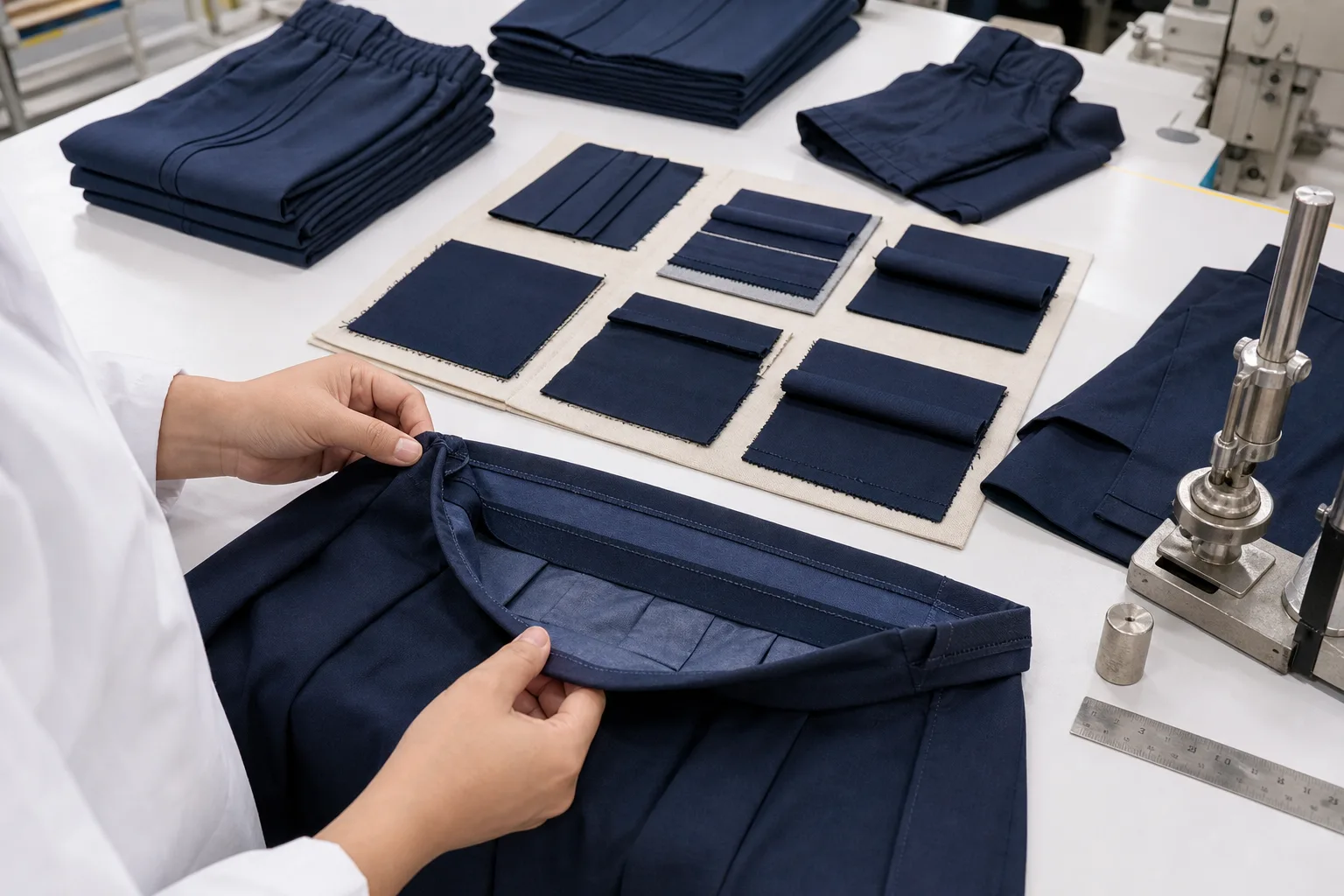
Use representative final garments made with the intended fabric, lining, thread, labels, fasteners, and pressing method. Inspect the garment at its original length and after the hem is released. Check visual balance, side-to-side symmetry, ease of movement, hem interaction with shoes, and compatibility with other uniform pieces. A skirt, trouser, dress, pinafore, jacket, or sleeve may each reveal different problems when its length changes.
Care testing should reflect the instructions expected for the finished garment. After representative laundering, look for distortion, shrinkage, fraying, shade differences, pressing marks, and changes in the released construction. Where the design is intended to be opened or altered more than once, review the relevant operation again. A hem that works once may be difficult to release cleanly after wear or care.
Wearer feedback can add practical evidence about comfort, movement, appearance, and whether the adjustment method is understandable. When children participate, the fitting and feedback process should use an appropriate protocol and safeguards. Feedback helps explain how a garment works in use; it does not by itself establish regulatory compliance or replace required laboratory and legal review.
Record defects by severity and identify whether the cause is in the pattern, material, construction, care process, instructions, or alteration method. Review the complete garment rather than treating fabric, thread, or fasteners as isolated proof of performance. Confirm corrections with a revised sample in the relevant sizes and adjustment states.
Common Problems and Practical Improvements
Uneven release is one of the clearest signs that the hem was not balanced as part of the whole pattern. It may result from inconsistent stitching, insufficient marking, uneven pressing, or a construction that does not guide the alteration clearly. Recheck the pattern balance, stitch placement, fold sequence, and work instructions before adding more allowance.
Visible stitch marks, fraying, or exposed unfinished fabric can make an adjusted uniform look worn even when the new length is technically correct. The appropriate response depends on the material and construction. Possible development checks include seam finishing, thread selection, stitch removal, edge treatment, and pressing. These should be confirmed on the actual garment rather than assumed from a component sample.
Excess bulk can affect comfort, sitting, movement, layering, or the way the hem falls over footwear. Linings, pleats, vents, facings, contrast fabrics, and decorative details may intensify the problem. Reconsider the fold sequence and the relationship between the outer fabric and related components. A cleaner result may require a pattern revision or a different alteration method, not simply a deeper hem.
Distortion after release may show that the original hem was supporting the garment’s balance, side seams, pleats, or vents. Check the garment in both states and from normal wearing positions. If the waist, rise, width, sleeve shape, or overall proportion has changed substantially, a growth hem may no longer be the right solution. Replacement or a skilled alteration may be more appropriate.
Instructions also affect the result. Care labels, retailer guidance, or school-facing information should make clear whether the hem is intended to be released, who should perform the work, and what limitations apply. Factory quality corrections should be separated from alterations that require an experienced tailor or an approved repair process. No instruction can compensate for a construction that is unsuitable for the intended adjustment.
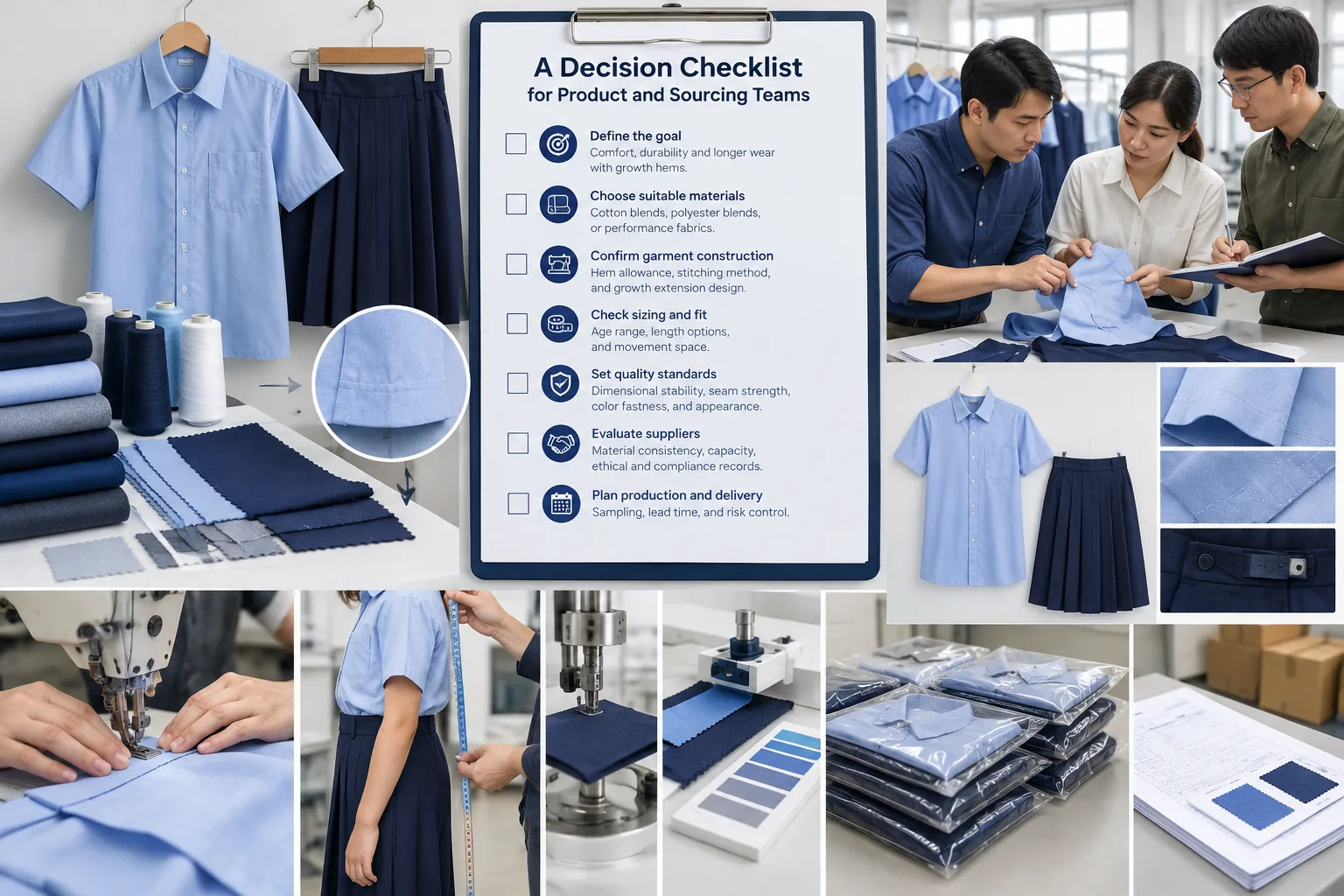
A Decision Checklist for Product and Sourcing Teams
Start by confirming the actual user need. Identify the garment, the expected fit change, the person who will perform the alteration, and the way the garment will be cleaned and maintained. A growth hem is most relevant when length is the principal issue and the rest of the garment can remain suitably proportioned.
- Review the pattern for a clean release, appropriate balance, accessible construction, and compatibility with pleats, vents, linings, and other uniform details.
- Request a sample made with final materials and inspect both the original and adjusted states.
- Check fit, movement, comfort, appearance, symmetry, and interaction with shoes or related uniform pieces.
- Define evidence requirements separately for appearance, fit, durability, care performance, and regulatory safety.
- Review the garment after representative care and any intended release or alteration operation.
- Document unresolved limitations, market-specific requirements, user instructions, and the point at which replacement is preferable to alteration.
This checklist is a development framework, not a universal specification. Teams can use relevant Apparel Manufacturing Tools alongside their own pattern, fitting, care, and quality records. Apparel Wiki is an independent educational publication, not a manufacturer, factory, laboratory, certifier, or service provider. The final decision should be based on the actual garment, wearer, market, materials, and maintenance conditions.
For the next step, compare one representative garment in its original and released states, then document what changed in fit, appearance, comfort, and construction. This simple comparison helps separate a useful growth feature from an adjustment that only appears practical on paper.
Can a growth hem make a school uniform last longer?
It may extend useful wear when length is the main fit issue and the rest of the garment remains appropriate. It cannot prevent replacement when the waist, rise, width, sleeve shape, or overall proportion no longer fits.
What is the difference between a growth hem and a regular hem allowance?
A regular hem allowance is construction material used to finish the edge. A growth hem is deliberately planned so additional length can be released or adjusted while preserving an acceptable finished garment.
Which school-uniform garments are most suitable for growth hems?
Suitability depends on the pattern, fabric, details, and expected fit change. Skirts, trousers, dresses, pinafores, jackets, and sleeves may all require different solutions and checks.
How much extra length should a school-uniform growth hem provide?
There is no universal amount. The useful adjustment depends on the garment category, pattern proportions, construction, fabric, wearer, appearance requirements, and the point at which the garment should be replaced.
Can every school uniform be altered with a growth hem?
No. Pleats, vents, linings, decorative details, narrow allowances, unstable materials, or broader changes in body proportions may make a growth hem unsuitable or impractical.
How should a growth hem be tested after laundering?
Use the care process intended for the finished garment, then inspect both original and released states for fit, balance, symmetry, fraying, distortion, pressing marks, and construction damage. Use applicable market or buyer requirements for formal testing.