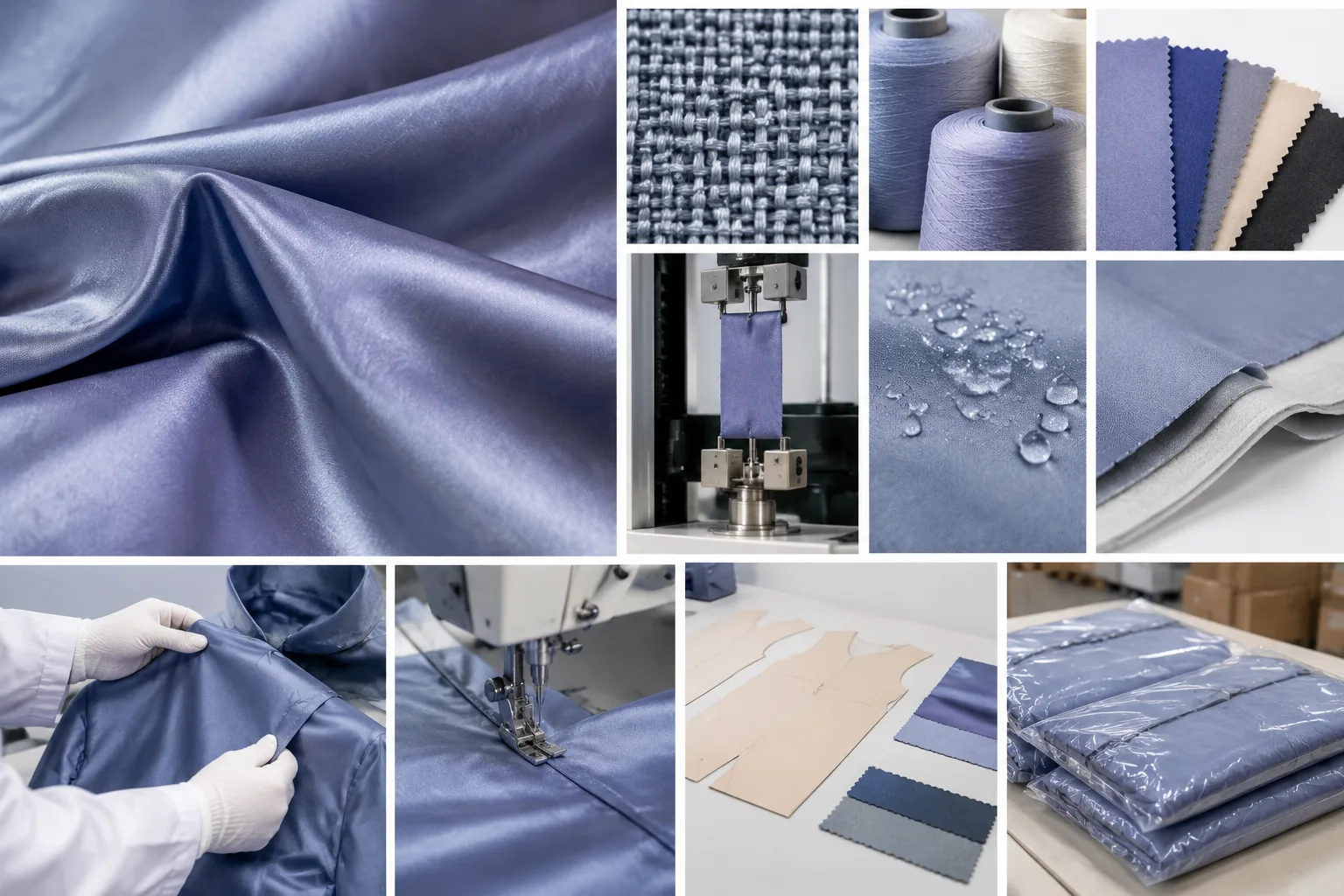
Taffeta fabric cost is driven by the exact fabric specification and the terms of purchase—not by the word “taffeta” alone. Fiber content, yarn, construction, weight, usable width, color, finish, quality requirements, order quantity, and delivery arrangements can all affect a quote. Two fabrics sold as taffeta are not necessarily equivalent, so a meaningful comparison starts with matching the details.
Apparel Wiki is an independent educational publication, not a fabric seller or sourcing agent. Our Sponsor page explains that sponsorship does not give sponsors control over editorial content. Here, the goal is to help buyers understand cost factors without suggesting a universal market price.
What Drives the Cost of Taffeta Fabric?
Taffeta is a fabric name used for materials that can differ in fiber composition, yarn characteristics, construction, and finish. The name alone does not tell a buyer exactly what is being quoted. A fabric made to one specification may require different materials or processing from another, even when both are described as taffeta.
It also helps to separate three costs. The fabric price is the quoted amount for the material on a stated unit and basis. The delivered fabric cost may also include items such as packing, transport, insurance, duties, taxes, or brokerage, depending on the purchase terms and route. The finished-garment material cost depends on how much fabric the product requires, including the effects of usable width, cutting yield, and any material loss.
For business planning, treat a quote as the price of a defined offer—not a general price for taffeta. Check that the fabric details and commercial terms match the intended product before deciding whether one offer is less expensive.
Start With the Exact Taffeta Specification
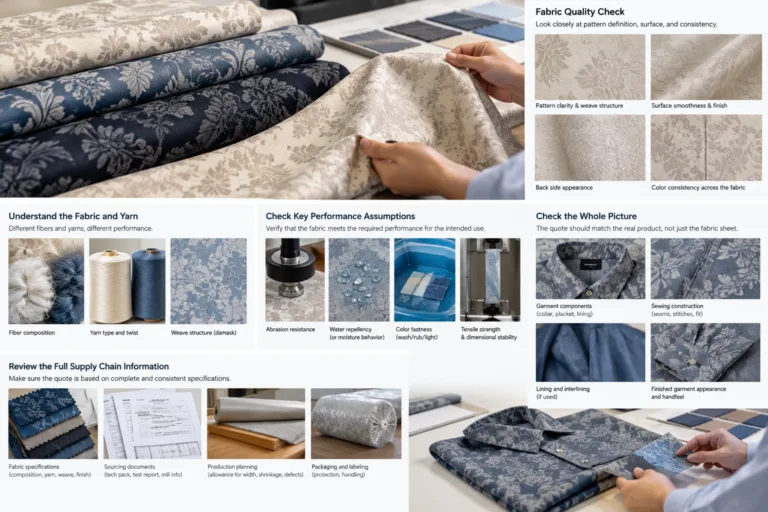
A useful specification records the fabric’s fiber content and blend, yarn details where known, woven construction, target mass per unit area, finished usable width, color or print, and finish. Request the same fields from each supplier. A trade name or construction description does not, by itself, establish the fiber content or guarantee that two offers describe the same material.
GSM means grams per square meter: it measures mass per unit area. It does not independently establish thickness, quality, or price. A higher GSM figure may describe more mass per area, but it is not enough to predict whether a fabric will suit a garment or cost more. Check the stated value against the relevant product documentation, and clarify the condition or stage at which it applies if that matters to your comparison.
Width also needs a precise definition. Confirm whether the figure is the total width, including selvages, or the usable cuttable width. The latter is more useful for estimating how much fabric can go into a garment. Ask suppliers to identify finished width and any assumptions behind it, rather than comparing figures that may measure different things.
For each offer, request a specification sheet or other product documentation covering composition, GSM, width, color, and finish. If a field is unknown or described only in broad terms, mark it as unconfirmed rather than assuming that the fabric matches another quote.
How Fiber, Yarn, and Construction Affect Taffeta Cost
Fiber selection and blend composition can affect the material inputs and the processing needed to make the fabric. They can also change the hand, appearance, care expectations, and suitability for a particular product. These effects are specification- and supplier-dependent; there is no reliable universal ranking that makes one fiber choice the least expensive in every market or application.
Yarn details matter too. Fineness, whether yarn is filament or spun, twist, and the dyeing route where relevant may influence material and processing requirements. A quote that identifies only “taffeta” leaves these distinctions unclear. Where appearance, handling, or sewing behavior matters, ask for enough detail and a sample to evaluate the actual offer.
Construction choices—including density, target weight, and width—are also quote variables, not automatic quality rankings. Different end uses may prioritize different attributes: a lining, an occasionwear garment, decorative volume, and a coated application may not need the same balance of appearance, handling, and care characteristics. The lowest material quote may therefore be a poor fit if it does not meet the product’s requirements.
Compare the documented fabric and its suitability for the intended use, rather than relying on a fiber label or trade name alone. Product-specific claims about composition or care should be checked against the supplier’s documentation for the fabric being offered.
Which Finishes and Quality Requirements Add Cost?
Finishing can change the quoted cost, depending on what is requested and what the initial offer includes. Dyeing, printing, coating, calendaring, water-repellent or flame-resistance treatments, bonding, and other finishes may involve additional processing. These are possible cost additions, not features included in every taffeta or guaranteed to have the same commercial effect across suppliers.
Clarify whether a quote covers the required color and finish, or only a base fabric. Shade approval, color continuity, hand feel, defect tolerance, inspection expectations, and roll-length requirements can also affect the offer. Written definitions help prevent a low headline price from masking different assumptions about appearance or acceptable defects.
For coated or bonded fabric, evaluate the finished material rather than relying only on a description of the treatment. When relevant to the product, sample review can include layer adhesion, behavior after flexing or laundering, and changes around seams. A supplier’s statement that a finish is present is not, by itself, proof of a particular performance level.
Any test result should be interpreted in relation to the sample and conditions it covers; it does not automatically establish how every production lot or finished garment will perform. Identify destination-market and product requirements before ordering, since applicable requirements depend on the intended use and market. For product-specific finish or performance claims, check relevant documentation and consider independent testing when the project’s risk warrants it.
How Order Quantity and Buying Terms Change the Quote
Even when two offers cover the same taffeta specification, the quoted unit price may differ because the buying conditions are not the same. A supplier may quote available stock or a fabric made to order; color development, sampling, production allocation, order consolidation, and payment terms may also affect the offer. Minimum order conditions are supplier- and product-specific, so confirm them directly rather than assuming a standard taffeta fabric MOQ.
Check the quote unit before comparing prices. Fabric may be quoted by meter, yard, kilogram, or roll, and those bases are not interchangeable without enough information about length, usable width, and, where relevant, weight. Record the currency, quantity, quote date, and validity period as well. Availability and commercial terms can change, so a past quote is not evidence of a current offer.
Separate the fabric price from the costs of receiving and using the goods. Depending on the purchase, sampling, testing, packing, documentation, domestic transport, international freight, insurance, duties, taxes, and brokerage may be quoted separately or handled under different arrangements. Confirm the delivery point and what the price includes. Import charges depend on the route and destination; check applicable requirements with the relevant authority or a qualified customs professional.
How to Compare Taffeta Quotes on a Like-for-Like Basis
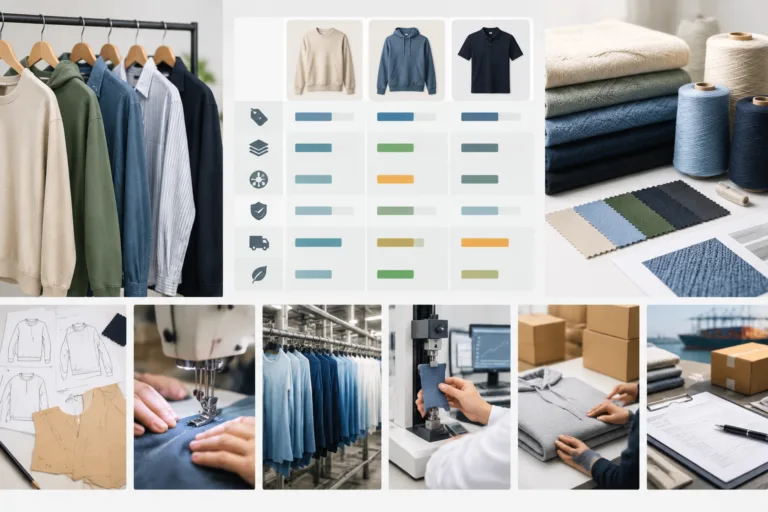
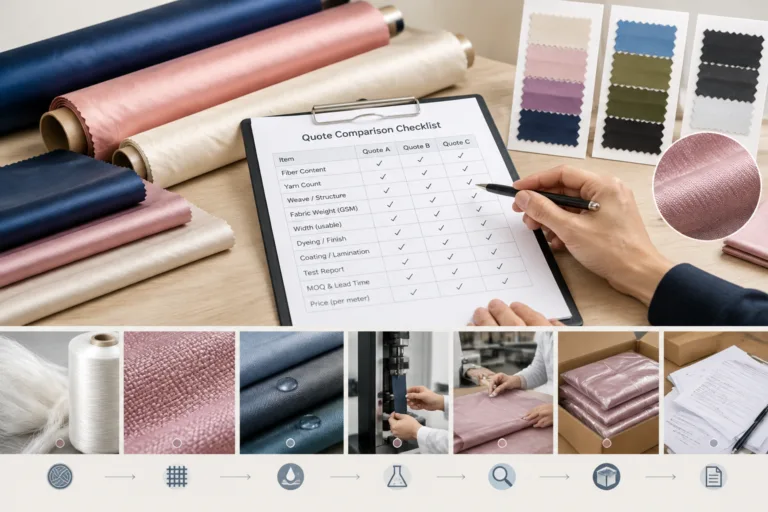
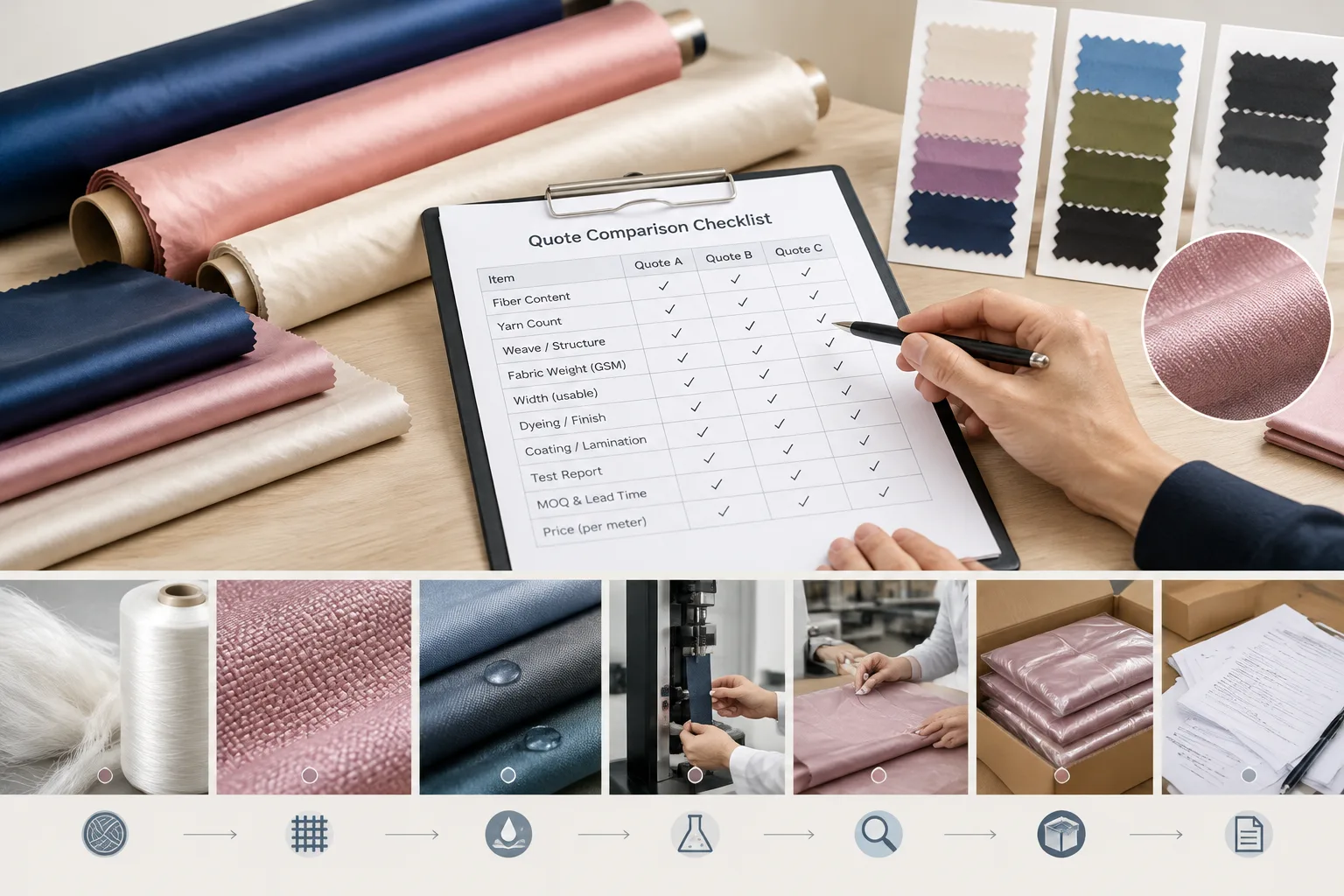
Build a comparison matrix and ask each supplier to complete the same fields: fiber composition, construction description, GSM, finished usable width, color or print, finish, and the agreed basis for inspection or defects. Add unit and unit price, order quantity, currency, delivery terms, freight inclusion, testing charges, payment terms, and quote validity. Missing or unclear fields should be treated as questions, not as evidence that two offers are equivalent.
Compare the same unit and commercial basis, then review samples for appearance-sensitive uses. Terms such as “taffeta,” “width,” “waterproof,” “premium,” and “first quality” can leave important details undefined. Ask what each term means for the particular offer and document any agreed acceptance criteria. A swatch can help assess color and hand, but it does not establish that all production fabric will match it.
The lowest price per yard or meter may not produce the lowest usable material cost. Usable width, marker efficiency, expected shrinkage, defects, and cuttable areas can affect how much fabric a garment requires. Compare expected yield for the intended pattern and production process where that information is available. Shortlist offers based on documented equivalence and suitability for the end use, not just the headline figure.
What Should You Test Before Committing to a Taffeta Order?
Use a staged review that matches the product’s risk. Start with the specification and supplier documents, then assess a swatch and sample yardage before making a prototype garment. Where relevant to the intended care route, evaluate the fabric after care procedures appropriate to the product. Production-lot checks may also be warranted, especially when the finish, color requirements, or commercial exposure makes variation consequential.
Focus evaluation on the garment’s actual needs: shade consistency, hand and noise, opacity, seam appearance, creasing, dimensional change, and compatibility with lining, interfacing, trims, and sewing settings. For coated or bonded taffeta, assess layer integrity and changes around flexed or sewn areas when relevant. Choose any test plan for the specific end use, finish, care expectations, and sales market; do not treat a result for one sample as proof of every lot or of finished-garment performance.
Before placing an order, finalize the technical specification, compare normalized quotes, approve and retain reference samples, and agree on acceptance criteria with the supplier. Keep relevant documents tied to the fabric and order they describe. The appropriate depth of evaluation depends on the product’s risk and customer expectations.
Why do two taffeta fabrics with the same name have different prices?
The name alone does not define the fabric. Composition, yarn, construction, GSM, usable width, color, finish, quality requirements, order conditions, and delivery terms can all differ between offers.
Is a higher GSM taffeta always more expensive?
No. GSM measures mass per unit area; it does not independently determine price, thickness, or quality. Compare the full specification and commercial terms.
Should I compare taffeta by price per yard, meter, or kilogram?
Use a common unit only after confirming the relevant length, width, and weight information. Also align the specification, quantity, currency, and delivery basis.
What details should be included in a taffeta fabric quote request?
Specify composition, construction, GSM, usable width, color, finish, quality or inspection expectations, quantity, quote unit, delivery destination, and any relevant sample or testing needs. Ask for payment terms and quote validity.
Does a coating or special finish change taffeta fabric cost?
It may. Coating, bonding, dyeing, printing, or other requested processing can affect the offer, but the impact depends on the specification and supplier. Confirm what the quoted finish includes.
Is the lowest taffeta quote necessarily the lowest garment material cost?
No. Usable yield, width, defects, shrinkage, and the fabric’s suitability for the garment can affect consumption and production. Compare the expected usable material cost, not only the quoted unit price.