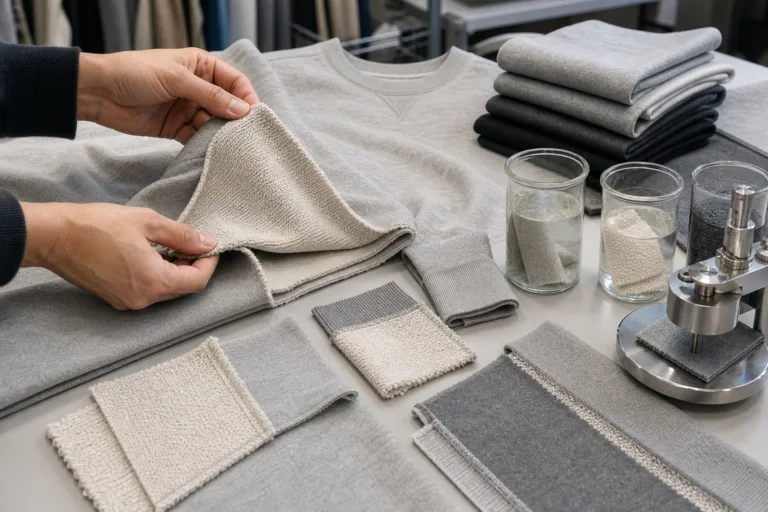
Loopback sweatshirt fabric is a knit with a relatively smooth face and visible, unbrushed loops on the reverse. Those loops are part of the fabric’s construction—not a fiber type or a finish—and they offer a useful way to identify the fabric without proving how it will perform. Apparel Wiki is an independent apparel knowledge publication; its sponsorship information describes the site’s editorial independence.
In common trade usage, loopback fabric may also be called loopback jersey or French terry, but naming can vary by supplier and region. For a project, confirm the construction and composition in the specification rather than assuming that two labels mean identical fabrics.
What Is the Loopback Structure in Sweatshirt Fabric?
The loopback sweatshirt fabric structure combines a knit face, usually selected as the garment’s outer surface, with small loops visible on the back. The loops are formed as part of the knit, rather than created by brushing the surface into a fuzzy layer. This makes “loopback” a description of structure, not a complete material identity.
To identify a fabric clearly, separate four layers of information: fiber content, yarn, knit construction, and finishing. Fiber content tells you what the fibers are; yarn describes how they are arranged into strands; construction describes how those strands form the fabric; and finishing covers processes applied afterward. A supplier’s name for the fabric is a useful starting point, but it does not replace those details.
The loops provide a visible clue, not a performance guarantee. Stretch, breathability, warmth, durability, and quality can depend on other fabric and garment variables. Treat each as something to assess for the particular fabric and intended use.
How the Face and Back Are Formed in a Loopback Knit
Picture the fabric in cross-section: the face is the side normally presented outward, while the reverse carries loop-forming yarns that rise into small arches. Those arches remain recognizable in an unbrushed loopback. In brushed-back fabric, by contrast, mechanical finishing raises or opens fibers on the surface. The processes change the appearance differently, even though both fabrics are knits.
Loop size, spacing, density, alignment, and stability can vary. There is no single loop appearance that defines every commercial loopback fabric. The face and back may also respond differently to handling, washing, or finishing, so inspect both sides when developing a garment. Look closely at the fabric, and use magnification if loop continuity or small defects matter to the decision.
Keep the construction distinct from later operations such as dyeing, washing, softening, or brushing. These processes can alter surface feel or appearance; they do not make the supplier’s construction description a substitute for checking the actual sample.
Loopback Versus Brushed-Back Fleece: What Actually Changes?
The most visible difference is the reverse surface. Loopback retains identifiable knit loops; brushed-back fleece has a raised, fuzzy surface produced by brushing. “Fleece” in this context describes a fabric or surface type, not a fiber category: either fabric may use different fiber blends and yarn systems. Hand feel and likely warmth can differ, but they also depend on composition, fabric weight, finishing, and garment design.
| Inspection point | Loopback | Brushed-back fleece |
|---|---|---|
| Back appearance | Recognizable loops or small arches | Raised, fuzzy surface; loops are less distinct |
| Hand feel | Often textured, with a defined loop surface | Often softer or fuzzier to the touch |
| Warmth expectation | Depends on fabric and garment; the loops alone do not set warmth | Brushing may create a loftier-feeling surface, but does not guarantee a particular warmth |
| Surface fibers | Loops remain visible; inspect for damage or loose fibers | Raised fibers are more apparent; consider surface change and shedding in evaluation |
| Quick inspection cue | Check whether the reverse shows continuous, distinct loops | Check whether the reverse looks raised and napped rather than loop-defined |
This comparison describes typical structural and finishing differences, not test results. If warmth, moisture handling, abrasion, pilling, or laundering behavior matters, compare representative fabrics under relevant, consistent conditions instead of choosing by trade name or touch alone.
Which Variables Change the Behavior of Loopback Sweatshirt Fabric?
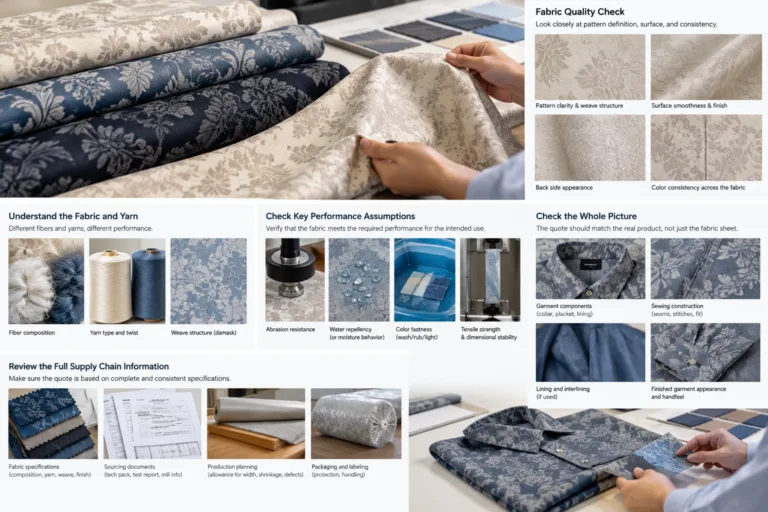
Structure gives clues, but the fabric’s behavior reflects several layers working together. Fiber composition can affect hand feel, moisture behavior, recovery, abrasion response, and care needs. Yarn type and size, stitch and loop configuration, density, and overall fabric weight can also influence drape, firmness, and dimensional stability. The direction and degree of any effect should be verified for the particular fabric, not assumed from the word “loopback.”
Finishing—including dyeing, washing, softening, or other mechanical processes—can change surface feel, loop definition, appearance, or dimensions. Garment choices matter as well: panel direction, fit, seam placement, stress points, and rib attachments can affect how a sweatshirt wears and behaves. A fabric sample is therefore only one part of evaluating the finished product.
GSM means mass per unit area. It is a specification input, not a direct measure of thickness or a quality ranking. When reviewing a sample, request GSM alongside composition, usable width, finishing details, and the condition in which measurements were taken. A fabric name or nominal GSM alone is not enough to approve bulk production; verify relevant properties such as stretch, recovery, shrinkage, and durability against the project’s requirements.
How to Evaluate a Loopback Fabric Sample for a Sweatshirt Project
Start by checking the supplier’s specification rather than relying on the trade name or a small swatch. Confirm the stated fiber composition, knit construction, finished usable width, GSM, finishing process, and the condition under which measurements were taken. If information is unclear or inconsistent, ask for clarification before using it as a basis for development approval.
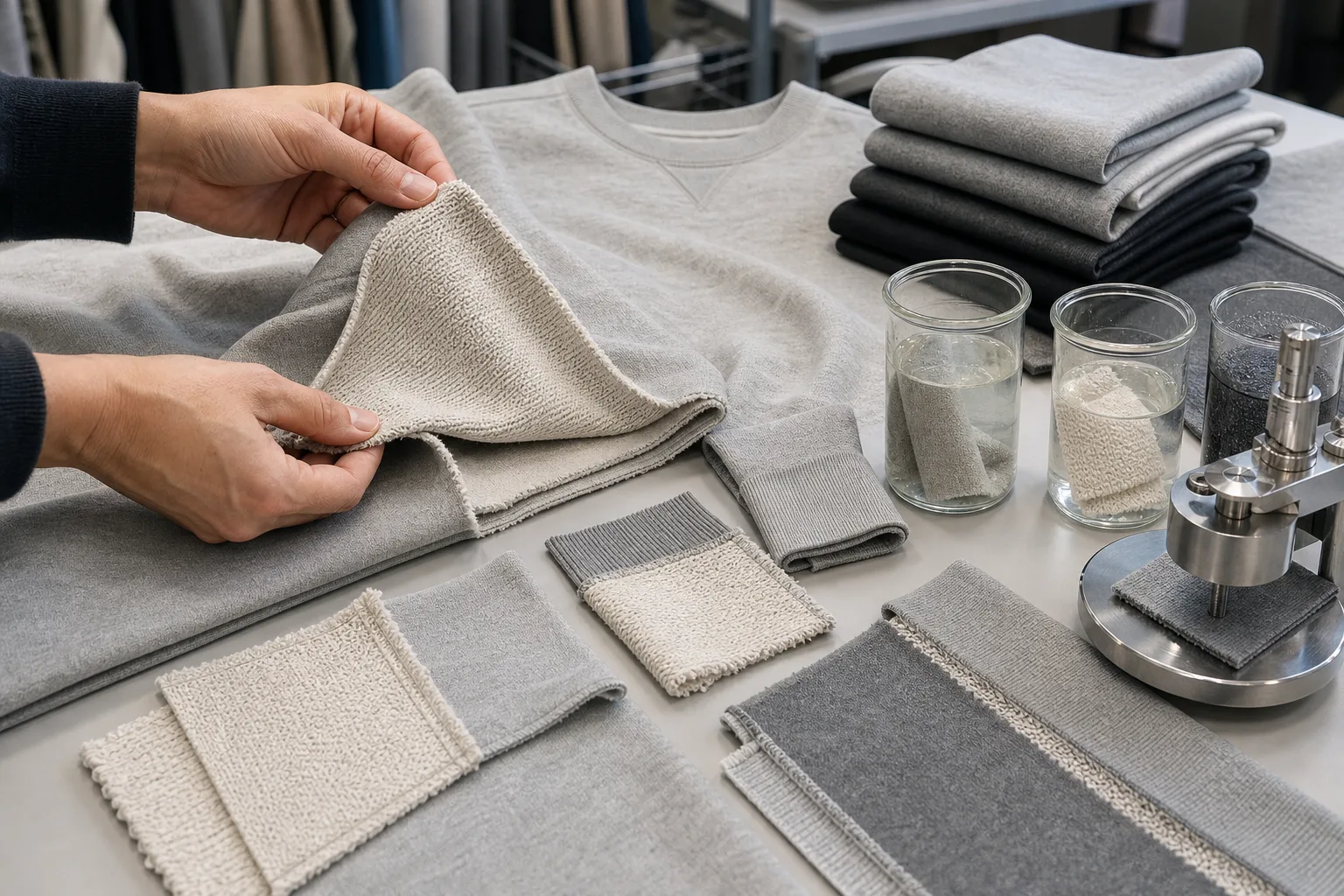
Inspect both sides under consistent lighting. On the back, look for loops that are uneven, broken, skipped, or visibly different across the sample; on the face, check for holes, barre, contamination, and other surface irregularities. A small swatch can help identify construction, but it may not show variation across a larger piece or roll. When consistency matters, inspect representative material from more than one location.
Check the fabric’s lengthwise and crosswise directions. Note whether the edges curl, the piece twists, or stretch and recovery seem different by direction. These observations are screening clues, not substitutes for measurements. If the fabric will be washed, condition a representative sample using the intended care process before judging its dimensions, color, hand feel, or loop appearance.
Finally, assess the fabric as part of the planned garment. Make sample seams and examine areas such as cuffs, hems, pocket openings, and rib attachments, where handling and construction may affect the result. Record visual observations separately from subjective hand-feel approval and any laboratory test results. Compare the approved sample, development sample, and bulk material against the same documented criteria.
- Confirm the fabric specification and measurement condition.
- Inspect both surfaces and, where possible, multiple sample areas.
- Check direction, handling, and after-wash appearance.
- Evaluate garment components and record approval criteria.
When Is Loopback the Right Sweatshirt Fabric Choice?
Loopback may be a suitable candidate when a sweatshirt design calls for an unbrushed, visibly textured inner surface. That structural feature is a starting point, not a guarantee of a particular warmth level or wearing experience. The outcome also depends on composition, yarns, fabric weight and density, finishing, garment fit, and how the piece will be layered and used.
Translate the product brief into criteria before selecting a fabric. Consider the intended climate and activity, desired back-surface feel, warmth target, stretch and recovery needs, acceptable dimensional change, appearance after laundering, and care expectations. These priorities may lead two products to different choices even if both are described as sweatshirts.
When comparing loopback with brushed fleece, lighter jersey, or another sweatshirt knit, use samples with comparable composition and weight where possible. Keep care and test conditions consistent, and assess the properties relevant to the garment rather than assuming one construction is universally better. A supplier’s fabric name helps identify what to ask about; it does not replace a physical sample and a complete specification review.
Limits of Reading Performance From the Loop Structure Alone
The visible back can help identify a looped knit structure, but it cannot establish fiber content, exact GSM, warmth, breathability, durability, recovery, or production consistency. Fabrics sharing a broad trade name may differ in yarn, loop configuration, density, finishing, width, and behavior after care. Treat the structure as one useful observation among several, not as proof of finished-product performance.
Likewise, a test result for one fabric does not automatically apply to another fabric with the same name—or to a garment made from it. Select tests according to the product’s intended use and buyer requirements. Relevant properties might include dimensional change, colorfastness, abrasion, pilling, stretch, or recovery, but the appropriate checks and acceptance criteria must be set for the specific project.
Apparel Wiki is an independent educational publication, not a factory, laboratory, certifier, or service provider. Its guidance can help readers frame questions, but product-specific claims need supporting supplier documentation or appropriate test evidence. The practical sequence is: identify the fabric, inspect it, condition or wash a representative sample, test relevant properties, approve against documented criteria, and monitor bulk material against the approved reference.
Is loopback sweatshirt fabric the same as French terry?
The terms are often used for similar loop-backed knits, but commercial naming can vary. Confirm the construction and specification with the supplier instead of assuming the labels always mean exactly the same thing.
What is the difference between loopback fabric and brushed-back fleece?
Loopback retains visible loops on the back. Brushed-back fleece has a back surface that has been mechanically raised or opened, giving it a fuzzy appearance. Composition and other specifications can vary in either type.
Does a looped back make a sweatshirt fabric warmer?
Not by itself. Warmth depends on factors including the fabric’s composition, weight, density, finishing, and the garment’s design and use. Evaluate the actual sample for the intended product.
Is loopback sweatshirt fabric always cotton?
No. Loopback describes a fabric structure, not its fiber content. Check the supplier’s composition specification for the particular fabric.
How can I tell which side of loopback fabric is the back?
The back typically has recognizable loops, while the face is relatively smooth. Inspect both sides, since appearance and loop definition can vary between fabrics.
What should I check before approving loopback fabric for production?
Review composition, construction, width, GSM, finishing, and measurement conditions. Inspect both surfaces and assess a representative sample after intended care, then compare relevant tests and bulk material with documented approval criteria.