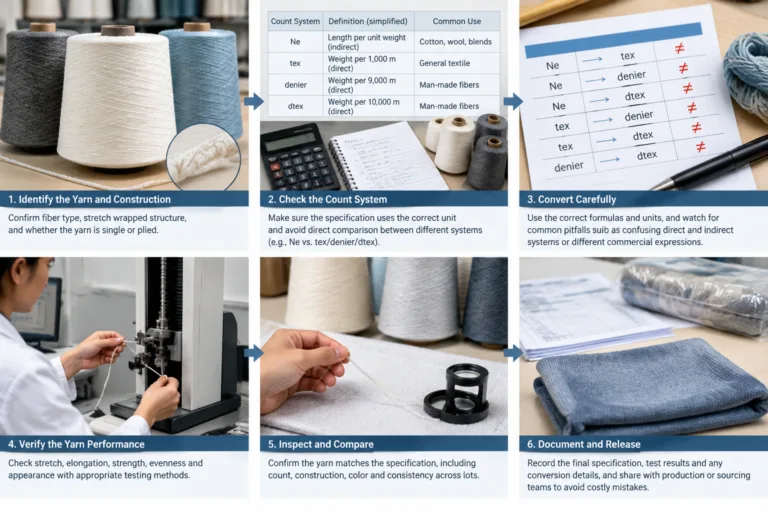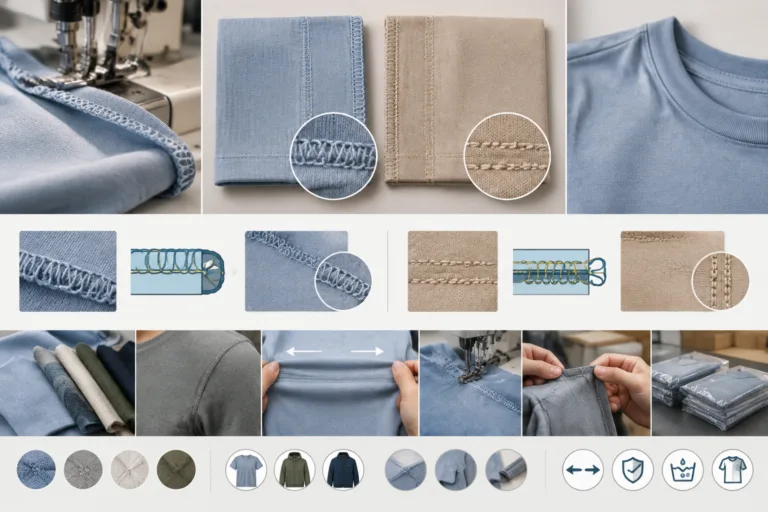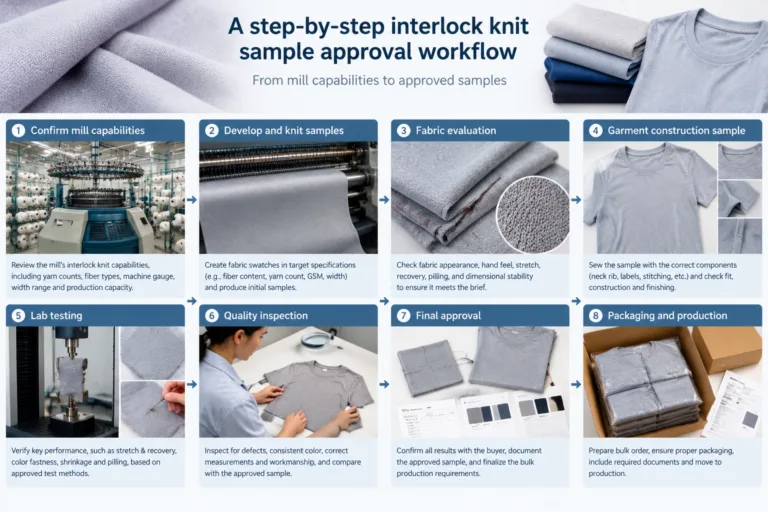
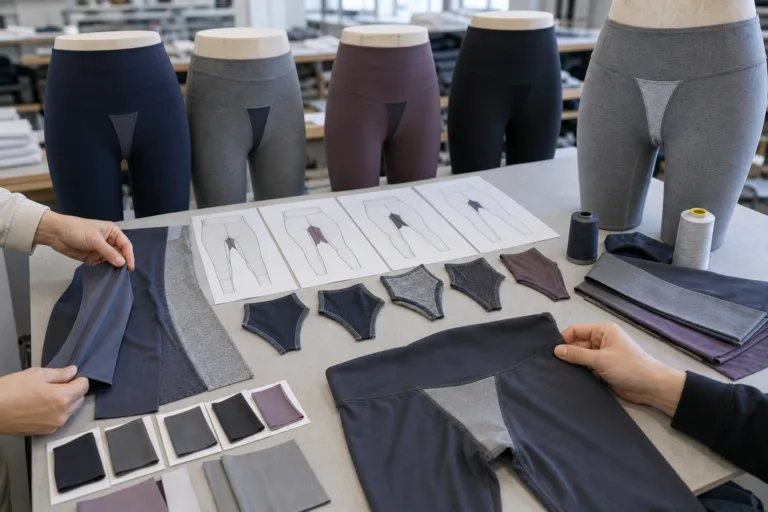
A leggings gusset is an inserted fabric panel in the crotch area. Its outline changes where seams meet and how fabric is distributed around the crotch, inner thighs, and seat. That makes leggings gusset shape a development decision, not simply a decorative detail: the appropriate option depends on the activity, fit brief, fabric, size range, and construction method. Apparel Wiki is an independent educational publication; its Sponsor page explains the separation between sponsorship and editorial judgment.
A gusset may influence how a garment feels during movement, how coverage is maintained, and where seam pressure or visual lines appear. It does not automatically guarantee comfort, mobility, opacity, or a particular fit result. The panel must be assessed as part of the complete leggings pattern and tested in representative materials and sizes.
What Is a Gusset in Leggings?
In practical garment-development terms, a leggings gusset is a separate piece of fabric inserted into the crotch area and joined to the leg and body panels. Instead of bringing several major seams together at one concentrated point, the pattern can use the gusset to redistribute seam lines across a defined area. Common descriptions include diamond, four-sided, triangular, or longer multi-panel gussets, although the exact terminology and geometry can vary between patterns.
The gusset panel shape is not the same thing as the surrounding crotch curve. The panel is the inserted piece itself; the crotch curve describes the shaping of the adjoining pattern edges around the body; and the seam configuration describes how those pieces are joined. Two leggings can use panels with similar outlines but have different seam directions, seam intersections, allowances, or construction sequences. Those differences can change the garment result.
The gusset also works with the front rise, back rise, crotch depth, inseam, waistband, and leg shape. Fabric stretch and recovery matter just as much. A panel that appears generous on paper may not provide the intended result if the fabric stretches differently along the length and width, if the rises are poorly balanced, or if the joining seams restrict the surrounding area. For that reason, a gusset should not be evaluated in isolation.
The correct question is not “Which gusset shape is best for leggings?” It is “Which configuration suits this product brief, material, wearer tasks, and manufacturing method?” Everyday leggings, studio apparel, training styles, and cycling-inspired garments may place different emphasis on seated comfort, repeated flexion, coverage, appearance, or seam control. Those requirements should guide pattern choices rather than assumptions about the product category.
Why Gusset Shape Matters in Leggings Development
Leggings place important design attention on the crotch, inner thigh, seat, and waistband because these areas move and interact with one another. A wearer may walk, sit, bend, squat, extend the hips, or repeatedly flex the legs. The product brief should identify which positions and tasks matter before a team selects or modifies a leggings crotch design.
Seam direction and panel boundaries can affect how the garment is perceived against the body. A seam crossing a high-contact area may feel different from one that follows a less exposed path. Multiple seams can also create different visual lines and localized construction bulk. These are development questions rather than universal outcomes: the effect depends on the pattern, seam allowance, stitch or seam type, thread, fabric surface, and the individual wearer.
Gusset geometry can also change how stretch is distributed through the crotch and inner-thigh area. A shape cut with a particular stretch direction may behave differently from the same outline rotated on the fabric. Fabric recovery, thickness, weight, opacity, and surface friction can further change the result. Therefore, a comparison made in one knit should not automatically be transferred to another fabric with a different construction or laundering response.
Activity and posture provide a useful starting point. A design intended mainly for everyday wear may prioritize a smooth appearance and stable fit across ordinary seated use. A style intended for yoga, training, or studio movement may require closer examination of repeated flexion and coverage in changing positions. These labels do not prove a performance level; they simply help define the wearer tasks that the sample must address.
Size range is another reason to treat gusset selection as a system decision. The same outline may not maintain the same proportions or seam relationships after grading. Review the gusset together with front and back rise, crotch depth, inseam, waistband position, and leg volume across representative sizes. Fit feedback from one size or one fit model cannot establish that the construction works consistently for every intended wearer.
Common Leggings Gusset Shapes and Their Trade-Offs
Common shape families provide a useful comparison framework, but they should not be treated as a universal ranking. The panel outline, the number of adjoining pieces, and the direction of the seams are related decisions, not interchangeable terms. A larger or longer gusset is also not automatically more comfortable or more mobile. Pattern balance, fabric behavior, seam placement, and wearer testing remain decisive.
| Shape family | Typical design intent | Potential advantages to investigate | Development questions |
|---|---|---|---|
| Diamond or four-sided | Redistribute the crotch area across a defined panel with several joining edges. | May offer multiple options for placing seams and shaping the movement area. | Where do the seam intersections land? Does the panel remain balanced after grading? |
| Triangular | Use a tapered panel that connects the crotch area to adjoining pattern sections. | Can support a visually simple pattern concept and a controlled panel outline. | Does the taper suit the rise, stretch direction, and intended movement positions? |
| Longer or multi-panel | Extend the crotch construction farther along the inner leg or distribute it across more pieces. | Provides additional seam-placement and shaping options for a particular fit brief. | Will extra seams increase construction complexity, bulk, or visual distraction? |
A diamond gusset leggings pattern may be selected when a team wants a distinct panel with several edges to manage shaping and seam placement. A triangular gusset may suit a pattern with a more tapered visual or construction approach. Longer or multi-panel configurations may be useful when the design brief calls for more extended redistribution through the crotch and inner-leg area. These descriptions indicate possible design intent, not guaranteed comfort or performance.
When comparing options, hold relevant variables as constant as possible. Use the same base size, fabric, seam allowance, stitch construction, and grading assumptions before attributing a different result to the gusset outline. Examine static fit, movement, coverage, seam feel, visual appearance, and recovery after use or laundering where applicable. Claims about preventing camel toe, guaranteeing squat-proof coverage, reducing chafing, or delivering a specified range of motion require appropriate project evidence; the shape alone cannot establish them.
How Fabric, Fit, and Construction Change the Decision
A leggings gusset pattern cannot be selected independently from the fabric and the rest of the garment. Stretch and recovery should be considered in the directions that matter to the pattern, rather than inferred from fiber content alone. A fabric may extend readily but recover differently, or behave differently after laundering. Those changes can alter how the gusset lies, how seams feel, and whether the garment remains stable during movement.
Review fabric weight, thickness, opacity, surface friction, and the intended fit together. A fabric selected for a close or compressive fit may place different demands on the crotch area than one intended for relaxed everyday wear. The same diamond or triangular panel can produce different results when cut from fabrics with different stretch directions, recovery, or dimensional stability. These are development variables, not proof that one gusset shape is inherently superior.
Fit relationships are equally important. Gusset length and width interact with the front rise, back rise, crotch depth, inseam, inner-thigh shape, and waistband position. A change to one measurement can move a seam toward or away from a high-friction or high-extension area. Grading also deserves review: a shape that works in one base size may need examination across the intended size range, because proportions and movement needs do not remain identical at every size.
Construction details complete the decision. Record the seam allowance, stitch or seam type, thread, seam bulk, reinforcement, and the direction in which each component is cut. The assembly sequence can affect how accurately the gusset is set and how consistently the seam behaves. Evaluate the complete garment in final or representative materials and with the intended construction method. A successful fabric swatch or isolated component does not establish the performance of the finished leggings.
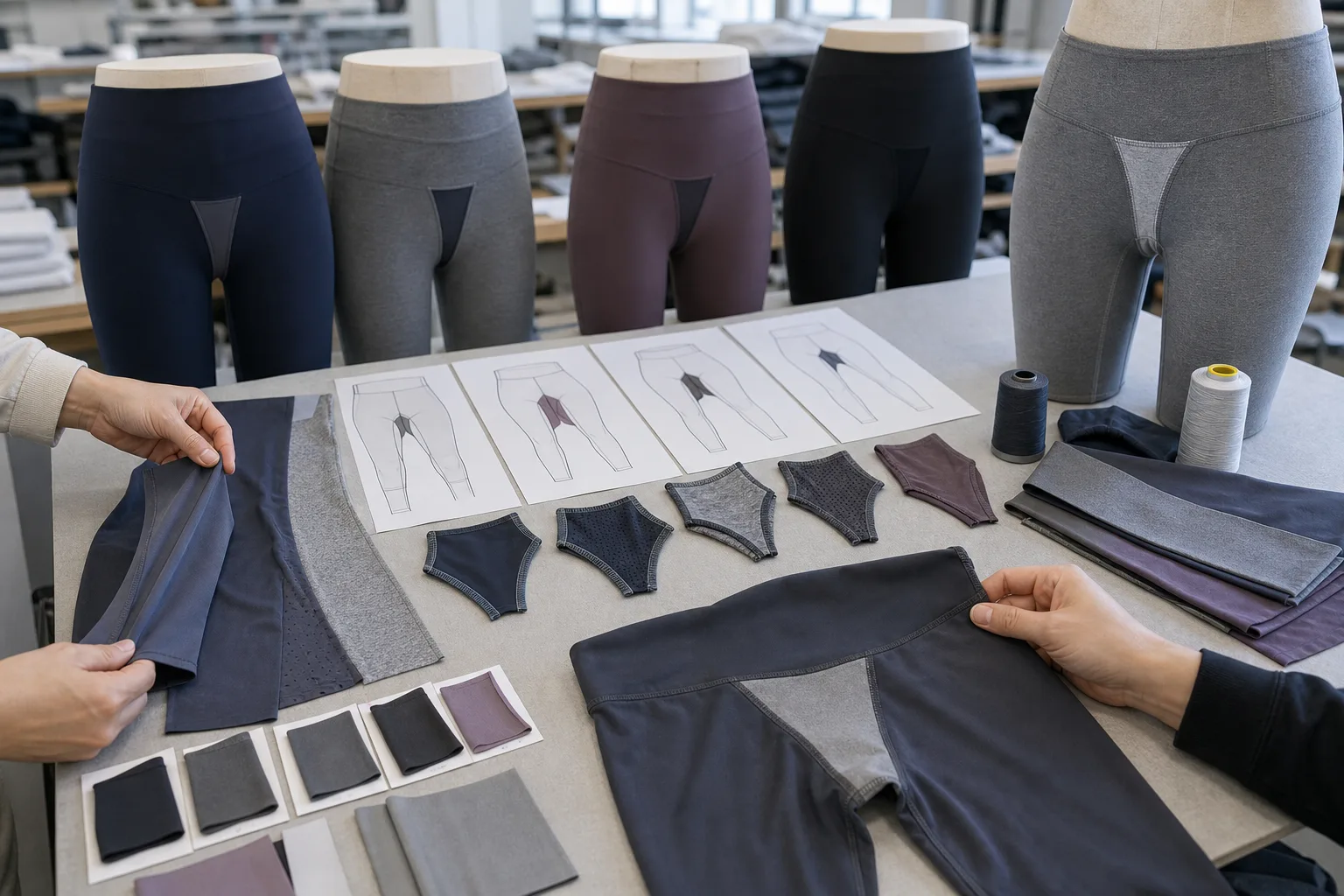
A Practical Process for Choosing and Testing Gusset Shape
Begin with a written use case. State whether the leggings are intended for everyday wear, studio activity, training, seated use, or another defined context. Describe expected postures, coverage expectations, fit intent, target users, and acceptable visual details. This converts a general request for “comfort” or “flexibility” into questions that can be examined during sampling.
Next, mark the garment zones affected by movement, friction, pressure, and seam concentration. Include the crotch, inner thighs, seat, and waistband, while considering how the wearer bends, sits, walks, or repeatedly flexes. This map helps the team decide which observations matter and whether the gusset is being asked to solve a problem that actually originates in the rise, fabric, waistband, or overall fit.
Create controlled pattern variations. Change the gusset outline while holding the base size, fabric, seam allowance, stitch construction, and relevant grading assumptions as constant as practical. Label every version clearly. Comparing uncontrolled samples makes it difficult to attribute a change in fit or seam feel to the gusset shape itself.
Build samples in the intended material and construction. Check static fit first, then observe movement, coverage, seam comfort, recovery, and appearance. Include the post-use or post-laundering condition when care and dimensional stability are relevant to the product brief. Avoid treating a single pose or mirror check as a complete evaluation.
Use representative sizes and, where appropriate, more than one fit tester. Different body proportions, activities, and seated-use needs may expose different issues. Record qualitative feedback separately from instrumented results or formal compliance evidence. Photographs, marked measurement points, sample revision numbers, and written pass, revise, or reject decisions make the comparison more useful for the next fitting.
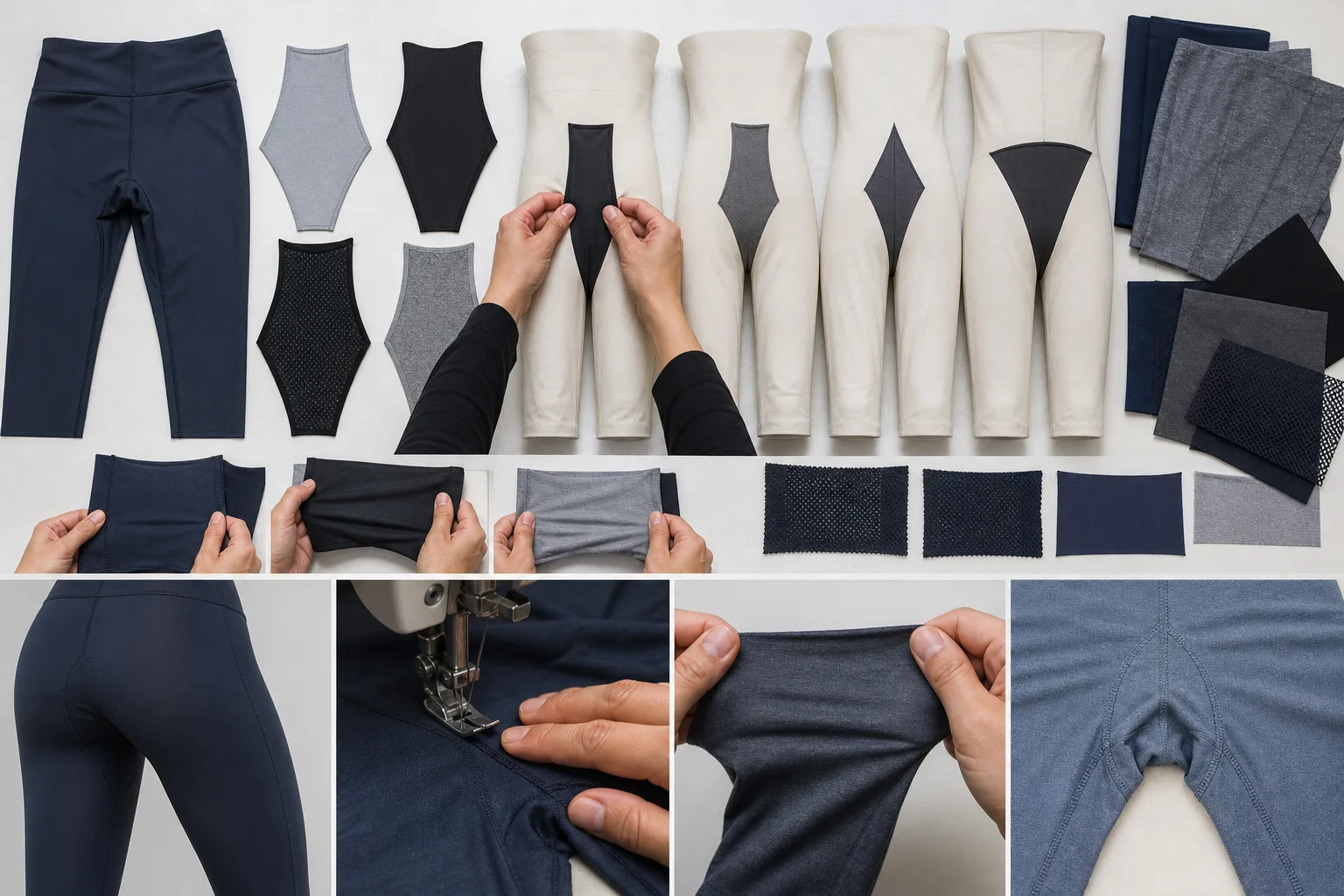
How to Document the Gusset Decision in the Technical Package
Once a gusset configuration is selected, show it clearly in the pattern and technical drawing. Identify the panel outline, seam lines, notches, grain or stretch direction, seam allowances, and measurement points. The drawing should agree with the pattern pieces, so a reviewer can understand both the intended appearance and the construction relationship.
Record the fabric specification, component identifiers, construction sequence, stitch or seam details, and any approved alternatives. Link the decision to the fit sample, size range, revision number, and relevant fitting or testing observations. Keep the bill of materials, measurement specification, artwork, and construction notes aligned. Conflicting information between these documents can create execution ambiguity during sampling or production.
Also define which changes require a new sample or review. Examples include a change to gusset length or width, seam position, fabric substitution, stretch direction, or stitch construction. A technical package should preserve the reasoning behind the selected leggings gusset shape without implying that Apparel Wiki is a factory, manufacturer, or production-service provider. Apparel Wiki is an independent educational publication; project-specific requirements remain the responsibility of the product team and its responsible manufacturing partners.
For a broader workflow, teams can use the Apparel Manufacturing Tools resource alongside their own pattern, material, and fitting records. The useful next step is to turn the preferred gusset concept into a controlled sample comparison, then update the technical package with the evidence and revision decision.
What is the purpose of a gusset in leggings?
A gusset is an inserted crotch panel that changes seam arrangement and can influence fit, coverage, movement, and seam placement. Its effect depends on the full pattern, fabric, construction, and intended use.
Which gusset shape is best for leggings?
There is no universally best shape. The appropriate choice depends on the activity, fit brief, fabric behavior, size range, seam placement, construction method, and results from representative sampling.
Are diamond gussets better than triangular gussets?
Neither is automatically better. A diamond gusset and a triangular gusset create different panel boundaries and seam relationships, but the practical outcome must be assessed in the complete garment.
How does fabric stretch affect leggings gusset shape?
Stretch and recovery affect how the gusset extends, returns, and interacts with nearby seams. Directional stretch, fabric weight, opacity, surface feel, and laundering behavior should be assessed with the intended pattern and construction.
Can a gusset prevent camel toe or guarantee squat-proof leggings?
No. Gusset shape alone cannot guarantee a particular appearance, coverage result, or range of motion. Rise, fit, fabric opacity, stretch, seam placement, and wearer testing all contribute to the outcome.
How should a leggings gusset be tested during product development?
Compare controlled samples in the intended fabric and construction. Review static fit, movement, coverage, seam comfort, recovery, appearance, and relevant post-laundering changes across representative sizes and users, then document the decision.