Negotiating custom knit minimums starts with identifying what the minimum actually measures. A custom knit minimum is the lowest quantity a supplier is willing or able to produce under a defined specification and commercial arrangement. It may refer to finished garments, but it may also apply to yarn, fabric, dyeing, colors, sizes, trims, or packaging. Apparel Wiki is an independent educational publication; see our Sponsor information for editorial context.
That distinction matters because one supplier’s “MOQ” may describe the total order, while another supplier may apply separate limits per style, color, material, or production batch. Before asking for a lower number, map the constraints at each relevant stage. This makes the discussion more precise and helps distinguish a negotiable commercial preference from a production requirement that may remain unchanged.
What Does a Custom Knit Minimum Actually Include?
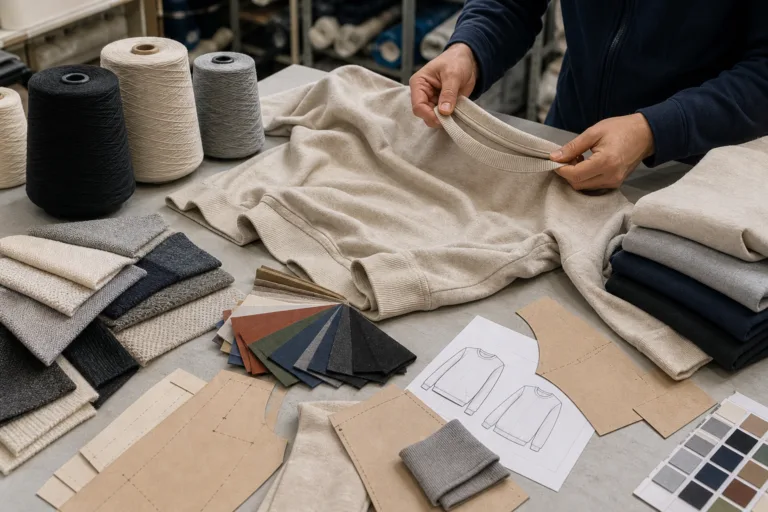
In custom knitwear, the minimum is not necessarily a single finished-garment threshold. It is a quantity condition attached to the specification being quoted. The supplier may be assessing the style, construction, yarn, color program, size range, finishing, labeling, and packaging together, or may calculate separate requirements for selected inputs.
For example, a supplier could discuss a minimum for the total number of garments while separately requiring a material purchase, a dyeing batch, or a particular color quantity. A different quotation might state a minimum per style or color, or require a combined order across several sizes. These are project-specific arrangements, not universal apparel manufacturing rules.
Ask the supplier to identify the unit behind every minimum. Useful questions include:
- Does the quantity apply to the total order, each style, or each color?
- Is the size breakdown flexible, or is there a minimum by size?
- Does the requirement originate with the garment, yarn, fabric, dyeing, trim, or packaging stage?
- Is the material already available, or would it require dedicated purchasing?
- Does the quoted quantity assume one batch, one color process, or a specific finishing method?
Separating these layers prevents a common mistake: treating a lower finished-garment quantity as proof that the whole project can be produced at that level. A supplier may accept fewer garments while retaining a material or color constraint. Conversely, a supplier may have flexibility if the buyer changes the specification, combines quantities, or uses an already available material. Each possibility must be confirmed in writing.
Why Production Constraints Affect the Negotiation
A supplier may resist a lower minimum because some work and purchasing decisions occur before individual garments are completed. Development, pattern preparation, sampling, machine preparation, and other setup-related activities may be spread across the order. The exact cost treatment varies by supplier and project, so buyers should request an explanation rather than assume that every setup cost is charged in the same way.
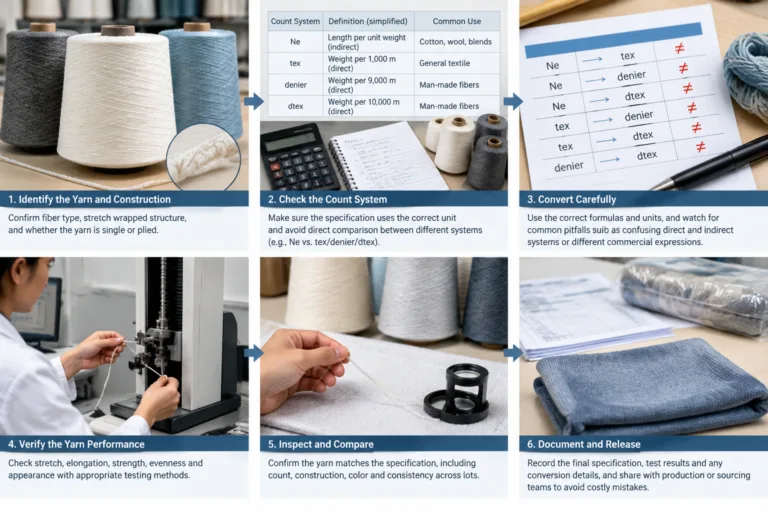
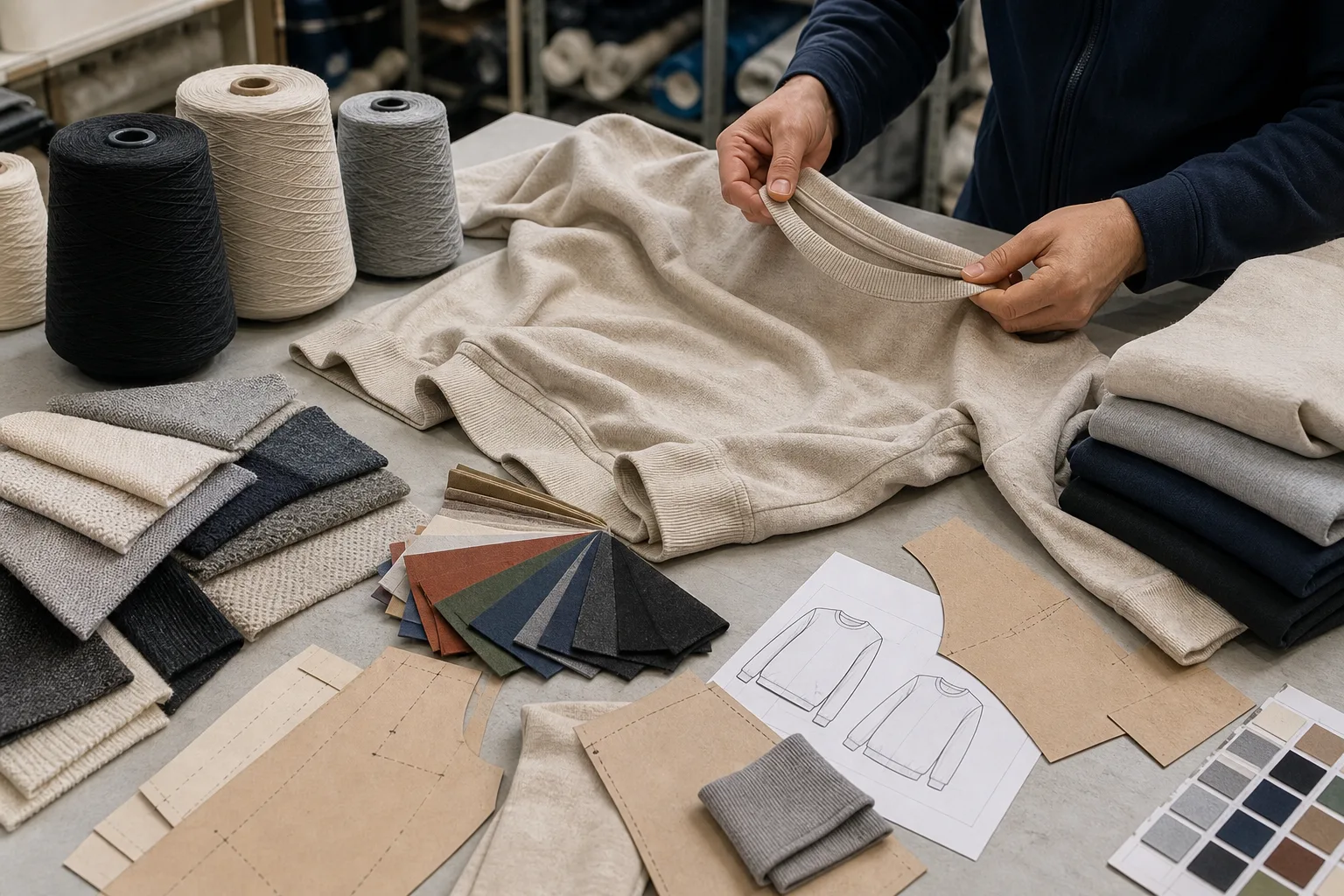
Material commitments can create another layer of constraint. Yarn or fabric may need to be purchased in a supplier-defined quantity. Dyeing may be organized around a batch or color process, while changes in color or material can require additional preparation. Trims and packaging may also be ordered or packed according to quantities that do not match the buyer’s preferred launch size.
For this reason, reducing complexity can sometimes be more practical than demanding a lower quantity while keeping every specification unchanged. Fewer colors, a common material, a narrower variant range, or consolidated trims may remove a particular preparation or purchasing issue. These are negotiation options, not guaranteed solutions. The supplier must confirm whether the proposed change actually affects the binding constraint.
A smaller first order can also create later questions. Material availability may differ when the buyer reorders. Prices may change if the original material commitment is not repeated. Color consistency may require an agreed reference and approval process, and replenishment may not use the same material conditions as the first order. These risks should be discussed before treating a small launch quantity as a complete solution.
Keep two perspectives separate during the conversation. The supplier should explain which constraint is operational, such as material purchasing or preparation work. The buyer should explain its commercial objective, such as testing demand, limiting inventory exposure, or launching a narrower assortment. Neither perspective alone establishes that a lower minimum is feasible. The negotiation becomes useful when both sides identify what can change and what consequence follows.
How to Prepare an RFQ Before Negotiating the Minimum
A standardized request for quotation (RFQ) gives suppliers the same information and makes their minimums easier to compare. Include the intended style and construction, yarn or material requirements, colors, size range, quantity by size, finishing, labels, packaging, quality expectations, delivery location, and requested commercial terms. State which details are fixed and which are open to discussion.
Ask each supplier to report minimums separately rather than presenting only one headline figure. The quotation should identify whether each condition applies per style, color, size, material, dye lot or batch where relevant, and total order. Also request the unit of measure and a clear list of included and excluded costs. Packaging assumptions, additional material or waste assumptions, and delivery terms should be visible before the quotations are compared.
| RFQ area | Question to document |
|---|---|
| Quantity structure | What is the minimum per style, color, size, material, batch, and total order? |
| Material basis | Can the order use an existing approved material, or is dedicated purchasing required? |
| Cost scope | Which setup, material, packaging, and delivery costs are included or excluded? |
| Substitution rules | What changes if an alternative material affects weight, hand feel, wash care, color, or fit? |
Ask suppliers to state the assumptions behind any lower first-order option. A supplier might propose an existing material, a reduced color range, or a different packaging approach. Record the trade-off and require approval before a substitute changes the product. A material with a similar description is not automatically equivalent for fit, appearance, care instructions, or performance.
Quote normalization should come before minimum-order negotiation. A lower unit price is not directly comparable when one quotation excludes packaging, uses a different quantity definition, or assumes a material substitution. Review every response against the same specification, mark unresolved items, and ask for written clarification. The resulting comparison gives the buyer a defensible basis for discussing which minimum can change and which constraint requires a different project decision.
What Can You Negotiate Without Ignoring Feasibility?
Begin the discussion by asking which constraint is actually binding. A supplier may be able to reduce the finished-garment quantity but still require a material purchase, color batch, or trim quantity that makes the change ineffective. A useful negotiation question is: “What specification change would make this quantity workable?” This produces more useful information than asking only for a lower total MOQ.
Possible trade-offs include combining quantities across sizes, reducing the number of colors, using a common approved material, consolidating trims, or launching fewer variants. Each option changes the product or commercial plan. A smaller color range may reduce complexity, for example, but it also narrows the assortment. Combining sizes may simplify the order structure, while still requiring the buyer to confirm that the proposed size distribution matches expected demand.
Other arrangements may include a pilot order, staged release, shared material purchase, or reserved inventory. These are negotiation possibilities, not standard solutions. Ask the supplier to explain who owns unused material, who pays for storage, how future replenishment will be priced, and whether later production can maintain the same color and material basis. The written quotation should state the conditions rather than relying on an informal promise.
Every concession should be treated as an exchange. A buyer may gain a smaller launch commitment but give up assortment breadth, cash efficiency, launch speed, or customization. Record the target quantity, exact specification, approval requirements, and unresolved risks. This keeps the discussion focused on a workable custom knit order instead of an unsupported promise that a lower minimum is always available.
How to Compare Minimum-Order Options in Practice
Compare order structures using more than the quoted unit price. For each option, review total expected spend, usable product quantity, inventory exposure, product consistency, launch timing, future replenishment, and approval workload. A lower price may not represent a lower delivery cost if preparation, packaging, freight, testing, rework, or unused inventory is excluded or uncertain.
| Comparison area | Question to ask |
|---|---|
| Specification retained | Which colors, materials, sizes, and construction details remain unchanged? |
| Quantity structure | Does the minimum apply per style, color, size, material, batch, or total order? |
| Material commitment | Must the buyer purchase dedicated yarn, fabric, trims, or packaging? |
| Immediate cash exposure | What must be paid or committed before demand is confirmed? |
| Operational risk | Could the option affect consistency, approval, replenishment, or leftover inventory? |
| Unresolved questions | Which assumptions still require supplier confirmation or sample review? |
Consider a qualitative example: one option keeps several colors but requires a larger commitment, while another reduces color complexity for a smaller launch. The second option may limit assortment and later color matching, whereas the first may leave more inventory at risk if demand is uncertain. Neither is automatically better. Choose the structure whose assumptions are documented and whose product, quality, and replenishment risks the team can manage.

How to Confirm the Agreement Before Placing the Order
Negotiation is incomplete until the minimum is defined in writing. Confirm whether the final quantity applies per style, color, size, material, batch, or total order. Also record whether quantities refer to ordered units, approved units, packed units, or another measure used in the supplier’s quotation. Ambiguous quantity language can create a different commercial result from the one discussed.
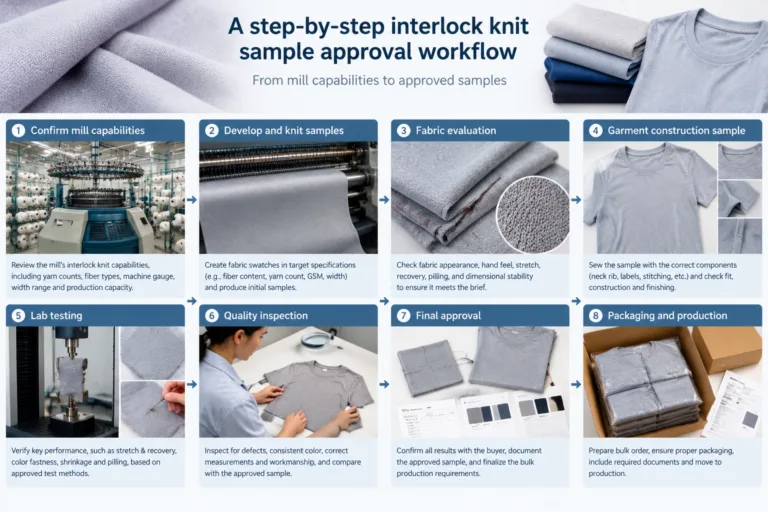
Attach or reference the approved product specification, including yarn or material, color references, construction, measurements, tolerances, finishing, labeling, packaging, and substitution rules. A proposed substitute should require approval before it changes weight, hand feel, wash care, color, fit, or other product characteristics. Similar descriptions or fiber content alone do not establish that two materials are interchangeable.
Document responsibility for leftover material, unused trims, rejected units, rework, and any inventory reserved for replenishment. If future orders depend on retained material or a particular color basis, state the relevant conditions and assumptions. Confirm which items affect price, delivery, quality approval, and replenishment, and identify anything that still requires sampling or testing.
The purchase order or agreement should match the negotiated quotation and approved sample. After the first production or launch, compare actual usable output and remaining inventory with the original assumptions. This review does not guarantee a better future minimum, but it gives the sourcing team evidence for the next order and helps distinguish a one-time concession from a repeatable arrangement.
As an educational next step, turn the comparison into a decision record: list each option, identify the production constraint it addresses, note what the buyer gives up, and attach the supplier’s written confirmation. Apparel Wiki provides independent apparel-industry information, not manufacturing, laboratory, certification, or sourcing services; project-specific commercial and contractual decisions should be checked against the relevant documents and qualified advisers.
FAQ
Is a custom knit minimum the same as a finished-garment MOQ?
No. A finished-garment MOQ may be only one part of the arrangement. Separate minimums can apply to yarn, fabric, dyeing, colors, sizes, trims, packaging, or the total order. Ask the supplier to define each quantity basis.
Why can a supplier accept fewer garments but still require a material or dyeing minimum?
Material purchasing or color processing may follow a different batch or commitment structure from garment assembly. The supplier may reduce finished units while keeping another production input unchanged. Request the specific constraint and its commercial conditions in writing.
What should I ask a supplier before negotiating a lower custom knit minimum?
Ask which minimum is binding, what unit it applies to, which costs are included, whether existing approved materials can be used, and what specification or timing change would make a smaller order feasible.
Can reducing colors or combining sizes make a custom knit order more feasible?
It may, if color changes, material purchasing, or order complexity is creating the constraint. The supplier must confirm feasibility. Record the effect on assortment, demand coverage, color consistency, and replenishment before accepting the trade-off.
How should I compare two knitwear MOQ quotations?
Normalize the specifications, quantity definitions, material assumptions, packaging, delivery terms, included costs, and exclusions. Then compare total expected spend, usable output, inventory exposure, consistency, timing, replenishment, and approval workload rather than unit price alone.
What should be documented when a supplier agrees to a smaller first order?
Document the quantity basis, approved specification, material ownership, substitutions, leftovers, rework, storage, replenishment conditions, price assumptions, delivery terms, and any sample or quality approvals. The purchase order should match that written agreement.