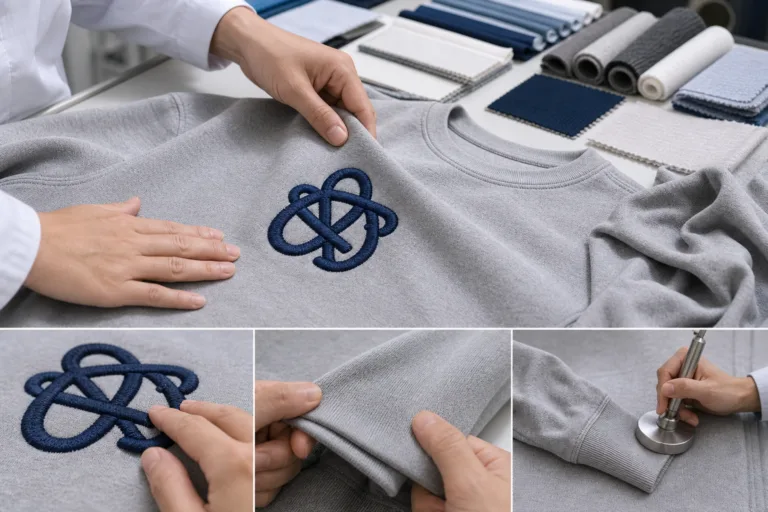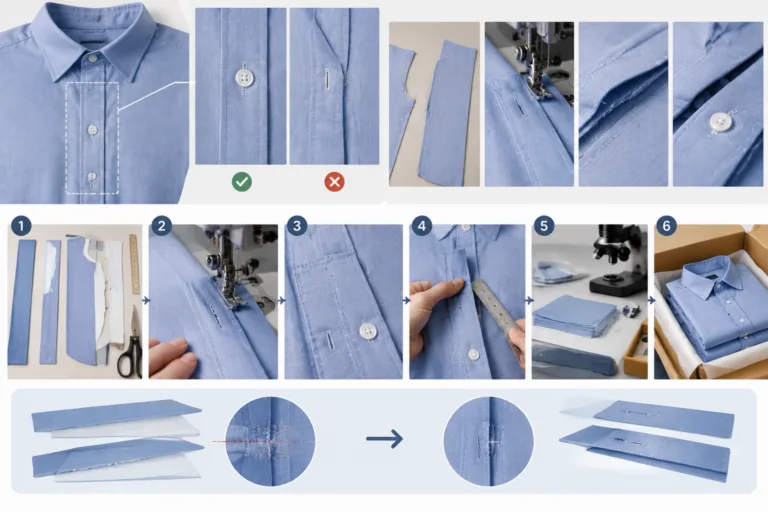
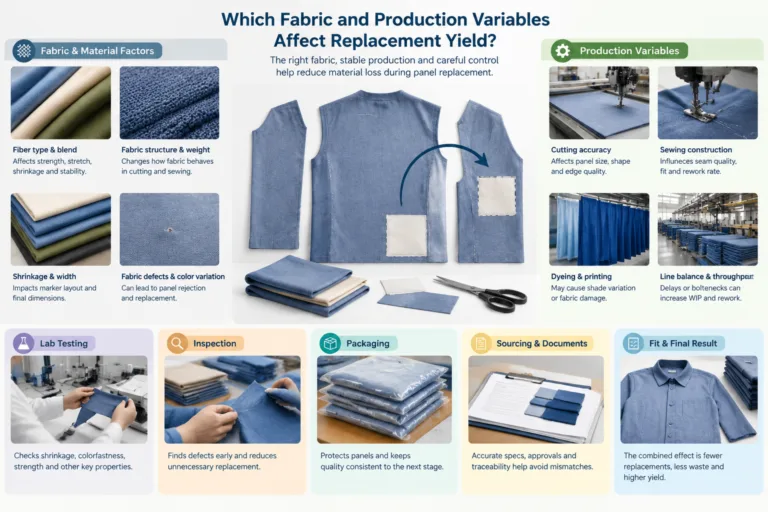
Panel replacement waste reduction means using the least additional fabric reasonably possible when a garment panel must be recut or substituted, without compromising the approved product standard. The process starts by confirming that replacement is necessary, identifying an acceptable material source, and checking the replacement against pattern, shade, grain, placement, and quality requirements. Apparel Wiki is an independent educational publication; information about its editorial independence is available on the Sponsor page.
The lowest-waste decision is not automatically the smallest piece of fabric that can contain the pattern. A remnant may appear large enough but still be unsuitable because of its lot, usable width, defects, nap direction, print position, or unknown history. Effective control therefore connects material records with approval, cutting, inspection, and final disposition.
What Is Panel Replacement Waste Reduction in Garment Manufacturing?
A garment panel is an individual cut component, such as a front, back, sleeve, collar, pocket, waistband, or lining piece. Panel replacement occurs when one or more original components cannot proceed as intended because they are damaged, incorrectly cut, mismatched, defective, lost, or rejected during cutting, sewing, or inspection.
Panel replacement waste reduction focuses on minimizing the extra material issued, cut, discarded, or made unusable during that replacement event. The objective is not simply to consume an existing remnant. The replacement panel still needs to satisfy the applicable pattern and product requirements, including dimensions, construction details, fabric direction, appearance, and any approved matching conditions.
This waste category should be kept distinct from normal marker offcuts, end-of-roll remnants, full-garment remakes, and post-consumer textile waste. These streams arise at different stages and may require different records or responses. A remnant, for example, is not necessarily waste if its identity and dimensions are known and it remains suitable for approved future use.
No single replacement workflow fits every garment. The appropriate controls depend on factors such as product type, fabric construction, panel geometry, production stage, quality specification, and the available cutting setup. A development sample may be handled differently from a repeated replacement request within a large production order.
Where Does Material Loss Happen When a Panel Must Be Replaced?
The first visible loss is usually the rejected panel, but the total material effect can be larger. A fabric defect, incorrect cut, shade mismatch, sewing-stage damage, or specification error may trigger a second material draw. The new draw can exceed the panel’s measured area because the pattern must be aligned to the grainline, nap, stripe, plaid, directional print, or an undamaged part of the cloth.
Further loss may occur when remnants are poorly identified or difficult to locate. A usable piece can be overlooked if its dimensions, fabric type, color, shade group, lot, or known defects were not recorded. Conversely, a remnant with sufficient total area may have the wrong proportions: a long, narrow panel cannot be cut from a short, wide piece merely because their calculated areas are similar.
Urgent recutting outside the original cutting plan can also reduce material efficiency. A single replacement may require opening another roll, creating a small lay, or cutting around defects without the nesting opportunities available in a full marker. Mixing unidentified lots can create a further rejection risk, potentially causing another replacement rather than a genuine reduction in waste.
It is important to separate loss created during replacement from problems created earlier. Inaccurate spreading, unsuitable shrinkage assumptions, incomplete fabric inspection, incorrect pattern information, or cutting errors may surface as replacement requests, but their root causes precede the recut. Treating every incident as a cutting-room issue can hide failures in material control, product development, sewing, or inspection.
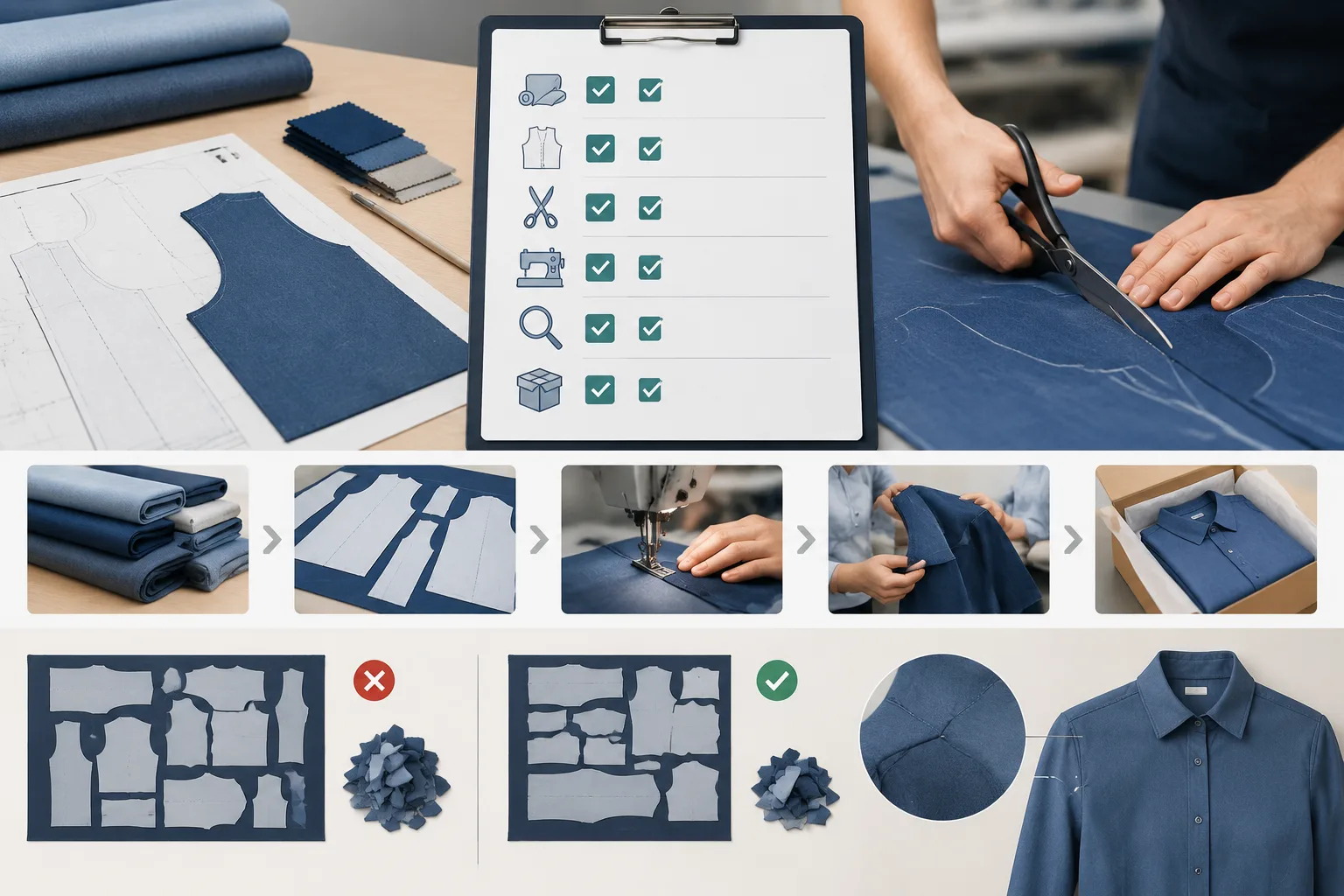
A practical garment replacement panel process follows a connected flow:
- Discover and identify the defective or unusable panel.
- Confirm whether repair, rework, release, or replacement is permitted.
- Search for suitable, traceable remnants or available material.
- Approve the material source and verify the pattern requirements.
- Recut and inspect the replacement panel.
- Record the rejected panel and the disposition of remaining material.
Speed at one step does not necessarily improve total output. Rapid recutting may only increase work-in-process if shade approval, inspection, sewing, or another downstream operation remains the actual constraint.
How Should a Replacement Panel Be Authorized Before Recutting?
A replacement panel approval process should operate as a control gate, not merely as a form-filling exercise. Before fabric is issued, the request should identify the style, size, color, panel name, quantity, defect reason, production stage, and required completion date. This information helps prevent the wrong pattern, material, or quantity from being cut.
The team should first determine whether the original panel can be repaired, reworked, or accepted. That option is appropriate only when the approved specification and responsible decision-maker permit it. Repair should not be assumed acceptable for every fabric, appearance standard, product category, or customer requirement.
Available remnants, open rolls, and other material can then be checked by fabric construction, color or shade group, width, lot, condition, and known defects. Physical availability alone is insufficient: the material identity and approval information need to move with the fabric.
Before recutting, verify the correct pattern version, grainline, seam allowance, notches, mirrored orientation, print or stripe placement, and any one-way cutting requirement. If the proposed source differs from the original lot, shade, finish, or construction, the variation should receive an explicit project-appropriate approval rather than being treated as an automatic substitution.
Finally, record what happened to the rejected panel, how much material was issued, and whether any usable material remained. The exact document or software workflow can vary between small-batch development and larger production runs; the essential control is a traceable connection between the defect, decision, material source, recut, and inspection result.
Which Replacement Option Uses the Least Material Without Creating New Problems?
The best way to reduce panel replacement waste is to prevent unnecessary recutting first, then use an approved material source that creates the lowest combined risk. The smallest immediate draw may be a poor choice if it causes shade mismatch, incorrect direction, failed inspection, or another replacement.
| Option | Material demand | Main risks | Speed and traceability | Approval focus |
|---|---|---|---|---|
| Approved remnant | Often low | Unknown lot, dimensions, condition, shade, or direction | Potentially fast if accurately labeled | Confirm identity, usable area, defects, and placement |
| Same-lot recut from an existing lay or roll | May require more fabric than a remnant | Defects, limited width, or disruption to planned use | Usually easier to trace when records are current | Verify lot, shade, pattern, and available quantity |
| Newly planned small lay | Can create proportionally larger offcuts | Low nesting efficiency and setup demands | Useful for several coordinated replacements | Confirm quantities and cutting plan |
| Adjusted marker | May improve combined material use | Timing, placement, and marker-control errors | More planning may be required | Verify all affected pieces and marker details |
| Approved repair or rework | May avoid new fabric | Appearance, durability, construction, or acceptance concerns | Speed depends on the defect and available skill | Confirm that the specification permits the method |
Reusable remnants are easier to evaluate when their dimensions, fabric identity, shade or lot information, direction, and known defects are retained. These records do not make a remnant acceptable by themselves, but they allow teams to compare options without repeatedly handling unidentified material or opening new fabric prematurely.
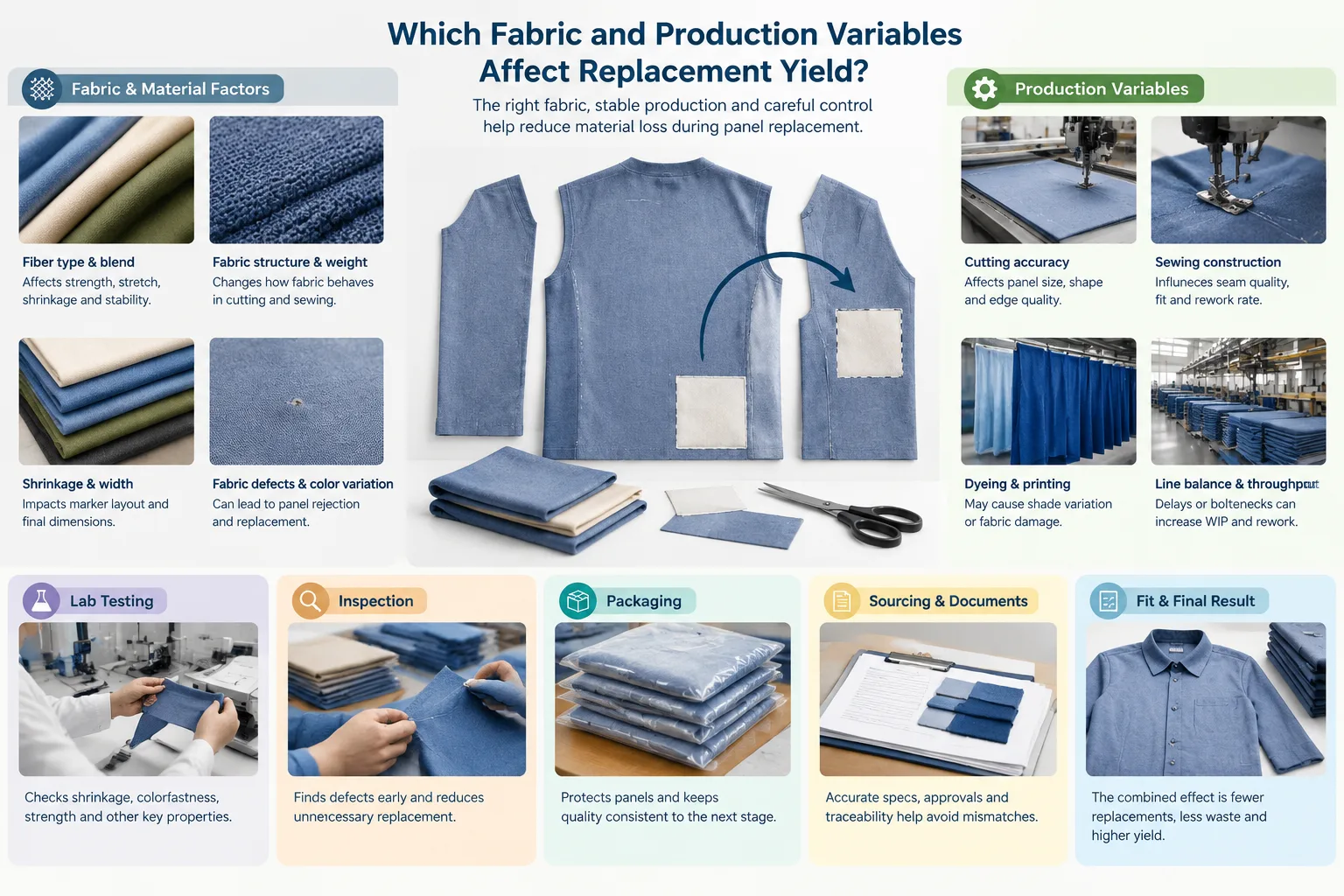
Which Fabric and Production Variables Affect Replacement Yield?
Replacement yield depends on the fabric that is actually available, not simply the width, shrinkage, or condition stated in an earlier record. Nominal roll width can differ from usable width when selvages, edge damage, surface defects, holes, stains, or other restricted areas cannot be included in the panel. Before recutting, teams should check the material from the relevant production batch.
Shrinkage and fabric relaxation can also affect whether a replacement remains compatible with the original garment. A result from sample fabric does not automatically represent every later roll or color lot. The applicable measurements, conditioning process, and acceptance requirements should come from the approved specification and the controls used for that order.
Shade or color lot is another practical restriction. Material may be technically large enough for the pattern but unsuitable if its appearance differs from adjoining panels. Roll-to-roll variation can be especially visible when the replacement sits beside an original piece, such as a sleeve next to a bodice or one trouser leg beside the other. Some cases may require a matched pair or set to be evaluated rather than one isolated panel.
Direction further reduces placement choices. Nap, one-way designs, directional prints, stripes, and plaids can prevent a pattern from being rotated into an apparently open area. Matching requirements may demand additional fabric beyond the panel’s measured area. Grainline, seam allowances, notches, mirrored pieces, and print position must therefore be considered before a remnant is classified as usable.
Operational timing matters as well. A remnant may offer low material demand but be difficult to identify or approve quickly. Conversely, opening a roll may accelerate recutting while disrupting material reserved for another lay. The practical choice depends on available material, production priorities, approval time, and the location of the actual bottleneck—not only cutting speed.
How Can Teams Measure Whether Replacement Waste Is Actually Falling?
Effective panel replacement waste tracking begins with consistent event records. Each request can identify the style, panel, size, color, material lot, production stage, defect reason, replacement source, and quantity approved. Material issued should be recorded in a consistent unit so similar orders or review periods can be compared without mixing length, area, weight, or undocumented estimates.
Teams should keep three outcomes separate: material use prevented through repair or better control, approved remnants reused for replacement, and material sent for further handling after waste has already occurred. These categories describe different results. In particular, sending discarded fabric to another organization does not by itself demonstrate that the material was ultimately recycled or recovered.
A useful review compares replacement material issued with the number and type of accepted panels produced. However, a lower material draw is not sufficient evidence of improvement on its own. Requests may have been delayed, defects may have gone unreported, or mismatched panels may have moved to a later inspection stage. Material data should therefore be reviewed alongside rejection, rework, waiting, and final acceptance information.
Weekly or order-level reviews can group recurring causes such as cutting errors, fabric defects, sewing damage, shade mismatch, incorrect pattern information, or late inspection. The purpose is not to produce an unsupported industry benchmark. It is to identify the most frequent preventable cause within a defined operation and assign one practical corrective action, such as improving roll identification or checking pattern details before recutting.
What Are the Limits of a Low-Waste Panel Replacement Plan?
The option using the least new fabric may still be unacceptable. Shade, hand feel, shrinkage behavior, appearance, durability, print placement, construction, or customer requirements can override a low-material choice. Waste reduction should operate within the approved product standard rather than becoming a reason to release a questionable panel.
Remnant reuse can also transfer risk when material identity is incomplete. A piece with unknown lot, finish, condition, direction, or defect history may cause another rejection and consume additional labor and fabric. Accurate labeling improves decision-making, but it does not replace inspection or the approvals required for the specific product.
End-of-line inspection has similar limits. It may identify a mismatched or damaged replacement, but it cannot remove all systemic problems created earlier through inaccurate cutting information, weak fabric control, repeated sewing damage, or delayed defect detection. Prevention should address the point where the problem originates rather than relying exclusively on final inspection.
Teams should distinguish buyer specifications, internal factory practices, material-specific test results, regulatory requirements, and editorial recommendations. They are not interchangeable. No fixed saving, universal replacement rate, or compliance result can be promised without evidence that applies to the relevant fabric, garment, market, and production process.
A Practical Checklist for the Next Panel Replacement Request
- Confirm that replacement is necessary and determine whether an approved repair or rework method is permitted.
- Identify the exact style, panel, size, color, material lot, direction, quantity, defect reason, and required completion point.
- Search labeled remnants and available same-lot material before opening another roll or planning a separate lay.
- Check usable width, relevant shrinkage information, shade, fabric condition, grain, nap, and directional design requirements.
- Verify the correct pattern version, seam allowances, notches, mirrored-piece requirements, and stripe, plaid, or print placement.
- Obtain the appropriate approval if the proposed source differs in lot, shade, finish, construction, or other controlled characteristics.
- Record the selected source, material issued, accepted result, remaining usable material, and disposition of the rejected panel.
- Feed preventable causes back into fabric inspection, cutting, pattern control, material records, or sewing training.
The next useful step is to compare this checklist with the team’s current request and material-control records. Related Apparel Manufacturing Tools can support further learning, but each workflow should remain aligned with the applicable product specification, quality system, and production conditions.
Frequently Asked Questions
What is panel replacement waste reduction in garment manufacturing?
It is the controlled reduction of additional fabric issued, discarded, or left unusable when an unacceptable garment panel must be repaired, recut, or substituted while maintaining the approved product requirements.
Is it always better to use a fabric remnant for a replacement panel?
No. A remnant is suitable only when its identity, condition, usable dimensions, shade or lot, direction, and placement requirements can be verified and approved.
How do shade lots and fabric width affect replacement-panel waste?
Shade requirements can restrict which roll or remnant is acceptable, while usable width determines whether the pattern fits after selvages and defects are excluded. Both can increase the material needed beyond the panel’s measured area.
Should a damaged panel be repaired or recut?
The decision depends on the defect, fabric, construction, appearance requirements, and approved specification. Repair can reduce new material use, but it should not be used when it creates unacceptable quality or durability risk.
What information should be recorded for each replacement panel?
Useful records include style, panel, size, color, lot, quantity, defect reason, production stage, replacement source, approval decision, material issued, inspection result, and remaining-material disposition.
How can a factory tell whether replacement waste is actually decreasing?
It can compare consistently measured replacement material and accepted panel output over time, then review the results alongside defects, rework, delayed requests, and final rejection data. Internal trends are more informative than unsupported universal benchmarks.