Supplier shutdown planning for an apparel business is the process of preparing conditional decisions for an interruption or loss involving a supplier and the production dependencies connected to it. The disruption may be temporary or permanent, and it may involve a garment factory, subcontractor, fabric or dyeing source, yarn supplier, or another upstream node. The purpose is to understand exposure, protect critical commitments where feasible, and decide when to adapt, transfer, delay, or stop affected work.
This is scenario planning, not a prediction that a supplier will close. The appropriate response depends on the product, order status, supplier relationship, available alternatives, approvals, inventory, and commercial constraints. Apparel Wiki provides independent educational guidance as a garment-industry knowledge blog, not as a manufacturer, factory, sourcing agent, or service provider. For site context, see the Sponsor page.
What does supplier shutdown planning mean for an apparel business?
An apparel supplier shutdown plan organizes what a business should verify and decide if a production or sourcing relationship becomes unavailable. “Shutdown” can describe a short operational pause, an extended interruption, a permanent closure, or a loss of access to one process while other parts of the supplier remain active. The practical question is not only whether a factory is operating, but whether the specific fabric, construction, order mix, and approvals required by the business can still be completed.
A useful plan links the possible interruption to real work: styles in development, purchase orders, materials already ordered, work in progress, finished goods, customer commitments, and payment or contract obligations. Some activities may continue while another dependency is unavailable. Others may need a new source, a product change, a revised delivery commitment, or a commercial decision to reduce or cancel the work where that is feasible.
General operating patterns should be separated from project-specific recommendations and hypothetical examples. A business should confirm supplier status through current records and direct communication before treating an interruption as fact. The plan then becomes a structured way to act under uncertainty rather than a guarantee of replacement capacity, product equivalence, or delivery performance.
Which suppliers and production dependencies should you map first?
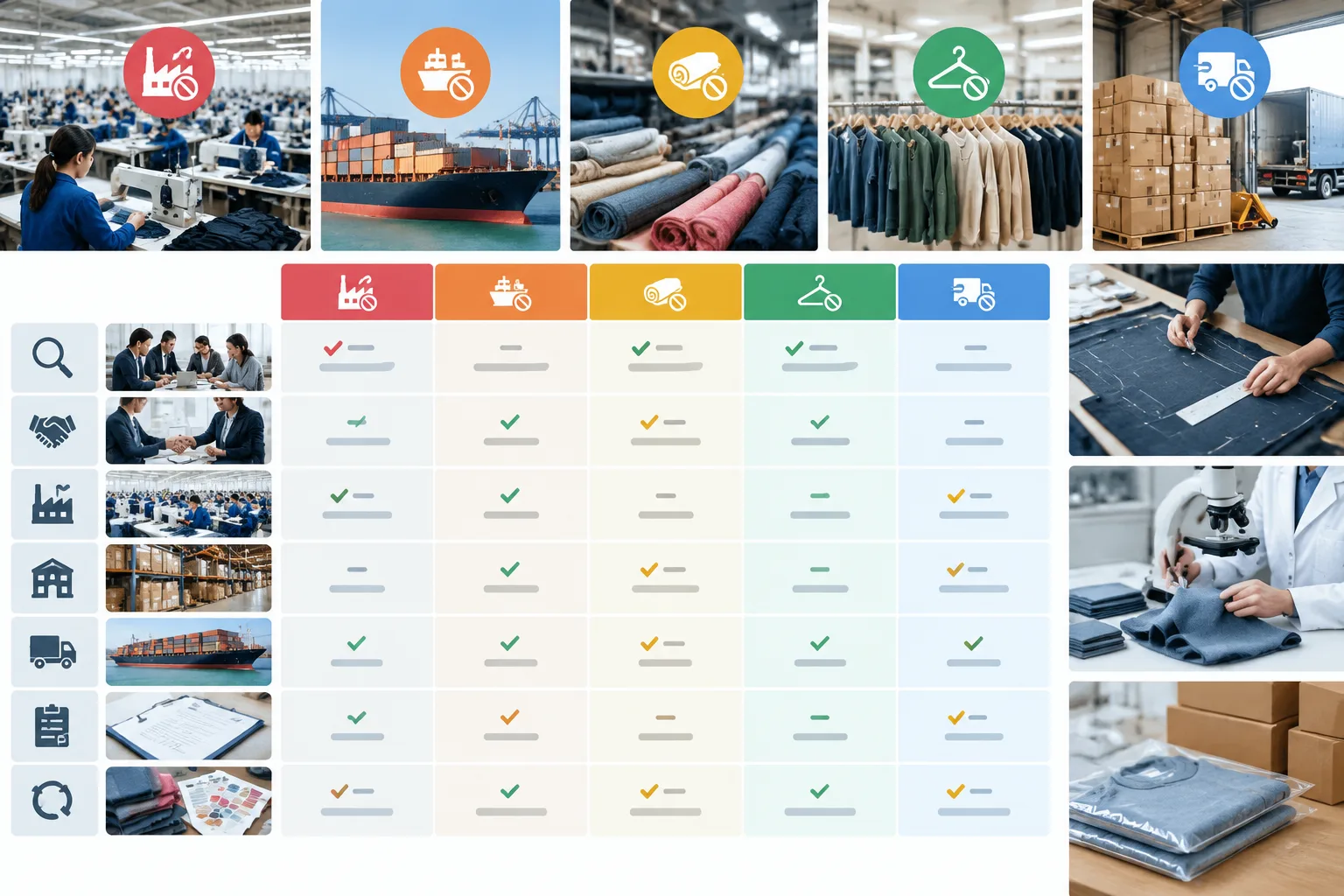
Begin with the direct supplier named in the purchase order or commercial record, then map the production stages that matter to the product. Depending on the garment, these may include yarn, fabric formation, dyeing, printing, finishing, trims, cutting, sewing, washing, pressing, packing, and raw-material sources. Not every style uses every stage, so the map should follow the actual product rather than a generic supply-chain diagram.
Record known subcontracting arrangements separately from assumptions. A supplier may disclose a production site, while other processing or material steps remain unverified. A first-tier supplier address is not proof of where the complete supply chain is located, and a factory’s stated role does not automatically establish ownership, control, or responsibility for every upstream activity.
Connect each node to the work it could affect. Useful links include:
- supplier or facility name and role;
- style, material, color, or component involved;
- purchase order, sample, or development project;
- production stage and current status;
- approval, testing, or inspection dependency;
- expected delivery commitment;
- evidence source, confidence level, and open questions.
For company-specific mapping, compare contracts, supplier disclosures, purchase orders, production records, and direct confirmations. Mark information as confirmed, reported but unverified, assumed, or unknown. That distinction keeps an apparel supply chain visibility exercise honest: a neat map is not necessarily a complete map when subcontractors, material sources, or processing locations have not been checked.
Which supplier shutdown scenarios are worth planning for?
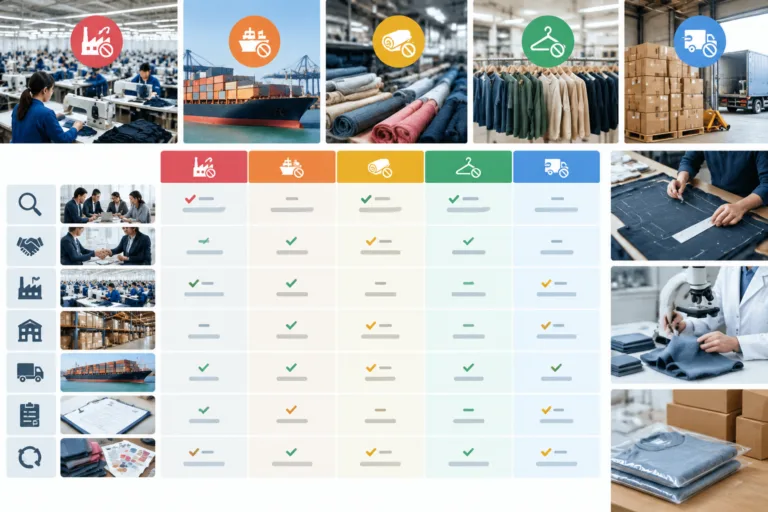
A focused scenario set helps a clothing business compare materially different interruptions without presenting any of them as a forecast. At minimum, consider a short interruption, an extended interruption, a permanent closure, and a disruption affecting an upstream material or process node. The last case matters because a garment supplier may remain open while a fabric, dyeing, finishing, or trim dependency becomes unavailable.
For each scenario, define the trigger, assumed scope, affected work, information still unknown, and planning horizon. Separate a confirmed supplier status from a warning signal or contingency assumption. For example, a direct notice of closure is evidence about status; an unanswered message is an information gap; a planning assumption that production could pause for several weeks is hypothetical unless supported by current records.
| Scenario | Assumed scope | Evidence status | Decision to prepare |
|---|---|---|---|
| Short interruption | One process or site is temporarily unavailable | Confirm dates, affected orders, and work in progress | Wait, reschedule, or use available stock |
| Extended interruption | Capacity or access remains uncertain | Track supplier updates and critical-path exposure | Start evaluating transfer or product changes |
| Permanent closure | The supplier relationship or production site is lost | Require direct confirmation and record review | Qualify another source or reduce affected work |
| Upstream disruption | A material or process node is unavailable | Verify inventory, substitutes, and approvals | Protect the product decision and downstream schedule |
Prioritize scenarios by potential operational and commercial consequences, not by unsupported likelihood estimates. A lower-volume style may still deserve attention if it uses a unique material or has a fixed launch commitment. Conversely, a broad disruption may be manageable when approved inventory or an established alternative is genuinely available.
How could a shutdown affect orders, timing, and inventory?
Trace each affected order from purchasing preparation through processing, queue time, transport, customs where relevant, and approvals. The purpose is to identify dependencies and the critical path, not to add nominal durations and present the result as a certain revised delivery date. Some activities can continue in parallel, while others cannot begin until a material, sample, inspection, or approval is available.
For every order, identify what the interrupted supplier controls and what another party can continue. A business may still be able to complete unrelated styles, prepare packaging, review fit comments, or arrange transport for finished goods already released. Those activities should be separated from work that remains blocked by missing fabric, unfinished processing, unavailable equipment, or an unapproved substitute.
Inventory can buffer different kinds of disruption, but its usefulness depends on identity, location, ownership, condition, and product compatibility. Finished goods may protect an immediate customer commitment; work in progress may be difficult to redirect; raw materials may preserve a style but still require processing elsewhere. Record who bears the risk of unused, obsolete, or non-transferable stock before treating inventory as a solution.
- Confirm the quantity and status of finished goods, work in progress, and raw materials.
- Link inventory to the affected style, color, size range, lot, or order.
- Check whether goods are accessible, released, owned, and usable for the required commitment.
- Record missing milestones, approvals, logistics assumptions, and current supplier information.
- Update delivery estimates only when the relevant capacity and dependencies are verified.
This order-to-delivery review shows whether the business should wait, reallocate stock, transfer production, modify the product, or reconsider the commitment. It also exposes unknowns early, before an assumed recovery date becomes an unsupported promise.
What response options should you compare in each scenario?
Once the affected orders and dependencies are clear, compare response paths against the same criteria. A practical matrix can include feasibility, evidence required, timing dependencies, quality or approval implications, commercial exposure, and reversibility. This keeps an urgent decision from becoming an unsupported assumption that any available supplier, material, or inventory can solve the problem.
| Response | Questions to check |
|---|---|
| Wait or reschedule | Is the supplier status confirmed, and can the affected commitment tolerate the uncertainty? |
| Reallocate available stock | Does the stock match the required style, color, size range, condition, ownership, and destination? |
| Transfer production | Can another source handle the specific fabric, construction, order mix, approvals, and relevant processes? |
| Change the product | What material, construction, fit, appearance, or approval consequences would the change create? |
| Reduce or cancel work | What do the applicable agreements and commercial discussions permit, and who bears resulting losses? |
Waiting may preserve product consistency, but it leaves the business exposed if the supplier cannot provide a reliable status or recovery path. Stock reallocation can protect a commitment while creating shortages elsewhere. Holding finished goods is different from holding work in progress or raw materials: each buffers a different uncertainty and may have different ownership, handling, and obsolescence risks.
When evaluating an alternative garment supplier, inspect evidence connected to the actual product and order. Relevant evidence may include comparable samples, process explanations, trial-order results, approval records, and verifiable production documentation. Facility photographs or equipment lists can provide leads, but they do not establish that a source can consistently manage the required fabric, construction, quality expectations, or order combination.
Also identify the commercial parties clearly. The quoting party, contracting party, payment recipient, production site, and subcontractor may not be the same entity. Confirm the production arrangement, permitted subcontracting, capacity for the relevant work, commercial terms, and approval responsibilities through current records and direct communication. Do not infer quality from country, company size, or a low quote alone.
How can you turn scenarios into a usable shutdown plan?
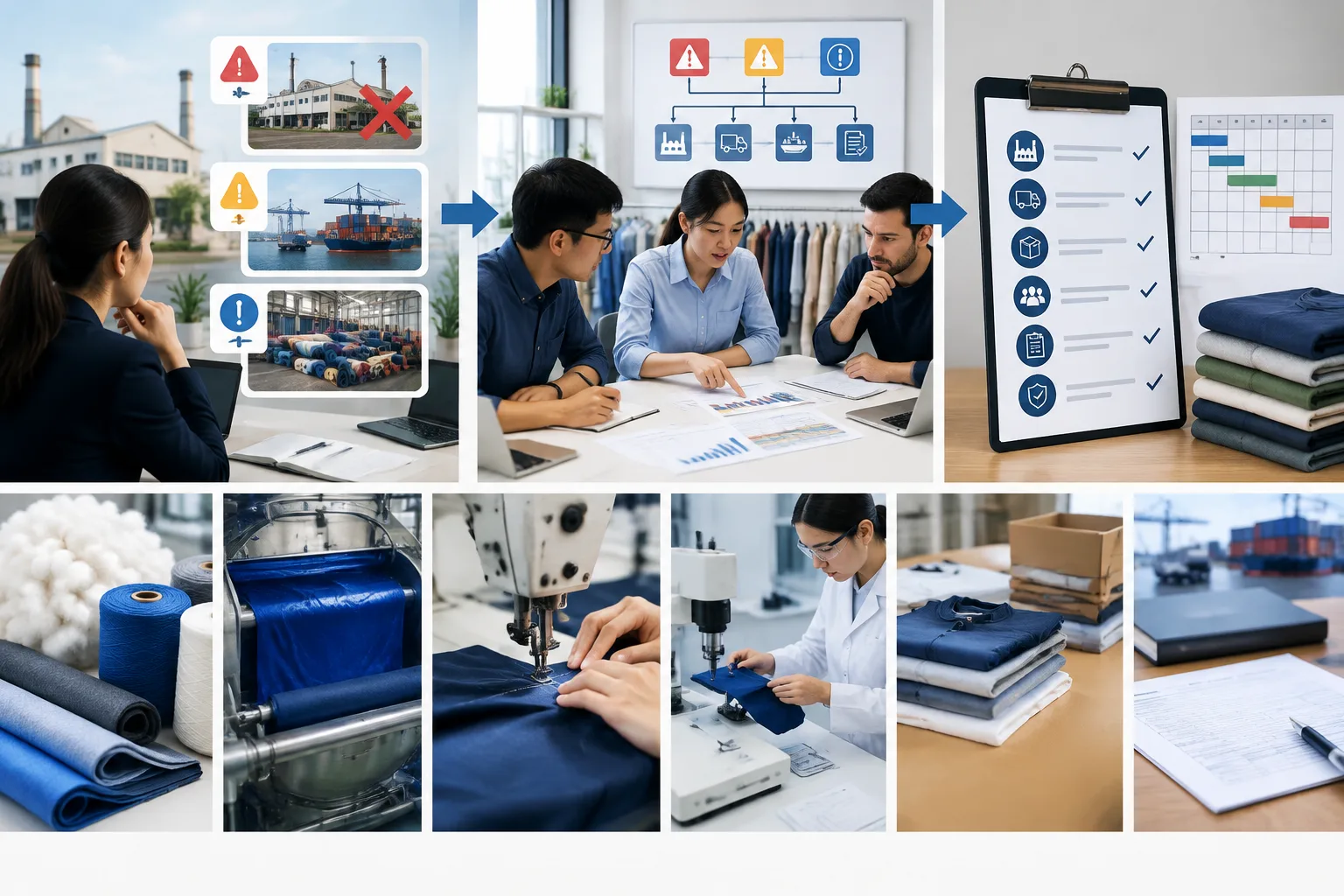
A usable apparel supplier shutdown response plan should fit on a working checklist or concise planning record. Assign an owner for supplier contact, an owner for order and inventory review, and named decision-makers for product, quality, commercial, and internal communication issues. The goal is not to create a complicated score; it is to make the next decision visible and accountable.
- Record the trigger, confirmed status, or signal that activated the scenario.
- List affected suppliers, materials, styles, orders, locations, and production stages.
- Separate verified facts from assumptions, open questions, and hypothetical planning conditions.
- Document immediate actions, approval dependencies, decision deadlines, and escalation contacts.
- Record the evidence supporting each status update, including its date and source.
- State who may approve waiting, substitution, transfer, reduction, cancellation, or customer communication.
Maintain a link between supplier and material identities and the events associated with them. Depending on the business, that record may include a batch or lot reference, status update, date, location, handling action, order relationship, and supporting document. Digital tools or scans can help connect these records. They do not, by themselves, prove that an identity, location, or status was entered correctly. Teams can review suitable Apparel Manufacturing Tools when organizing production and traceability information, while still validating important records independently.
Set review triggers around business events rather than relying only on a calendar. Examples include a change in supplier status, a missed production milestone, a new subcontracting disclosure, a material substitution, a changed order mix, an approval rejection, or a confirmed inventory movement. Reopen the scenario when one of these events changes the assumptions behind the response.
What are the limits of scenario planning, and when should you revise it?
Scenario planning organizes decisions under uncertainty; it does not guarantee supplier information, replacement capacity, product equivalence, or delivery results. A plan can show what the business intends to check and who should act, but it cannot turn an unverified recovery statement into a confirmed date or make an untested alternative equivalent to the original source.
Common gaps include undisclosed subcontractors, upstream locations that have not been confirmed, stale inventory records, unclear ownership of goods, and alternatives that have never been evaluated against the product. A supplier dependency map may therefore be useful while still incomplete. Mark confidence and open questions explicitly so that missing information is not mistaken for evidence that no dependency exists.
Revise the plan when supplier relationships, products, orders, approvals, inventory, production arrangements, or logistics assumptions change. Recheck the plan after a new supplier is added, a material is replaced, a process is moved, or a major commitment becomes dependent on one source. Where decisions involve specialized contract rights, logistics constraints, quality requirements, or material commercial exposure, obtain advice from appropriately qualified professionals for the relevant jurisdiction and subject.
Apparel Wiki is an independent educational publication, not a factory, laboratory, certifier, manufacturer, or sourcing service provider. This article offers general planning guidance. Company-specific decisions should be based on current records, direct confirmations, applicable agreements, and qualified advice.
Next step: Turn the four scenarios from Part 1 into a one-page review sheet. For each one, name the trigger, affected work, evidence still needed, decision owner, and next review date. That simple record can expose the most important unknown before a shutdown becomes an urgent operational decision.
FAQ
What is supplier shutdown planning in the apparel industry?
It is the process of preparing conditional decisions for a temporary interruption, extended disruption, or permanent loss involving a garment supplier or an upstream material or production node. It helps a business map exposure, compare responses, and track evidence without treating a shutdown as certain.
How should a small clothing business map supplier dependencies?
Start with each direct supplier, affected style, material, order, production stage, and approval. Add known fabric, dyeing, finishing, yarn, raw-material, and subcontracting relationships where relevant. Mark each connection as confirmed, assumed, unknown, or awaiting direct verification.
Should an apparel brand keep extra inventory in case a supplier shuts down?
Not automatically. Finished goods, work in progress, and raw materials buffer different risks and may not match the required style, color, size, condition, or destination. Compare the operational benefit with storage, ownership, cash-flow, obsolescence, and unused-stock risks for the specific business.
How can a business assess an alternative garment supplier after an interruption?
Check evidence related to the actual product and order, including comparable samples, process capability, approval requirements, trial performance, production records, commercial parties, and subcontracting arrangements. A facility image, equipment list, location, company scale, or quote alone does not establish a suitable match.
How often should an apparel supplier shutdown plan be reviewed?
Review it whenever a material assumption changes, such as supplier status, order mix, inventory, approvals, production location, subcontracting, or logistics. A periodic review can supplement these event-based updates, but a calendar date should not replace review after a significant business change.