
apparel manufacturing

This image illustrates the careful selection and examination of cotton and polyester yarns alongside fabric swatches, emphasizing the critical first step of choosing and classifying raw textile inputs in apparel manufacturing.

Complete Guide to Fabric Classification in Apparel Manufacturing

Understanding fabric classification is central to high-quality apparel manufacturing. Whether you’re a designer, sourcing manager, or factory technician, knowing the types of fabrics, textile categories, and how manufacturers select them is crucial to creating garments that perform, last, and look right. This guide draws on decades of hands-on experience from the production floor to break
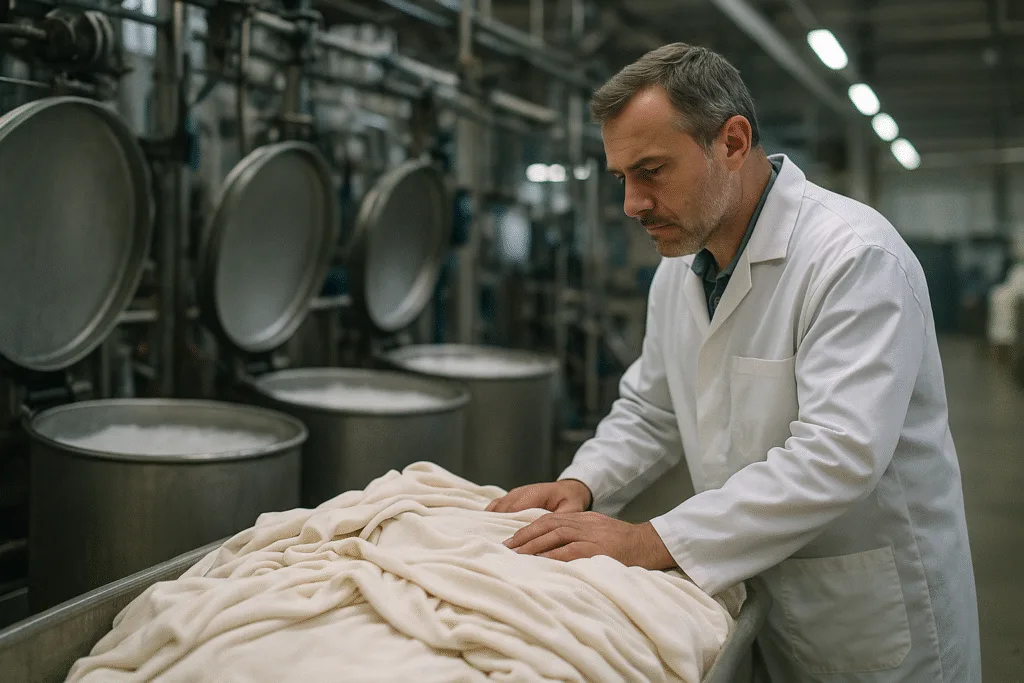
Shows an actual production process where cotton jerseys undergo enzyme wash to remove loose surface fibers, demonstrating how chemical finishing combats fabric pilling.

Why does my fabric pill and how can I prevent it?

Understanding Fabric Pilling: What It Is and Why It Matters Fabric pilling is one of the most common frustrations for both garment buyers and factory professionals. Those little fuzzy balls, especially on active shirts, loungewear, or robust polos, can undermine a garment’s durability and appearance. At Apparel Wiki, we often hear from buyers and designers

Shows a textile factory scene where the fabric's grainline is checked with a ruler during inspection of cotton and jersey rolls, supporting the importance of warp/weft alignment.

What Is “Grainline” in Apparel?

Understanding the Grainline: Foundation of Apparel Fabric The concept of “grainline” is one of the cornerstones of garment construction and pattern cutting. Knowing the grainline meaning is essential for anyone involved in apparel design or manufacturing, as it determines how a fabric behaves when laid, cut, and worn. Grainline refers to the direction of the

Scroll to Top