
Introduction to Cradle to Cradle and Eco-Design
Cradle to Cradle, Eco-Design is revolutionizing the way we think about sustainable product development. Instead of the “take-make-waste” model, this approach encourages designers and manufacturers to consider products as part of a never-ending cycle. By prioritizing the health of materials, reuse, and circularity, Cradle to Cradle principles help brands create items that are good for both people and the environment. This article unpacks core concepts, the demanding certification process, real-world examples, and the significant role of innovation in eco-design, especially for metals.
What Is Cradle to Cradle Design?

Cradle to Cradle design focuses on continuous material cycles, similar to nature where nothing becomes waste. Products are designed so materials can be reused repeatedly—or safely returned to the environment. This method relies on detailed material assessments and lifecycle thinking. The aim? Achieve products that are safe, circular, and responsibly made. Apparel Wiki notes that for designers in textiles or metals, understanding Cradle to Cradle’s foundational ideas can help avoid common pitfalls in eco-innovation projects.
The Principles Behind Cradle to Cradle, Eco-Design
Fundamental Cradle to Cradle, Eco-Design principles include:
- Material Health: Use safe ingredients that nourish the environment and humans.
- Material Reutilization: Ensure all materials can either be endlessly recycled or composted.
- Renewable Energy: Power facilities and processes with clean, renewable energy.
- Water Stewardship: Manage water responsibly, aiming for water that leaves the process as clean as or cleaner than it started.
- Social Fairness: Support fair, responsible business practices for communities and workers throughout the value chain.
History and Evolution of Cradle to Cradle Certification
The Cradle to Cradle concept emerged from the work of chemist Michael Braungart and architect William McDonough in the 1990s. It evolved into a global certification standard, administered by the Cradle to Cradle Products Innovation Institute. The program’s continuous updates reflect new scientific research and deepen sustainability criteria.
Why Lifecycle Thinking Matters in Eco-Design
Lifecycle thinking means mapping a product’s journey—from raw materials to end-of-life. Cradle to Cradle, Eco-Design stands out because it zeros in on every stage: extraction, manufacturing, transport, use, and recirculation. Brands embracing this perspective uncover where hidden environmental impacts exist. For instance, identifying where excess waste is created can lead to exploring strategies like reducing production waste at the design stage, a move that benefits both the environment and the bottom line.
The Five Levels of Cradle to Cradle Certification
Achieving Cradle to Cradle certification is no small feat. There are five progressive achievement levels for products—Basic, Bronze, Silver, Gold, and Platinum. Each level has increasingly rigorous requirements for:
- Material health and ingredient disclosure
- Material reutilization
- Renewable energy and carbon management
- Water stewardship
- Social fairness
Moving up the levels signals a deeper commitment to world-class sustainability.
Cradle to Cradle Certification Process Explained
The path to Cradle to Cradle certification follows these steps:
- Product assessment and material disclosure
- Third-party validation by qualified assessors
- Performance scoring in each core category
- Addressing gaps to meet the minimum status for each level
- Ongoing improvement and re-certification every two years
Criteria for Earning Cradle to Cradle Certification
Material Health Requirements
Every single material and chemical ingredient in a product must be identified and evaluated against rigorous safety and health criteria. Products containing banned substances are immediately disqualified or required to develop robust replacement plans.
Material Reutilization Standards
Products must demonstrate that materials are designed for perpetual recycling or safe composting. This includes strategies such as mono-material design, which simplifies recycling at the end of a product’s life.
Renewable Energy Goals
Manufacturing and supply chains need to shift toward renewable electricity and measurable carbon reductions over time.
Water Stewardship Criteria
Facilities are required to take active steps to protect water quality. For higher certification levels, closed-loop water systems and positive-impact strategies are essential.
Social Fairness Measures
Companies must demonstrate programs supporting worker well-being, community engagement, and responsible sourcing across supply networks.
Benefits of Cradle to Cradle, Eco-Design for Manufacturers
Manufacturers see significant upsides. Earning this certification can:
- Open doors to new markets, especially where green credentials are mandatory
- Boost supply chain transparency and trust
- Accelerate innovation, such as through designing for durability to reduce waste
- Streamline compliance with emerging global regulations
- Enhance reputation with eco-conscious consumers
What Does Cradle to Cradle, Eco-Design Offer Consumers?
For buyers, this label signals safer, more responsible products. Consumers are assured that what they use every day—whether clothing, building materials, or electronics—was made with rigorous standards and can safely cycle back into the environment or economy. It’s a strong alternative to generic “eco-friendly” claims.
The Role of Innovation in Modern Eco-Design
Innovation is the engine powering Cradle to Cradle, Eco-Design. Brands often need to rethink traditional practices. For example, shifting to mono-materials or developing new upcycling strategies for metal products ensures that materials maintain value beyond their first use. This is where eco-design intersects with engineering creativity.
Tackling Challenges: Eco-Design & Metals
In the context of metal products, Cradle to Cradle challenges include cleaning recycled metals, controlling alloy content, and designing for easy disassembly. Industry players increasingly adopt solutions like design for disassembly, which makes it simpler to reclaim valuable components at end-of-life.
Real-World Examples of Cradle to Cradle Success
Several companies have earned the Cradle to Cradle Mark. Examples include:
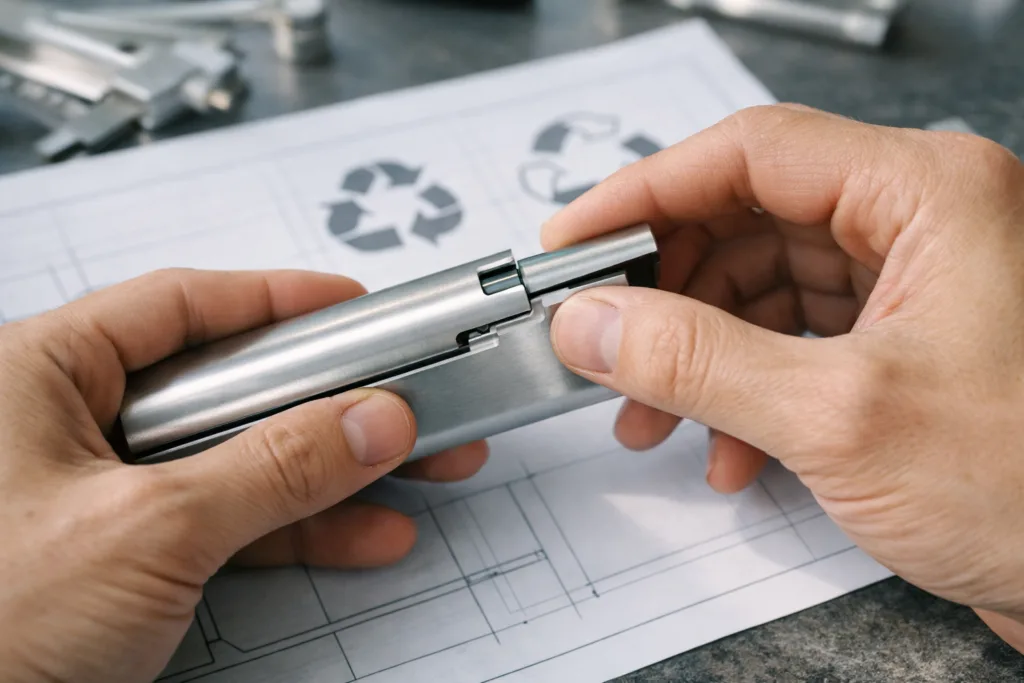
- Carpet tile manufacturers using fully recyclable backing and non-toxic adhesives
- Laptop makers pioneering modular devices that users can upgrade or recycle easily
- Metal roofing brands optimizing their products for disassembly and secondary use
For more industry-specific strategies, see how zero waste pattern cutting can help minimize production waste from the beginning.
Key Differences: Cradle to Cradle vs. Other Certifications
Unlike linear-focused certifications like “recycled content,” Cradle to Cradle, Eco-Design is holistic. It covers every product element and requires improvement over time. This dynamic model contrasts with static standards—pushing companies to continuously innovate and enhance their sustainability practices.
Material Health: Zeroing in on Safe Ingredients
Ingredient transparency is a core requirement. Brands must trace all materials, including dyes and finishes. Transitioning to safer alternatives can reduce environmental impact and boost product performance—important for both apparel and metals sectors.
Boosting Circularity: Material Reutilization in Action
Material reutilization means a product’s raw components are reused with little or no loss in quality. Mono-material construction, such as using a single type of recyclable plastic or metal, can greatly improve product recyclability and ease of processing in recycling systems.
Design for Disassembly: Making Circularity Practical
Practical circularity means designing joints, fasteners, and construction methods so that metal frames, fabric, or trims can be separated without special tools. This design philosophy not only supports Cradle to Cradle certification but also simplifies upcycling and repair, keeping materials in the loop longer.
Renewable Energy and Water Stewardship: Sustainability in Manufacturing
Manufacturers need to move away from fossil fuels, investing in solar, wind, or hydro sources. The same goes for water systems—developing effective closed loops reduces waste, costs, and compliance headaches over time.
Social Responsibility and Community Impact
Cradle to Cradle goes beyond the factory floor, demanding respect for workers’ rights, local community engagement, and supply chain transparency. Strong social programs underpin truly sustainable development.
Cradle to Cradle, Eco-Design in Fashion and Metals: A Comparative View
For apparel, eco-design often focuses on safe textiles, recyclability, and smart labeling. In metals, efforts might include modular design, closed-loop recycling, or traceable sourcing. Both sectors benefit from clear communication tools like those found on Apparel Wiki, which help demystify technical standards for industry professionals.
Risks and Common Pitfalls in Certification
Pursuing certification isn’t always smooth. Challenges include full ingredient traceability, supply chain complexity, and upfront investment costs. Brands should prepare by running transparent pilot projects and engaging all stakeholders early on.
The Future of Cradle to Cradle, Eco-Design
Sustainable product standards will only get tougher as eco-design goes mainstream. Expect next-generation products to embed digital IDs, smarter tracking, and even integrate recycled content in ways that boost—not compromise—performance.
How to Start on the Path to Certification
Companies can begin by doing a self-assessment against Cradle to Cradle principles and mapping out existing material flows. Tapping knowledge sources and practical manuals, like those on Apparel Wiki’s apparel manufacturing tools, can help structure early-stage improvements.
Key Takeaways for Manufacturers and Designers
- Start with lifecycle mapping and ingredient transparency
- Pilot mono-material and modular construction for circularity
- Prioritize renewable energy and water efficiency upgrades
- Build strong social responsibility into every supply contract
Conclusion: Why Cradle to Cradle Design Sets the Standard

Cradle to Cradle, Eco-Design sets a high bar for modern product creation. By taking inspiration from nature’s endless cycles, it ensures products are not just less harmful—but truly beneficial. While the path is rigorous, successful brands gain a powerful edge, proving sustainability and innovation really do go hand in hand. As lifecycle thinking takes hold and more sectors, from fashion to metals, embrace these standards, we edge closer to a regenerative economy where waste becomes a thing of the past. Forward-looking manufacturers and designers have much to gain by starting the certification journey now.
Frequently Asked Questions
What is Cradle to Cradle, Eco-Design in simple terms?
It is a design philosophy that ensures products can be fully recycled or returned to nature at the end of their life cycle, promoting circularity and continuous reuse.
How does the Cradle to Cradle certification process work?
The process involves third-party assessment of a product’s materials, energy, water, and social practices, with products certified at levels from Basic to Platinum.
Why is lifecycle thinking important in eco-design?
Lifecycle thinking helps brands identify and reduce hidden impacts at every step, from sourcing to end-of-life, making sustainability real and measurable.
What types of products can be Cradle to Cradle certified?
Many types, including textiles, building materials, metal goods, electronics, and even packaging, can earn certification if they meet strict standards.
What are the main benefits for manufacturers and consumers?
Manufacturers gain market access and strengthened reputation; consumers enjoy safer, healthier products and know their purchases support a circular economy.
Is Cradle to Cradle certification only for large companies?
No, small brands and startups can pursue certification too—especially by starting with a pilot product and scaling improvements as they grow.
Related Reading
- 7 Ways Mono-Material Design Supercharges Recycling & Sustainability
- Upcycling in Metal Production: Challenges and Real-World Benefits
- Design Longer-Lasting Clothing: 7 Proven Durability and Sustainability Strategies
- Transform Fashion Sustainability with Zero Waste Pattern Cutting Techniques
- Mastering Design for Disassembly: 10 Strategies for Circular Fashion Success