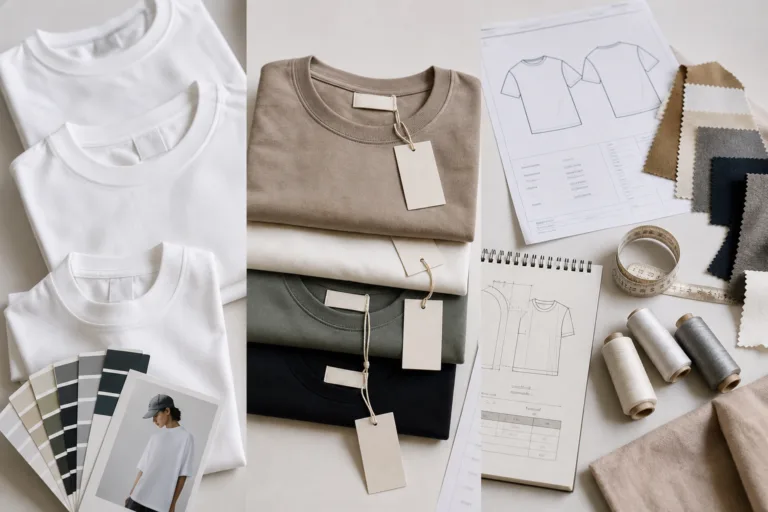
Choosing a production model is one of the earliest decisions that shapes how an apparel brand operates. When founders compare print on demand vs private label, they are really comparing risk, control, cash flow, brand identity, and operational complexity. Add custom manufacturing to the mix, and the decision becomes even more important because each model changes how products are developed, how fast they launch, how much money is tied up in stock, and how much influence the brand has over fabric, fit, construction, labeling, and customer experience.
If you also need broader context before deciding, the apparel manufacturing knowledge hub helps connect the business model question to the practical apparel details behind it. Readers often need more than a surface comparison: they need to understand how costing works, why MOQ changes by product type, how lead times affect launch timing, and where garment construction choices begin to matter. That foundation is especially useful when moving from idea-stage brand planning into actual product development and sourcing decisions.
Why the production model matters for apparel brands
In apparel sourcing practice, the production model is not just a supply method. It determines whether you are selling decorated stock blanks, pre-developed garments with your branding, or products built from your own specifications. That difference affects almost everything downstream: startup budget, unit economics, inventory exposure, defect risk, customization range, packaging options, and how easily a brand can scale without losing consistency.
A founder launching graphic T-shirts with no inventory budget faces a very different set of decisions from a founder building a cut-and-sew performancewear line. The first may value speed and low risk. The second may need strict fit control, fabric testing, trim selection, and supplier development. A practical comparison should therefore go beyond simple definitions and focus on how each model works in real apparel operations.
What is print on demand?
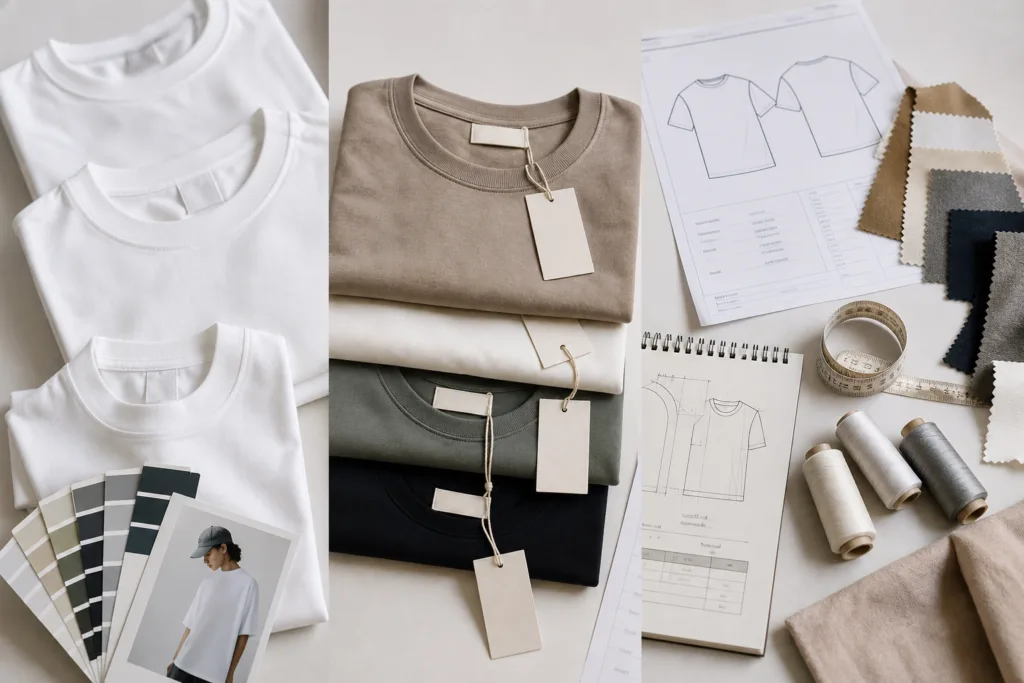
Print on demand, often called POD, is a business model where a base garment is produced only after a customer places an order. In most apparel cases, the product itself is a ready-made blank sourced by the POD provider, and the decoration is added after purchase using methods such as direct-to-garment printing, heat transfer, or embroidery. The seller usually uploads artwork, creates product listings, and routes orders through the platform or fulfillment partner.
The key point is that the brand usually does not manufacture the garment itself. It selects from available blank styles, colors, and sizes, then customizes surface design and sometimes labels or packaging depending on the supplier. This means POD is often closer to decoration fulfillment than to full apparel product development.
Typical POD workflow
- Choose blank garments from a catalog
- Upload artwork and create mockups
- List products on an online store or marketplace
- Receive customer order
- POD provider prints, packs, and ships the item
- Brand receives the margin between retail price and provider cost
Typical use cases include artist merchandise, slogan tees, event products, simple branded hoodies, and early-stage e-commerce tests. POD works best when the garment itself is not the main point of differentiation.
What founders gain and give up with POD
The main advantage is low inventory risk. There is usually no bulk stock purchase, and many providers have no formal MOQ. That makes POD useful for validating niche demand or launching with a limited budget. However, garment control is limited. Blank quality, fit, fabric composition, GSM, and available color range are defined by the supplier catalog. If a blank changes, stock-outs occur, or print quality varies across fulfillment locations, the brand has less control than in other models.
What is private label?
Private label means selling a pre-existing garment style made by a manufacturer or supplier, but under your own brand name. In apparel, this usually involves selecting stock or semi-stock styles, then adding your own neck label, care label, hangtag, packaging, and sometimes minor changes such as color choice, embroidery placement, or wash finish. The garment block, base fabric, and construction are typically already developed by the supplier.
Private label sits between POD and custom manufacturing. It gives more brand ownership than decorating blanks through a marketplace-based POD system, but it does not usually provide full control over pattern, measurements, fabric engineering, or construction architecture.
Typical private label workflow
- Select an existing supplier style
- Review fabric composition, GSM, fit, and available colors
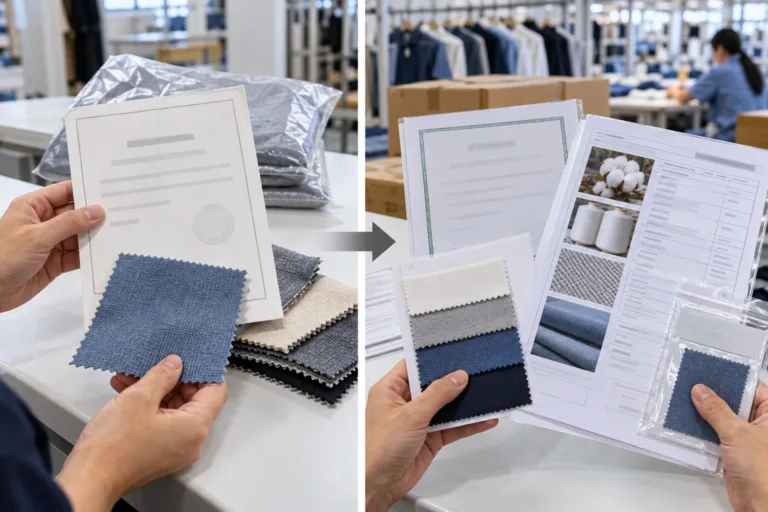
- Request samples
- Customize labels, tags, packaging, and limited design details
- Place a bulk order that meets the supplier MOQ
- Inspect production and receive inventory
Common private label products include basic T-shirts, polos, hoodies, sweatshirts, leggings, socks, uniforms, and lounge items where the brand wants ownership of presentation and repeat selling, but does not need fully custom development.
For many founders, private label is the first serious step beyond artwork-based selling. It requires inventory planning, but it also creates more stable branding and usually better margin potential than pure POD.
What is custom manufacturing?
Custom manufacturing means the garment is produced to your own specifications rather than chosen from a pre-existing catalog style. This can include custom pattern development, size specs, grading, fabric selection, dyeing, stitching details, trims, labeling, packaging, and finishing. In apparel development, this is often called cut-and-sew, bespoke product development, or full-package manufacturing depending on the supplier structure.
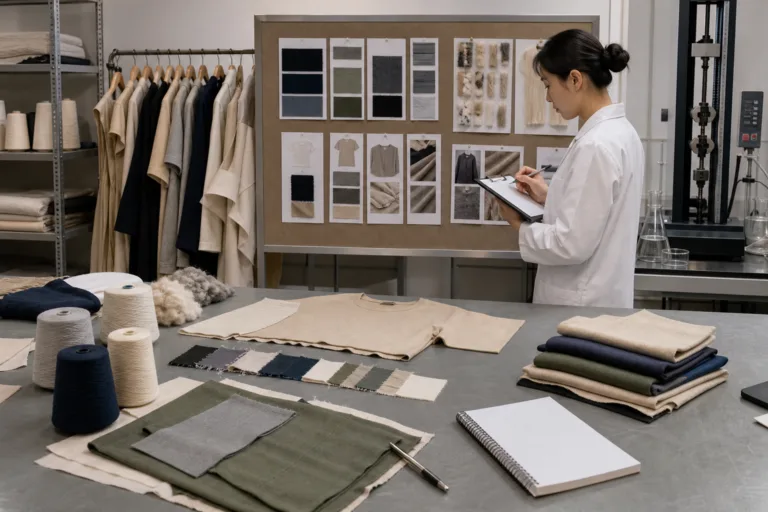
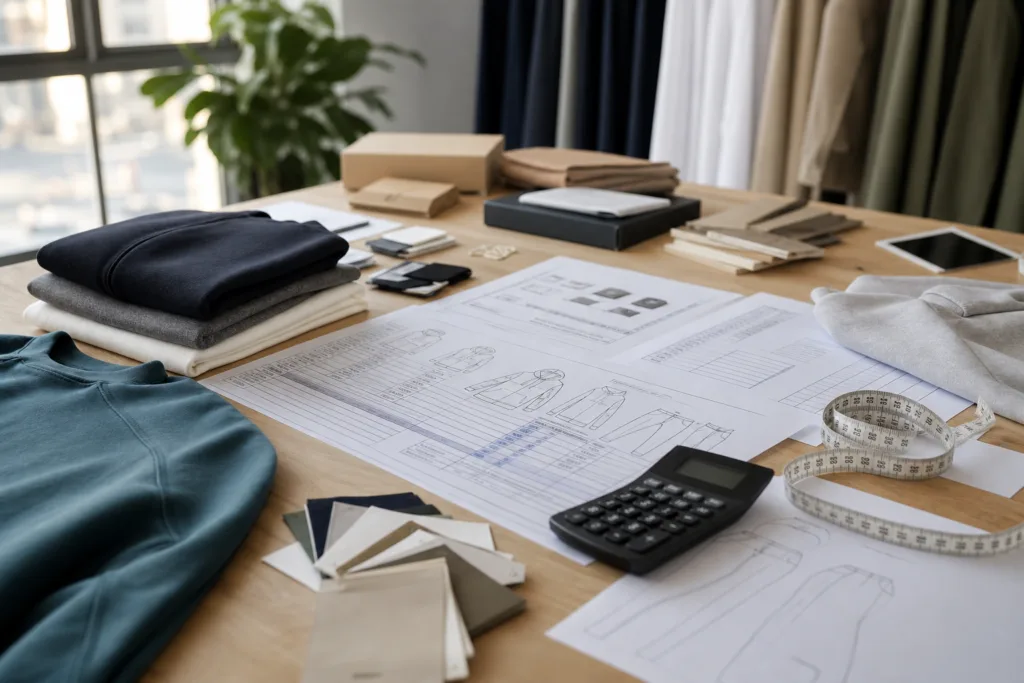
Custom manufacturing offers the highest control, but also the highest complexity. A brand may need a tech pack, measurement chart, bill of materials, prototype samples, fit approvals, fabric testing, color standards, and pre-production review before bulk starts. This model is common for founders building differentiated products where fit, hand feel, material performance, silhouette, or garment construction is central to the brand.
Typical custom manufacturing workflow
- Create product concept and specifications
- Develop tech pack and measurement chart
- Select fabric, trims, labels, and decoration methods
- Make prototype and fit samples
- Revise and approve pre-production sample
- Confirm MOQ, costing, and bulk timeline
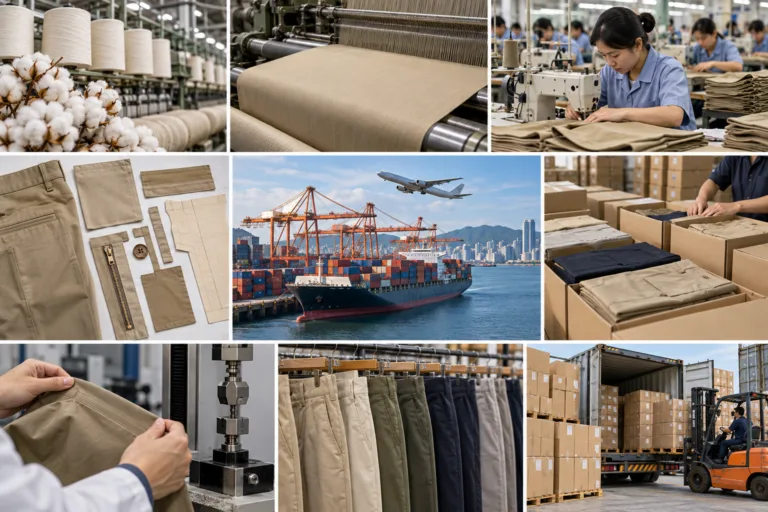
- Produce, inspect, pack, and ship bulk order
Examples include premium heavyweight tees with a proprietary fit, performancewear with specific stretch and moisture management targets, woven shirts with unique collar construction, or uniforms requiring exact branding, durability, and size consistency.
Print on demand vs private label vs custom manufacturing
When readers search print on demand vs private label, the missing third option is often custom manufacturing. Yet that third option explains the full decision ladder: lowest control and lowest risk on one side, highest control and highest complexity on the other.
| Factor | Print on Demand | Private Label | Custom Manufacturing |
|---|---|---|---|
| Product base | Supplier blank garment | Supplier-developed garment | Your own garment specification |
| MOQ | Usually none or per order | Low to moderate | Moderate to high |
| Startup cost | Low | Medium | High |
| Unit cost | High | Medium | Can be efficient at scale |
| Inventory risk | Low | Medium | High |
| Branding control | Low to limited | Moderate | High |
| Fit and fabric control | Very limited | Limited | High |
| Launch speed | Fast | Moderate | Slowest |
| Margin potential | Often lowest | Moderate | Highest potential if volume works |
| Operational complexity | Low | Moderate | High |
Cost comparison: setup cost, unit cost, and hidden cost
POD looks inexpensive because it avoids stock purchases, but low setup cost does not automatically mean low total cost. Per-unit fulfillment charges are usually high relative to bulk production. That compresses gross margin, especially on lower-ticket basics like tees.
Private label usually requires sample cost, label development, packaging setup, and bulk inventory payment. The total cash outlay rises, but the unit cost often drops compared with POD because garments are ordered in bulk. For founders comparing financial structure, a t-shirt cost breakdown by fabric, labor, and margin is useful for understanding how material, labor, and overhead interact once you move beyond on-demand decoration.
Custom manufacturing adds more cost layers: pattern development, sample rounds, fabric MOQ, trim sourcing, testing, freight, import duty, and quality control. However, when volume is sufficient, custom products can deliver stronger margins because the brand is no longer paying a premium for one-piece fulfillment convenience.
Hidden costs by model
- POD: platform fees, return handling, sample ordering for quality checks, limited packaging upgrades, and margin compression from provider pricing changes
- Private label: unsold inventory, relabeling mistakes, rework, warehousing, and freight
- Custom manufacturing: development iterations, failed sample rounds, fabric overage, testing, import costs, inspection cost, and production delays
For imported private label or custom production, the real landed figure matters more than quoted factory FOB price. Freight, duty, taxes, and destination charges can change the true economics, which is why a landed duty paid cost analysis for apparel is important before comparing suppliers across countries.
MOQ comparison: from no MOQ to factory minimums
MOQ, or minimum order quantity, changes the cash flow profile of each model. POD usually has the lowest barrier because production begins after sale. In practice, there may still be sample minimums or service thresholds, but not the classic factory MOQ seen in bulk manufacturing.
Private label often has low to moderate minimums. These may be set by style, color, or total order quantity. A supplier may allow 100 to 300 pieces per color in a stock body, while another requires carton-level or size-ratio commitments. Low MOQ does not always mean easy planning: if the ratio across sizes is wrong, popular sizes can sell out while slow sizes remain in inventory.
Custom manufacturing often involves layered minimums. The garment factory may quote a style MOQ, but fabric mills, dye houses, printers, and trim suppliers can add their own minimums. A founder asking for a custom dyed heavyweight French terry hoodie may face a garment MOQ plus a fabric color MOQ, plus zipper or label minimums. This is why custom projects often become more commercially viable when several colorways share the same fabric base and trim package.
Profit comparison: margin potential and scaling limits
POD often produces the lowest margin percentage because the provider is handling garment sourcing, single-piece decoration, and fulfillment. Brands can still make money with strong design positioning or niche audiences, but price sensitivity matters. A simple printed tee using a common blank may struggle if the market compares it directly with lower-priced alternatives.
Private label usually improves margin because bulk purchase lowers unit cost and the brand can shape perceived value through labels, finishing, packaging, and more consistent product presentation. Margins can improve further if the brand controls photography, merchandising, and repeat ordering well.
Custom manufacturing usually has the strongest long-term margin potential, but only if the brand can absorb development cost and drive enough volume. The ability to differentiate fit, fabric weight, detailing, or functionality supports stronger pricing power. But the model only works if sell-through justifies the larger upfront commitment.
A useful rule is this: margin potential rises with control, but so do development responsibility and inventory exposure.
Control comparison: product, branding, quality, and customer experience
This is where the difference between print on demand vs private label becomes especially clear. POD gives some design control over graphics, but limited control over the underlying garment. If the blank has a narrow neckline, thin GSM, poor opacity, or inconsistent size grading, the brand cannot easily fix it. In apparel development, product control starts with the base garment, not the print file.
Private label improves branding control. You may be able to add woven labels, neck prints, hangtags, polybags, and branded cartons. You can also choose among several house styles to find a closer fit to your target customer. But you still inherit most structural garment decisions from the supplier.
Custom manufacturing gives the highest control over fabric composition, GSM, shrinkage target, silhouette, seam construction, trim choice, care labeling, and packaging. It also creates the biggest quality responsibility. Once you control specs, you also need to control approvals, tolerances, and inspection logic. For broader terminology and construction guidance across these topics, Apparel Wiki is useful as a structured reference point.
Manufacturing location also affects customer experience and sourcing complexity. Country of origin, duty treatment, and import administration matter more once you move into private label and especially custom production using overseas factories. Founders dealing with international supply should understand Apparel country-of-origin rules because where cutting, sewing, and fabric processing occur can affect origin treatment and import planning.
Speed to market comparison
POD is usually the fastest way to launch because the platform already has garments, decoration methods, and fulfillment flow in place. Once product listings are ready, a store can go live quickly. However, fast launch does not always mean fast customer delivery, especially if the provider has peak-season congestion or uses multiple production sites.
Private label takes longer because sampling, branding trims, and bulk ordering are involved. Still, it is typically faster than custom manufacturing because the base garment is already developed. You are not building the product from zero.
Custom manufacturing is the slowest because there are more approvals and dependencies. Pattern work, fabric sourcing, sample revisions, color confirmation, pre-production checks, and bulk capacity booking all add time. Readers comparing launch calendars should review typical lead times for fabric, sampling, and bulk orders because realistic timing often determines whether a founder should start with private label first and move into custom later.
Supplier selection also influences launch speed. Lead time, reliability, responsiveness, and production flexibility are major sourcing criteria in global apparel trade, and broader evidence on Lead times and sourcing competitiveness reinforces why speed is not only about factory sewing time but also about supply chain coordination.
Who should choose POD?
POD is usually a good fit for founders who want to test demand before investing in inventory. It works well for design-driven concepts, creator merchandise, micro-niche communities, seasonal campaigns, and small-batch experimentation. It is also practical for brands that are still validating their audience and are not yet certain which styles, fits, or graphics will sell.
POD is often suitable when
- Your budget is limited
- You want to avoid inventory risk
- Your main differentiation is artwork or message
- You are comfortable with lower control over garment specs
- You need a fast market test rather than a fully developed apparel product
POD is usually less suitable when the brand identity depends on premium fit, fabric hand feel, unusual silhouettes, or highly controlled packaging.
Who should choose private label?
Private label is a practical middle path for founders who want a more serious branded product without the full burden of custom development. It works well for brands that care about presentation, repeatability, and improved margin, but are willing to use supplier-developed bodies.
Private label is often suitable when
- You want your own labels and packaging
- You can invest in a moderate opening inventory
- You want better margin than POD can usually offer
- You need faster execution than full custom development
- Your category is built on reliable basics rather than unique garment architecture
This model is common in basics-driven brands, teamwear, gymwear programs using stock bodies, and retailers building in-house labels around proven silhouettes.
Who should choose custom manufacturing?
Custom manufacturing makes sense when product differentiation is central to the brand and cannot be achieved by decorating or relabeling existing garments. If your target customer buys because of fit, fabric weight, drape, performance, durability, or construction detail, custom development may be necessary.
Custom manufacturing is often suitable when
- You have product specifications that stock garments cannot meet
- You want long-term control over fit and consistency
- You are building a premium or technical product
- You can fund development, sampling, and inventory
- You plan to scale with clearer forecasting and repeat programs
Cost negotiations matter in this model, but pushing too hard on price can damage material quality or workmanship. In sourcing practice, founders should understand the basics of negotiating factory pricing without sacrificing quality so margin improvement does not come from hidden quality loss.
Common advantages and disadvantages of each model
| Model | Main Advantages | Main Disadvantages |
|---|---|---|
| Print on Demand | Low risk, fast launch, no bulk stock, easy testing | Low control, high unit cost, weaker margins, dependence on blanks and fulfillment partner |
| Private Label | Brand ownership, better margins, moderate customization, faster than custom | Inventory risk, limited structural control, MOQ planning required |
| Custom Manufacturing | Strong differentiation, full spec control, high brand value potential | High complexity, larger cash requirement, longer lead times, greater quality responsibility |
How to choose the right startup model
Apparel Wiki explains this choice best through four filters: budget, risk tolerance, differentiation need, and growth stage.
Budget
If cash is tight, POD may be the only realistic starting point. If you can fund samples and inventory, private label becomes possible. If you can fund multiple sample rounds, bulk deposits, freight, and quality control, custom manufacturing enters the conversation.
Risk tolerance
If you want low inventory exposure, POD reduces downside. If you can accept moderate stock risk for better margins and stronger branding, private label may fit. If you are willing to take development and inventory risk for strategic brand differentiation, custom manufacturing can make sense.
Differentiation need
If your edge is graphic design or community identity, POD may be enough. If your edge is branded presentation and a stable basics range, private label can work. If your edge is the actual garment itself, custom manufacturing is often the right answer.
Growth stage
Early-stage testing often favors POD. Early traction with repeat demand often favors private label. Mature product-market fit and a clearer long-term identity often justify custom development.
Mistakes to avoid when choosing a launch model
- Confusing decoration with product development: a printed blank is not the same as a developed garment line
- Choosing custom too early: many founders invest in complex development before proving demand
- Ignoring true landed cost: quoted unit cost alone does not show total economics
- Underestimating MOQ structure: style, color, fabric, and trim minimums may all apply
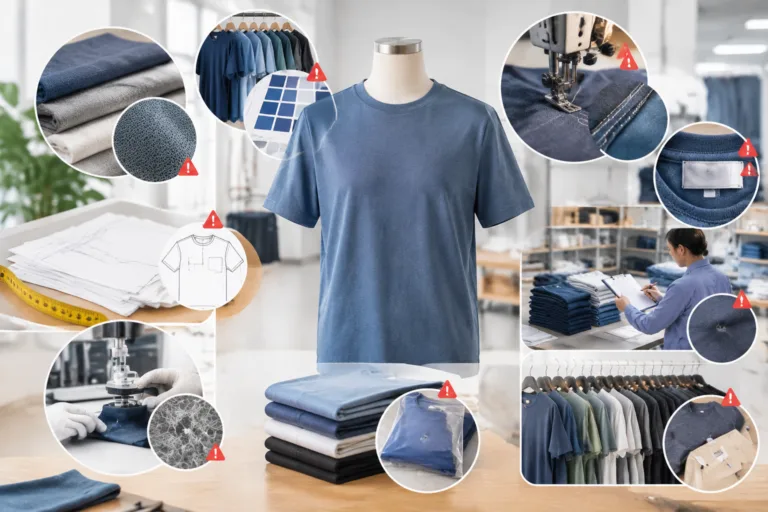
- Skipping sample evaluation: fit, shrinkage, print durability, and seam quality should be reviewed before launch or bulk approval
- Overestimating branding control in private label: relabeling a stock style does not create full product uniqueness
- Assuming POD is always the cheapest: low upfront cost and low long-term cost are not the same
Conclusion
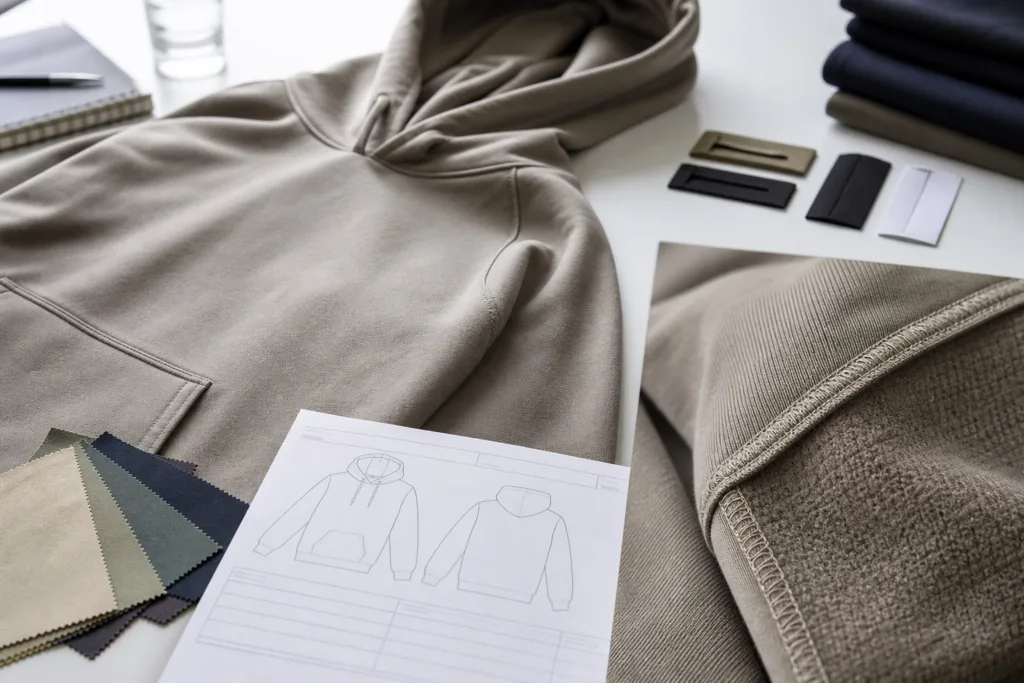
The real answer to print on demand vs private label is that neither model is universally better. Each solves a different business problem. POD reduces startup risk and speeds testing. Private label improves ownership, presentation, and margin without requiring full product development. Custom manufacturing creates the strongest differentiation and control, but asks for more capital, planning, and sourcing discipline.
For most new founders, the right choice depends less on ambition and more on readiness. If the brand is still proving demand, start simple. If demand is visible and presentation matters, private label can be a practical upgrade. If the garment itself must be uniquely yours, custom manufacturing is usually the long-term path.
FAQs
Is print on demand better than private label?
Print on demand is better for low-risk testing and small budgets, while private label is better for brands that want stronger branding, better margin potential, and more control over presentation. The better option depends on whether your priority is minimizing upfront investment or building a more established apparel product line.
When does custom manufacturing make sense for a clothing brand?
Custom manufacturing makes sense when your brand needs specific fit, fabric, construction, or performance details that existing supplier styles cannot provide. It is usually more appropriate once you have clearer demand, enough budget for development and inventory, and a reason to differentiate through the garment itself rather than only through graphics or labels.
Can a brand switch from POD to private label later?
Yes, many apparel brands use POD to test designs or audiences, then move into private label once they identify strong sellers. That transition often improves margin and branding control, but it also introduces inventory planning, sampling, and bulk purchasing responsibilities that did not exist in the original POD setup.
Is private label the same as custom clothing manufacturing?
No, private label usually means using an existing supplier-developed garment and selling it under your own brand, while custom manufacturing means creating the garment to your own specifications. Private label can include limited changes, but it does not usually provide full control over pattern, fit architecture, or fabric development.
Which model has the lowest MOQ?
Print on demand usually has the lowest MOQ because items are often produced after each order is placed. Private label commonly has low to moderate MOQs, and custom manufacturing usually has the highest minimums because garment factories, fabric mills, and trim suppliers may all have separate quantity requirements.
Which model usually gives the highest profit margin?
Custom manufacturing often offers the highest long-term margin potential because brands can control specification, positioning, and cost structure at scale. However, that does not automatically mean higher profit in practice, since development cost, inventory risk, and operational complexity are also much higher than with POD or private label.