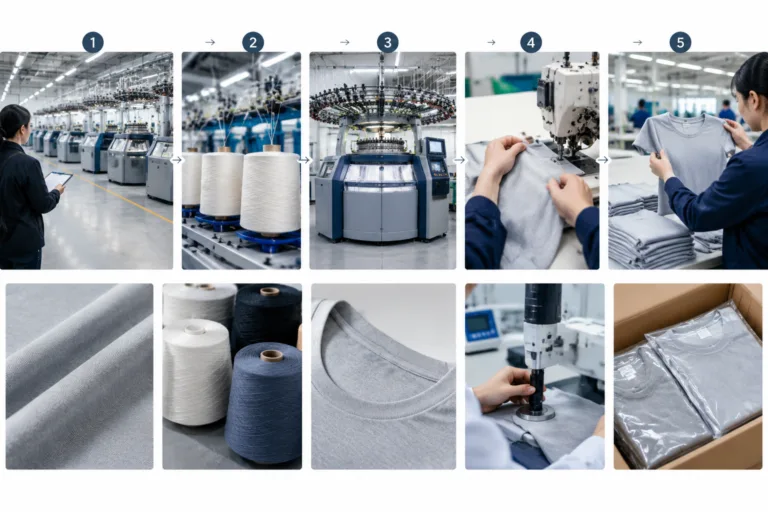
A seamless garment factory equipment checklist can show which production stages a supplier may be prepared to handle, but it cannot independently prove consistent quality, available capacity, or responsibility for your order. Equipment is a sourcing clue: the useful question is whether the listed machines, operators, materials, and process controls match the specific garment you want to develop. Apparel Wiki is an independent educational publication, not a factory or testing provider; its editorial independence is described on the Sponsor page.
In this context, a seamless garment is an apparel product made through programmed knitting or related construction methods that can reduce the need for conventional cut-and-sew joining in selected areas. The exact process still depends on the style, yarns, machine setup, programming, finishing, and any later assembly. A machine may be present at a site without being available for your order, and availability does not necessarily demonstrate repeatable capability.
What a seamless garment factory equipment checklist can tell a buyer
Start by separating three different questions. Equipment presence asks whether a machine or process appears to exist at the facility. Order availability asks whether that equipment is operating, suitable, and scheduled for your product during the required period. Demonstrated process capability asks whether the factory has produced a comparable style with comparable materials, dimensions, construction details, and finishing requirements.
These distinctions prevent an equipment list from carrying more meaning than it deserves. A factory photograph may be useful initial evidence, while a list may help identify follow-up questions. Neither one is a complete factory qualification. The buyer still needs to understand what the factory can make, which processes are genuinely in-house, who operates the equipment, and how critical results will be checked and documented.
Ask the supplier to identify the equipment and process associated with each important feature of the proposed garment. That may include shaped or mapped zones, openings, transitions, support areas, size grading, trims, finishing, labeling, and packing. Ask whether each stage is performed by the quoting entity, another company in the same group, or an external subcontractor. Ownership, operating status, machine specifications, and process scope should be verified with the individual supplier rather than inferred from location, facility size, price, or machine count.
This is also where editorial guidance must remain separate from factory-specific facts. Apparel Wiki can explain how to evaluate a seamless garment factory, but it cannot confirm a supplier’s machinery, test results, production schedule, regulatory status, or order responsibility without direct evidence. Treat any capability statement as conditional until it is supported by records, a comparable sample, a clear process explanation, or other product-specific evidence.
Which equipment categories matter for seamless garment sourcing
Read a seamless garment manufacturing equipment list as a process chain, not as a shopping list. The central category is programmed or seamless knitting equipment. Relevant details may include the machine type, gauge, product format, programming system, and the structures it can produce. Those details matter because a machine suitable for one garment format or construction may not be suitable for another. A named machine alone does not establish that it can produce your design at the required size range or with the specified yarn.
| Production function | Questions for the buyer | What the evidence may indicate |
|---|---|---|
| Knitting and programming | What machine, gauge, format, and program are proposed for the style? | Whether the factory may be equipped for the garment’s construction and zones. |
| Yarn preparation and inputs | How are the specified yarns received, prepared, identified, and controlled? | Whether the planned material route is understood and repeatable for development. |
| Transfer, assembly, or related joining | Which transitions or components require a separate operation, and who performs it? | Whether the proposed design depends on in-house work or disclosed outside support. |
| Finishing and pressing | What finishing route is used, and how are dimensions and appearance checked? | Whether the final treatment is part of the approved process rather than an assumption. |
| Inspection, labeling, and packing | Where are critical features inspected and how are finished goods identified and packed? | Whether final handling and verification are assigned to a defined party. |
Supporting operations may include yarn preparation, transfer or assembly where applicable, finishing, pressing, inspection, labeling, and packing. A seamless knitting factory may perform some of these stages itself and source others from separate partners. Ask whether equipment is dedicated to seamless products or shared across different product categories, and whether the proposed style has been made on the same or a comparable setup.
Connect each category to a buyer requirement rather than an unsupported benefit. Body mapping and support zones relate to the programmed construction; openings and transitions relate to specific machine or assembly operations; size range relates to the product format and grading method; stretch recovery and finishing consistency require appropriate product specifications and validation. Equipment names should not be converted automatically into claims about comfort, durability, compression, or fit. Those outcomes are project-dependent and require suitable development records or test results.
How to connect the equipment list to your product specification
Prepare a requirement-to-process map before comparing suppliers. List the yarn or fabric inputs, garment zones, openings, transitions, trims, finishing requirements, labels, packaging, size range, and any features that create particular risk. Then ask each factory to identify the machine or process used for every critical feature. A structured RFQ and technical brief make supplier responses easier to compare because each candidate is answering the same questions.
Request evidence tied to the proposed product, not only general factory material. Useful evidence may include a comparable development sample, a sample specification, a process explanation, and records showing how dimensions or other critical features were checked. “Comparable” should refer to the factors that matter to the product: materials, construction, dimensions, zones, and finishing. A sample made from a different yarn or through a different finishing route may demonstrate general experience without proving suitability for your order.
Material substitutions deserve particular control. Yarns or components with apparently similar fiber content can still produce differences in wash behavior, color, weight, fit, and hand feel. A changed finishing route may also affect the result. Document the approved materials and define which substitutions require renewed sampling, review, or testing. Do not treat a supplier’s proposed substitute as an automatic equivalent simply because its nominal composition appears similar.
Finally, keep product evidence, process evidence, and commercial responsibility distinct. A factory may explain how a style is made but still need to provide a sample or test record for the required result. It may show suitable equipment but rely on an undisclosed outside operation for part of the order. The strongest equipment checklist is therefore one that leads to specific verification requests, clear ownership of each process, and documented approval of the materials and construction used for production.
What equipment cannot prove about quality, capacity, or delivery
An equipment list can show that a supplier may have access to relevant production processes. It cannot, by itself, prove that the machines are operating, correctly configured, available for your order, or suitable for every feature in your specification. A photograph may also show equipment that belongs to another entity or is used only for a different product category.
Machine quantity is not dependable production capacity. Output also depends on operators, programming skill, maintenance, yarn and component availability, changeovers, existing orders, and bottleneck operations. A factory may have suitable machines but no practical capacity during your required production window. Ask for a capacity explanation tied to the proposed style, process sequence, and planned production period rather than converting machine counts into a promised monthly output.
Equipment presence does not prove process control or repeatability. The buyer still needs evidence that critical construction features can be made consistently, inspected, and corrected when they fall outside the agreed specification. Comparable samples, development records, inspection records, and a controlled production trial answer different questions from a room full of machines.
An apparel factory audit also has a defined scope. A social responsibility audit may address workplace or management conditions, while product validation addresses whether a particular garment meets its approved requirements. Neither should automatically be treated as proof of the other. Keep audit findings, product evidence, and production performance as separate parts of the supplier assessment.
Clarify the responsibility chain before commercial approval. The quoting party, contracting party, receiving party, production site, and subcontractor may be different entities. Ask who owns or controls the equipment, who will make each process, and whether any operation will be assigned outside the named facility. Subcontracting is not automatically unacceptable, but its scope, notification process, and quality responsibility should be documented.
A practical process for verifying a seamless factory before sampling
Start by sending every candidate the same technical brief and RFQ. Include the garment construction, approved or proposed materials, size range, critical dimensions, finishing requirements, packaging, requested dates, and applicable trade terms. A standardized request makes supplier answers easier to compare and reduces the risk that one quotation quietly excludes an important process or component.
Ask each supplier to connect its equipment list to the proposed style. The response should identify the relevant machine or process, whether the operation is in-house, whether the equipment is currently operating, and whether subcontracting is planned. Request explanations for features such as mapped zones, openings, transitions, support areas, finishing, and inspection rather than accepting a generic list of machine names.
Request a development sample made with comparable materials, dimensions, construction, and finishing. Also ask for a process explanation and records showing how critical features were checked. A sample is useful evidence, but it should be read alongside the material details and development history. A garment made with a substitute yarn or different finishing route may not represent the result expected from the approved production inputs.
When appropriate, use a controlled pilot or trial order before committing to bulk production. Agree the acceptance criteria, approved materials, packaging details, inspection responsibilities, and handling of deviations before the trial begins. Do not invent universal thresholds; define requirements from the product specification, buyer expectations, and any applicable validation plan.
Keep an issue log through sampling and approval. Record open questions, approved substitutions, responsible parties, subcontracting disclosures, corrective actions, and the evidence needed to close each item. Before bulk production, confirm that the approved sample, materials, process route, and commercial documents describe the same product and responsibility structure.
How to compare factories when the equipment lists look similar
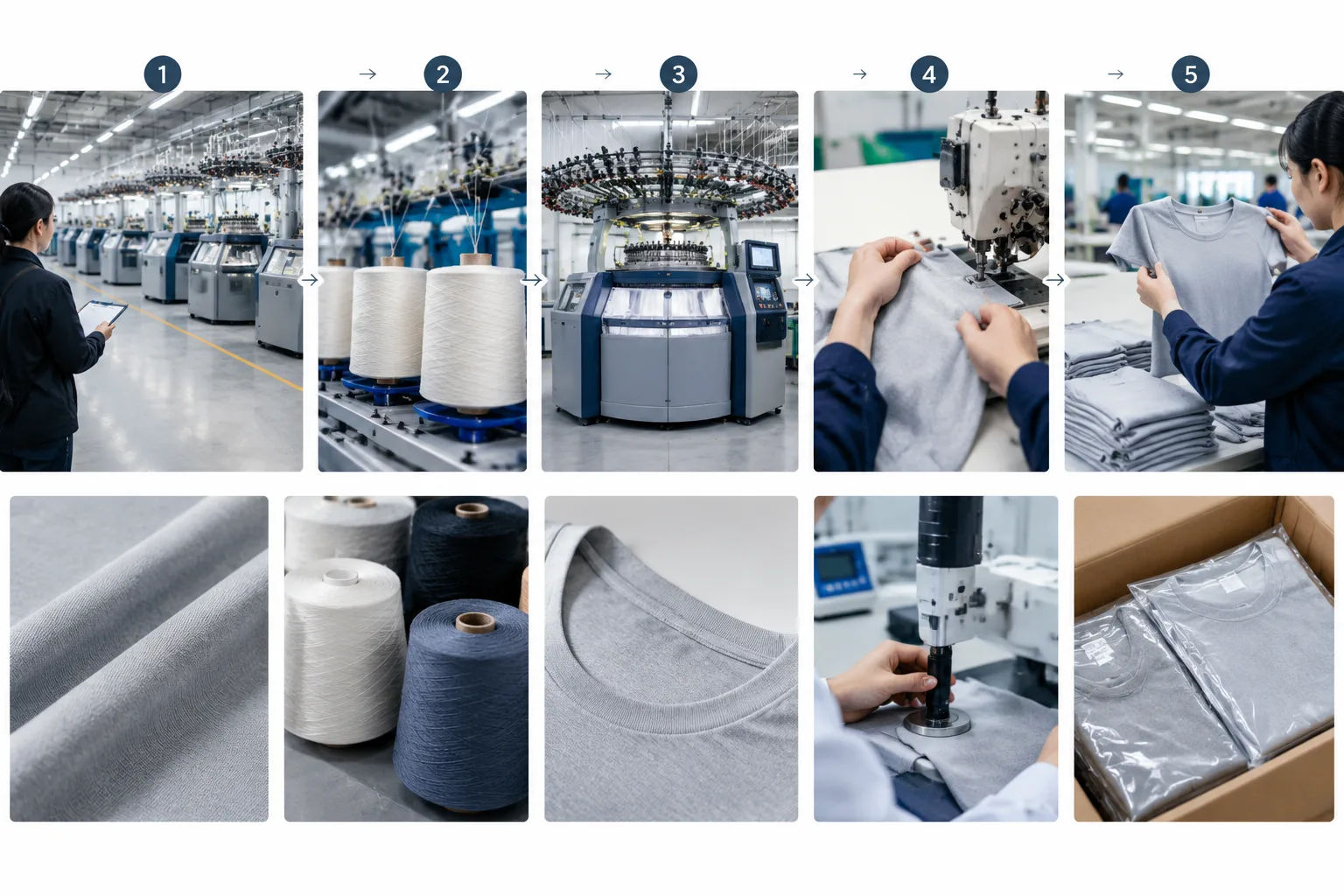
When several suppliers present similar seamless garment factory equipment, compare relevance rather than list length. The key question is whether the supplier can explain how its available process chain will produce your exact garment, including its materials, dimensions, zones, openings, transitions, finishing, and packaging. More machines do not automatically mean better project fit.
Assess the strength of the supporting evidence. Direct observation, current machine records, comparable samples, clear process explanations, and verified production history provide different levels of confidence. A transparent explanation of a limitation may be more useful than a broad capability claim that cannot be tied to the proposed style or supported by records.
Compare operational control as well as machinery. Ask who performs programming, knitting, assembly or transfer work where applicable, finishing, inspection, labeling, and packing. Confirm which steps are in-house, which are assigned to another site, and who remains responsible for conformity if a subcontractor is used. Also ask how the supplier explains available capacity for the requested production period.
Standardize quotations before comparing prices. Match the garment specification, approved materials, inclusions, exclusions, packaging, delivery assumptions, and trade terms. A lower unit price may reflect a different material, omitted process, different packaging scope, or an unstated production arrangement. Price comparison is meaningful only after the underlying offer is comparable.
A defensible decision can be organized around four questions: how well does the capability fit the product, how strong is the evidence, what execution risks remain, and which questions are unresolved? This framework supports a project-specific decision without declaring that one factory is universally better. Sampling and commercial verification should still confirm the conclusion.
The most useful next step is to turn the equipment checklist into a shared supplier questionnaire. Ask every candidate for the same process mapping, comparable sample evidence, capacity explanation, material approvals, subcontracting disclosure, and corrective-action records. This gives a buyer a clearer basis for supplier comparison than equipment photographs or the lowest quotation alone.
Does a long equipment list prove that a seamless garment factory is capable?
No. It indicates possible access to production resources, but capability still requires style-specific process evidence, comparable samples, operating-status confirmation, and commercial responsibility checks.
Which equipment should a buyer ask about when sourcing seamless garments?
Ask about equipment and processes connected to the proposed knitting or garment formation, yarn preparation, openings and transitions, finishing, pressing, inspection, labeling, and packing. Confirm which steps are actually used for your style.
Can machine quantity be used to estimate a factory’s production capacity?
Not reliably. Operators, programming, maintenance, materials, changeovers, existing orders, bottlenecks, and the requested production window all affect available capacity.
How can a buyer check whether listed equipment is actually available for the order?
Request current operating status, ownership or control information, a style-linked process plan, the planned production site, and an explanation of capacity during the required production period.
What should a buyer request in addition to factory equipment photos?
Request a comparable sample, material and construction details, process records, inspection or development evidence, subcontracting information, and a clear explanation of who is responsible for each production stage.
Does an apparel factory audit prove that a seamless garment will meet quality requirements?
No. An audit and product validation have different scopes. A specific garment still needs appropriate sample, process, inspection, and, where required, test evidence against its approved specification.