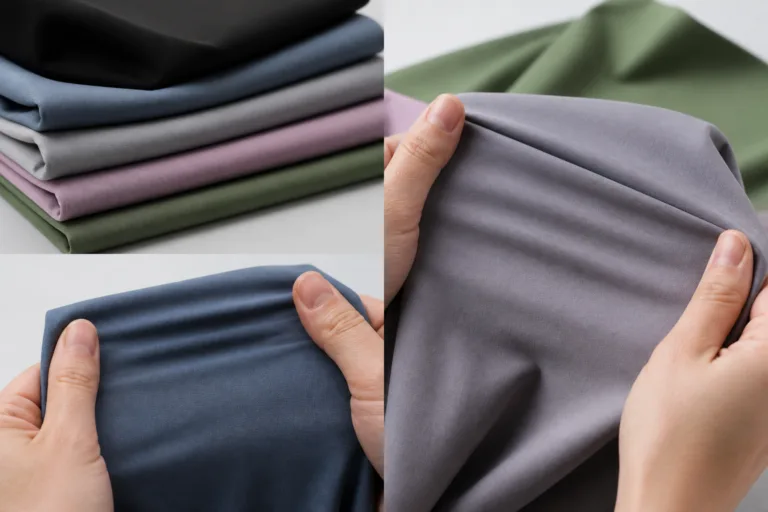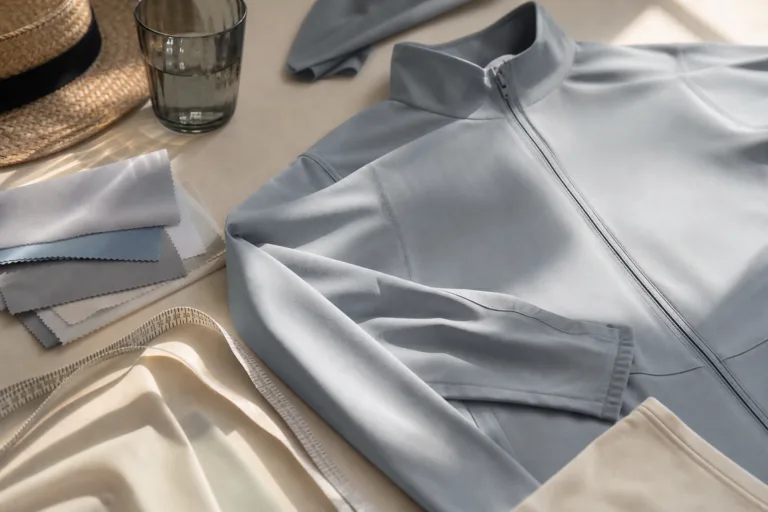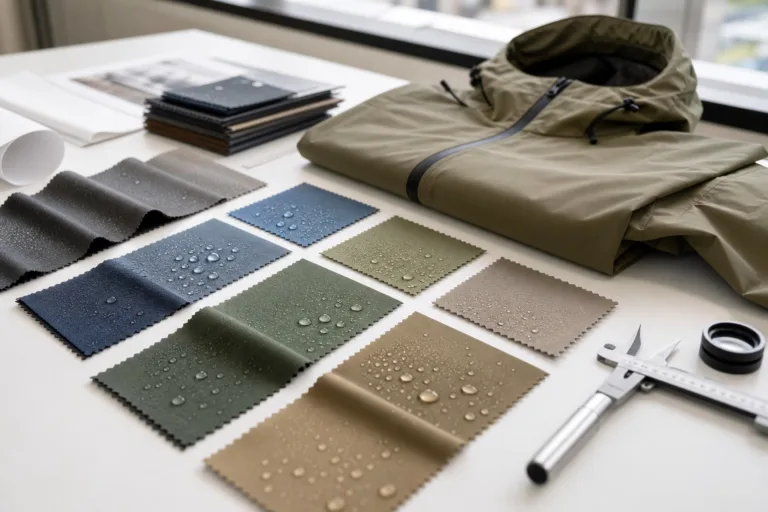
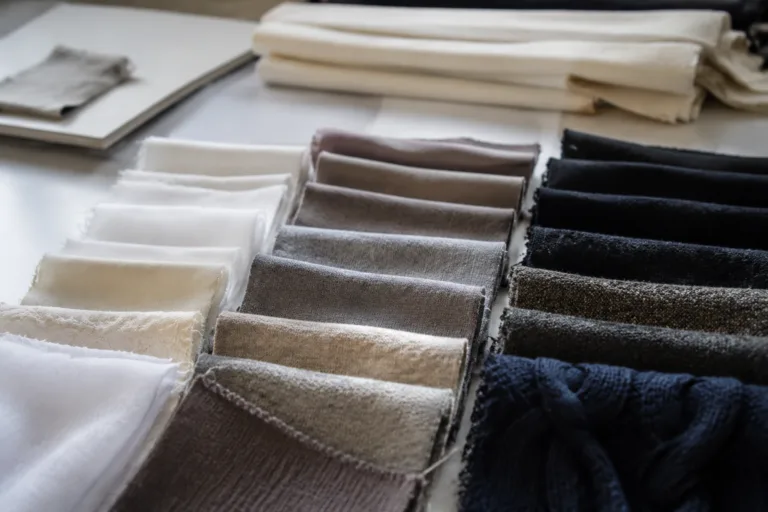
GSM (fabric weight) is one of the fastest ways to compare fabrics before you cut, sew, or spec a garment. For apparel and home textiles, GSM helps you estimate thickness, drape, warmth, opacity, shipping weight, and cost before samples are approved. That makes it a practical decision tool for product developers, sourcing teams, brand founders, and advanced hobbyists who need to choose the right fabric for a real use case rather than a vague “light” or “heavy” description.
For readers who want a broader foundation in fabric and construction decisions, the Apparel Wiki library can help connect weight, structure, and fiber choice to the rest of the product development process. If you are comparing yarn type, knit or weave construction, and finish effects, the same fabric can behave very differently even when the measured weight looks similar. That is why GSM should always be read alongside structure, fiber content, and final use.
What GSM Means and Why It Matters
GSM stands for grams per square meter. It tells you how much one square meter of fabric weighs. In simple terms, higher GSM usually means more material in the fabric, which can increase body, warmth, opacity, and durability, while lower GSM often means less bulk, more airflow, and lower shipping weight. However, GSM does not tell the whole story. Two fabrics can share the same GSM and still feel very different because one may be tightly woven, one may be loose knit, one may be brushed, and one may contain elastane or a dense finish.
In apparel development, GSM is most useful when you need to control end use. A summer tee, a heavyweight hoodie, a hotel towel, and a blackout curtain all need different performance characteristics. Using GSM as a specification brings objectivity to the conversation and reduces the risk of approving a sample that feels right in hand but fails in wear, wash, or cost target.
Quick Rules of Thumb
If you need a fast decision, start with use case. Light garments and linings usually sit in the lower GSM bands; everyday tops and shirts often sit in the middle; hoodies, denim, towels, and upholstery move much higher. Then ask three questions: does the fabric need drape or structure, breathability or insulation, and printability or plushness? If you are unsure, compare two nearby GSM options and judge them after washing, because finish and shrinkage can shift how the fabric feels more than the raw number suggests.
How GSM Is Measured
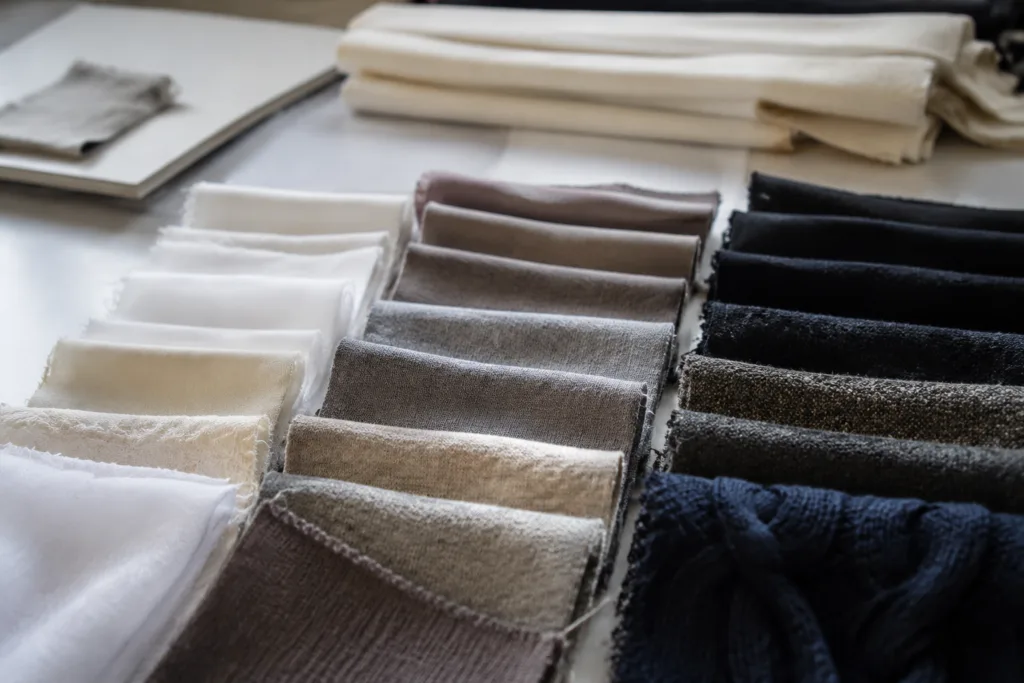
In a laboratory setting, GSM is measured by cutting or using a known-area specimen and weighing it accurately. The basic principle is simple: weight divided by area. The textile standard referenced in technical specification work is the ASTM standard for mass per unit area (ASTM D3776), which supports consistent testing logic for fabrics intended for apparel and home textiles. In practice, mills may also report GSM from production records, but buyers should know how to verify the number from a sample, especially when a fabric feels unexpectedly light or heavy.
Field Calculation: Sample, Weigh, Convert
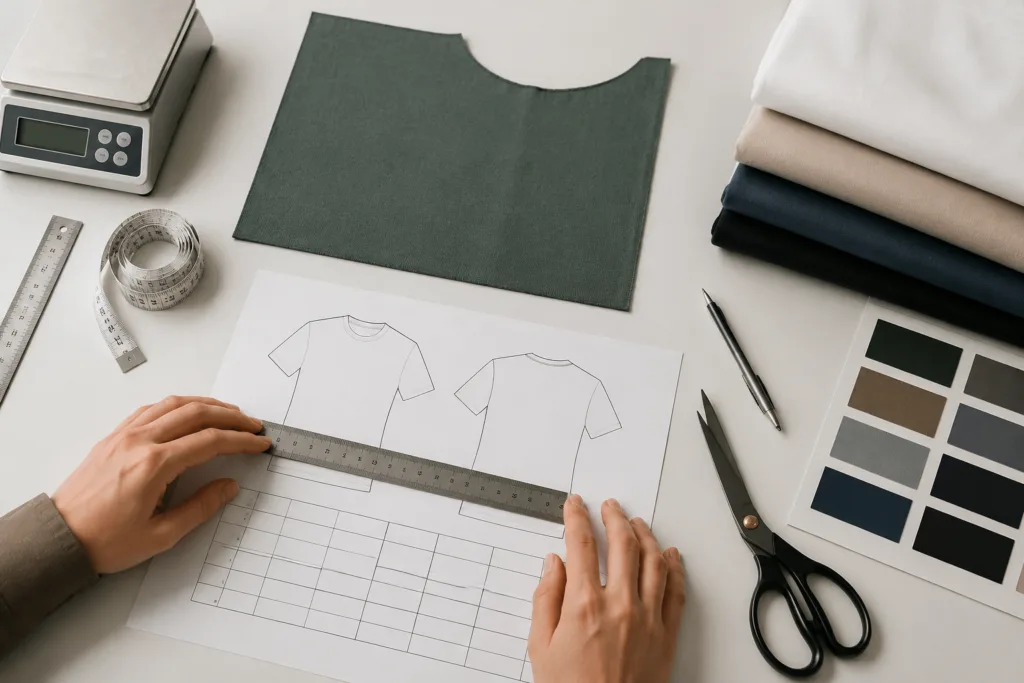
For a quick field check, cut a fabric sample of known dimensions, weigh it on a digital scale, and convert the result to grams per square meter. A common method is to cut a 10 cm by 10 cm square, which equals 0.01 square meter. If that sample weighs 1.8 grams, the estimated GSM is 180. The formula is: GSM = weight in grams / area in square meters. For a 20 cm by 20 cm sample, the area is 0.04 square meter, so a 7.2 gram sample is also 180 GSM. Larger samples reduce error when fabric is uneven, napped, or highly elastic.
Tools and Practical Checks
You do not need a complex lab to sanity-check GSM. A precise scale, a ruler or cutting template, and a clean sample are enough for a rough verification. For more reliable results, use multiple swatches from different spots of the roll or bulk lot. Avoid measuring near selvedges, thick seams, or visibly distorted sections. If the fabric is brushed, washed, coated, or heavily finished, measure the state that matters to production, not only the greige or pre-finish state.
Conversions, Units, and Tolerances
Many suppliers still quote fabric weight in ounces per square yard (oz/yd²), especially in denim, fleece, and some North American sourcing conversations. A simple conversion used in apparel practice is: 1 oz/yd² is approximately 33.9 GSM. So 5 oz/yd² is about 170 GSM, and 10 oz/yd² is about 339 GSM. This is only a working conversion, so round sensibly and confirm with the supplier’s own test basis.
| oz/yd² | Approx. GSM | Typical Read |
|---|---|---|
| 3 oz/yd² | 102 GSM | Very light |
| 5 oz/yd² | 170 GSM | Light to medium |
| 7 oz/yd² | 237 GSM | Medium |
| 10 oz/yd² | 339 GSM | Heavy |
| 14 oz/yd² | 475 GSM | Very heavy |
When writing tolerances, do not assume the number must be exact to the gram. A practical tolerance band depends on fabric type and production consistency. Many apparel programs use a range such as ±3% to ±5% for finished fabric weight, but the correct band should match the mill, fabric structure, and end use. A tightly controlled performance program may need a narrower band, while a brushed casual fabric may need more flexibility if the finish adds slight variation.
What Controls Fabric Weight
GSM is influenced by multiple construction factors. Yarn count matters because thicker yarns generally add weight. Yarn type matters because cotton, polyester, viscose, wool, and blends differ in density, absorption, and construction behavior. Ply matters because two-ply yarns usually weigh more than single-ply yarns of comparable visual cover. Stitch density matters in knits, while ends and picks matter in wovens. A denser construction usually increases GSM, but the hand feel also changes because compact fabrics feel firmer and more substantial.
Structure is just as important as fiber. A knit can feel soft and flexible at a weight that would feel flat in a woven fabric. A woven fabric can feel crisp, stable, and opaque at a lower or similar GSM because the interlacement pattern creates structure. If you want a deeper construction reference, Apparel Wiki’s guide to knit structures and fabric selection helps explain why two fabrics with similar weight may perform differently in fit and recovery.
Finishing can change the picture significantly. Brushing raises surface fibers and can increase perceived warmth without dramatically changing the measured GSM. Coating, lamination, resin finishing, or heavy sanforizing can change both weight and hand. In sourcing practice, always ask whether the GSM refers to greige, dyed, finished, or after-wash fabric, because each stage can produce a different value.
Knit vs Woven Weight Behavior
Knit and woven fabrics should not be read the same way. A knit often stretches and can appear lighter in structure even when the scale says otherwise. A woven fabric often holds shape better and may feel more stable at a lower measured weight. If your project requires clear identification of how construction changes the feel and use, the comparison of knit vs woven fabrics and uses is a useful companion reference. For woven categories, weave pattern also matters: plain, twill, and satin each create different surface behavior and durability profiles, which is why a fabric’s weight should be interpreted alongside its weave structure and end use.
For buyers who want to go one level deeper into weave logic, the overview of plain, twill, and satin weaves can clarify why a 180 GSM plain weave shirt fabric may not behave like a 180 GSM twill or satin. The weave changes drape, snag resistance, opacity, and the way the fabric compresses in packing.
How GSM Affects Performance
GSM influences many end-user perceptions, but not always in the same direction. Higher GSM often improves durability, coverage, and warmth. It can also improve print opacity for some graphics and reduce show-through in light colors. At the same time, it may increase cost, reduce airflow, and make garments feel bulky if the pattern is not adjusted.
Lower GSM usually improves lightness, packability, and cool-wear comfort. It may also reduce material cost and shipping cost. But lower GSM can bring opacity risk, seam distortion, less durability in abrasion zones, and a higher chance of the garment feeling flimsy if the construction is not balanced. For example, a light tee with a fine yarn and compact knit can still feel premium, while a heavier tee with poor yarn quality may still pill or twist after washing.
Key Trade-offs by Performance Factor
- Drape: Lower to medium GSM often drapes more fluidly, especially in viscose or rayon-rich fabrics.
- Opacity: Higher GSM usually improves coverage, but fiber type and knit density also matter.
- Warmth: Higher GSM generally traps more air, especially in brushed knits and fleece.
- Breathability: Lower GSM usually breathes better, though open structures can outperform dense lighter fabrics.
- Durability: Higher GSM can help, but yarn strength, abrasion resistance, and construction quality are equally important.
- Stretch recovery: GSM alone does not guarantee recovery; elastane content, loop structure, and finishing matter more.
Common GSM Ranges by Application
There is no universal “correct” GSM for every product, but practical ranges help narrow the search. These ranges should be treated as development starting points, not strict rules. The right number depends on climate, fit, fabric type, target price, decoration method, and customer expectation.
| Application | Typical GSM Range | What It Usually Means |
|---|---|---|
| Linings and very light shirts | 60–140 | Light hand, high drape, lower warmth |
| Everyday tees and polos | 140–260 | Balanced comfort, coverage, and printability |
| Leggings and stretch basics | 180–300 | Coverage, recovery, and moderate support |
| Hoodies and sweatshirts | 260–500+ | Body, warmth, and heavier shipping weight |
| Denim and workwear | 200–450+ | Durability, structure, and abrasion resistance |
| Towels and bath textiles | 350–700+ | Absorbency, pile mass, and plush feel |
| Bedsheets | 80–180 | Lightness, softness, and breathability |
| Curtains and upholstery | 180–600+ | Coverage, hang, and longevity |
Lightweight Apparel
Fabrics around 60–140 GSM are common in linings, summer shirts, and some lightweight tees. These fabrics work well when the goal is airflow, minimal bulk, and soft movement. They are usually not ideal when opacity or abrasion resistance is critical. If you are designing for hot weather or layered dressing, lightweight fabric can be a smart choice, but garment pattern and seam selection should prevent distortion and transparency issues.
Medium-Weight Apparel
Most everyday tees, polos, shirts, and many leggings land in the 140–260 GSM zone. This is often the easiest range for commercial balancing because it supports comfort, structure, and reasonable cost. It is also a common zone for custom decoration. For product developers, the medium band is often where the right GSM depends most heavily on yarn quality and finishing rather than weight alone.
For cotton-based basics, composition details matter as much as the number. A cotton tee at 160 GSM can feel very different depending on fiber quality, yarn twist, and surface finish. Readers comparing cotton sources may find cotton varieties: softness, durability, and uses useful when deciding whether a soft hand, stronger ring-spun feel, or more economical yarn system is the right fit.
Heavy Apparel and Outerwear
Fabrics at 260 GSM and above are typically used when body, warmth, durability, or a premium heavy hand is desired. Hoodies and sweatshirts often sit here, as do heavier fleece programs, denim, workwear, and some jackets. The trade-off is clear: heavier fabrics can feel more substantial and durable, but they usually cost more to buy, ship, and sew. They can also require different machine setup, stronger trims, and more careful pattern balancing to avoid stiffness.
Home Textiles
In home textiles, GSM helps communicate absorbency, opacity, loft, and longevity. Towels generally use higher GSM to build pile and absorbency, while bedsheets often use lower GSM to stay breathable and comfortable. Curtains and upholstery fabrics vary widely because construction is more important than a single weight number. A 500 GSM towel and a 500 GSM curtain fabric are not equivalent in performance because loop structure and fiber behavior are different.
Representative Examples That Show Why GSM Is Not Enough on Its Own
Consider two T-shirts. A budget tee at 150 GSM may use a loose knit and basic yarn, giving it a light hand but higher risk of twisting, show-through, or premature pilling. A premium tee at 180 GSM may use a tighter knit, better yarn, and controlled finishing, resulting in a cleaner surface and better recovery even though the GSM difference is only 30 grams. In other words, the number helps, but the construction decides how that number feels.
Now compare a lightweight dress shirt and an oxford. The dress shirt fabric might be lower GSM and smoother, with better drape and a crisper look under tailoring. The oxford may be heavier and more textured, giving more body and casual durability. If you only compare GSM, you may miss the fact that weave structure changes how the shirt hangs and wrinkles.
Towels show the same lesson. A higher GSM towel usually feels plusher and more absorbent, but pile height, loop density, and fiber quality also matter. Two towels with identical GSM can behave differently in absorption and drying time if one has a denser loop and another has a looser, airier construction.
Denim is often discussed in ounces per square yard rather than GSM. A 10 oz denim is roughly 339 GSM, which already places it in a heavier category for apparel. But the same denim weight can feel either rigid or manageable depending on yarn twist, weave, finish, and wash treatment. That is why denim developers always need both the weight and the finish story.
How to Choose the Right GSM for a Project
Start with use scenario, not with a random weight target. Ask what the garment or textile must do in the real world: cool a wearer, hold shape, absorb water, block light, survive abrasion, or support decoration. Then layer in seasonal need, customer expectation, and target retail price. A lower GSM can reduce cost and make the product feel easier to wear in heat, but it may force you to use a better yarn or tighter construction to keep quality acceptable.
If the fabric will be printed, consider opacity and surface smoothness. If it will be embroidered, consider stitch stability and whether the base fabric can carry the needle without puckering. If it will be brushed or coated, remember that the finish can change both measured GSM and perceived weight. A fabric chosen for a hoodie may need enough body to hold a hood edge or cuff shape, while a sheet fabric needs enough lightness to stay breathable and comfortable across repeated laundering.
For sourcing and development teams, Apparel Wiki often recommends treating GSM as one line in a spec matrix rather than a standalone decision. The best result usually comes when GSM is aligned with fiber, construction, finish, and end-use testing.
Specification Best Practices for Tech Packs
Write GSM into the tech pack clearly and define the measurement basis. A good spec line should state whether the figure is finished fabric GSM, post-wash GSM, or greige GSM. Include the fabric state, test method, and tolerance. For example: “Fabric weight: 180 GSM finished, measured on dyed and compacted fabric, tolerance ±5%.” That single sentence is far more useful than “fabric weight: medium.”
When possible, add supporting detail such as construction, yarn content, and intended finish. You might specify: “160–170 GSM, 100% cotton single jersey, enzyme washed, final approval after wash.” This narrows supplier interpretation and reduces sample mismatch. If the fabric is highly variable, ask for roll-by-roll records and test reports from production, not just a lab dip swatch.
It is also wise to define a wash or conditioning state. Some fabrics gain or lose measurable weight after finishing, moisture conditioning, or shrinkage. If the final garment performance depends on post-wash feel, then post-wash GSM is the number that matters most.
Sampling, Testing, and Pre-Production Checks
Sampling should verify that GSM is not drifting between lab dip, strike-off, pre-production sample, and bulk. Check swatches from multiple areas, especially if the fabric uses different yarn lots or if the finish is applied unevenly. For knits, test both across width and along length when variation is suspected. For brushed or napped materials, test after the intended finishing stage because the brushing can change the actual weight measurement slightly.
A simple sampling workflow is:
- Approve the construction and intended finish first.
- Measure at least three swatches from different fabric areas.
- Condition samples consistently before weighing.
- Record pre-wash and post-wash GSM if shrinkage matters.
- Compare results against the approved tolerance band.
- Flag any lot with visible non-uniformity, skew, or surface distortion.
For a home textile program, also check absorbency or coverage alongside GSM. A towel that meets the weight target but dries slowly or feels stiff may not satisfy the actual brief. In apparel, check fit and drape after washing because fabric weight and shrinkage interact with garment measurements.
Quality Control and Common Manufacturing Problems
GSM variation can come from inconsistent yarn counts, unstable knitting or weaving settings, finishing changes, moisture content differences, or poor roll management. A fabric can pass a casual hand-feel test but still fall outside spec once properly conditioned and measured. This is why buyers should not rely on “looks similar” when approving bulk.
Common issues include heavier selvedges, uneven brushing, coating streaks, mixed lots, and shade differences that lead to different finish uptake. In knitwear, loop density changes can create weight variation that also affects width and shrinkage. In woven fabric, ends and picks can drift during production, changing both weight and coverage. Quality control should therefore inspect not only the number, but the consistency pattern across the roll.
For suppliers, the safest route is to lock the construction and finishing formula early, then verify that the bulk matches the sample lot. For buyers, the most useful question is not “What is the GSM?” but “What is the GSM on the finished, production fabric that I will actually receive?”
Cost, Shipping, and Sustainability Considerations
Heavier fabrics usually cost more in raw material and shipping because they contain more fiber per square meter. They may also require more energy or time in drying, finishing, and sewing. On the other hand, a heavier fabric can reduce transparency complaints, improve perceived value, and sometimes extend product life. That makes the cost conversation a balance between upfront expense and product durability.
From a logistics perspective, GSM affects carton weight, freight planning, and storage density. A small increase in GSM across a large order can materially change shipment costs. For sustainability decisions, heavier is not automatically worse, but unnecessary fabric mass can increase resource use. The smarter approach is to choose the lowest weight that still meets the product’s performance, durability, and aesthetic requirements.
Recycled-content fabrics can also behave differently at the same GSM. A recycled polyester fleece may feel slightly different from a virgin polyester fleece because fiber length, blending, and finishing can influence hand and loft. If sustainability is part of the brief, keep GSM aligned with performance testing rather than assuming recycled content will feel identical at the same number.
Common Misconceptions to Avoid
One common mistake is assuming heavier always means better. A heavier fabric may be overbuilt for a summer item, making it hot, expensive, and less comfortable. Another mistake is confusing GSM with thickness. Thickness is a physical dimension; GSM is weight per area. A fabric can be thick and light if it is lofty, or relatively thin and heavy if it is dense.
A third mistake is ignoring structure. A 200 GSM knit and a 200 GSM woven fabric will not perform the same way. A fourth mistake is forgetting finish effects. Brushing, compaction, coating, and washing can all alter the final hand and sometimes the final weight. The best habit is to read GSM together with the complete fabric description, not as a standalone answer.
Practical Tools: Formula, Checklist, and Quick Reference
GSM formula: weight of sample in grams ÷ sample area in square meters = GSM.
Worked example: a 12 cm by 12 cm swatch has an area of 0.0144 square meter. If it weighs 2.59 grams, the GSM is 2.59 ÷ 0.0144 = 179.9, or about 180 GSM. If the fabric is stretch knit, take care to lay it flat without distortion before cutting the sample.
Quick measurement checklist:
- Use a conditioned sample in the same state as the approved fabric.
- Cut a clean shape with known dimensions.
- Weigh on a calibrated digital scale.
- Take multiple readings from different areas.
- Record whether the sample is pre-wash or post-wash.
- Compare against the spec tolerance, not only the target number.
Tech-pack language example: “Body fabric: 180 GSM finished single jersey, tolerance ±5%, measured after wash/conditioning, verified before bulk approval.”
Short Case Studies
Premium T-Shirt Brand
A premium tee program may start at 170–190 GSM, but the real goal is not only weight. The team should test yarn quality, knit density, shrinkage, opacity, and print performance. If the shirt is meant to feel substantial without being heavy, a tighter knit at 180 GSM may outperform a looser 200 GSM fabric. The decision is guided by drape, recovery, and the brand’s desired hand feel.
Hotel Towel Supplier
A hotel towel brief may target a higher GSM for a plush, absorbent guest experience, but the supplier also needs to consider drying time, laundry cost, and durability in repeated industrial washing. A towel that is too heavy can increase operational cost even if it feels luxurious. The smarter target is a balanced GSM that supports absorbency and lifecycle value without creating unnecessary bulk.
Decision Checklist
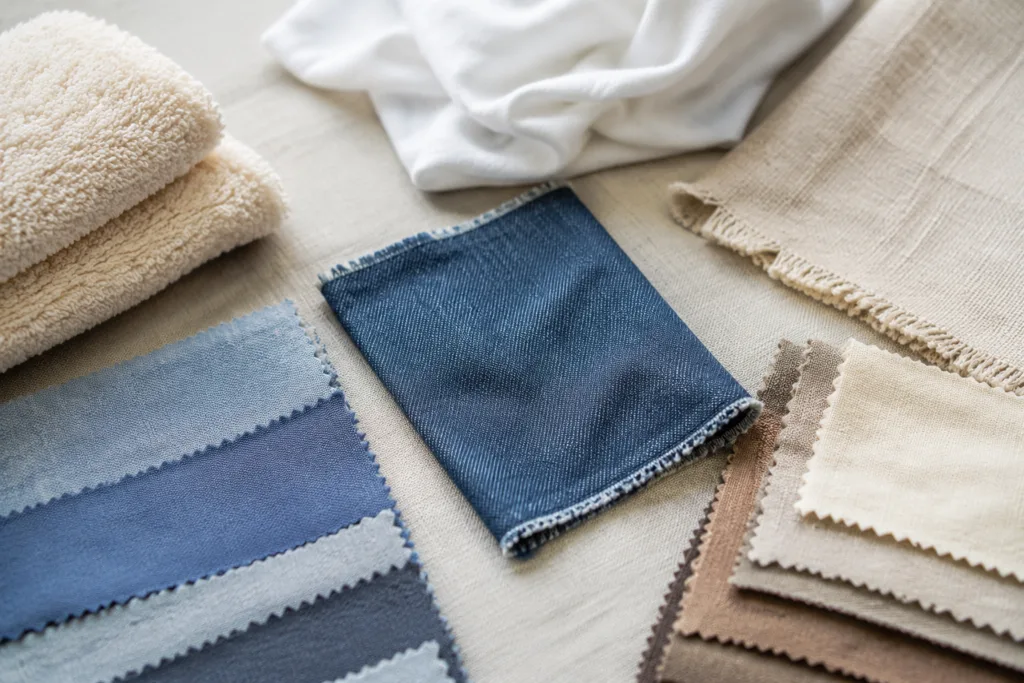
Use this final checklist when choosing GSM for apparel or home textiles:
- Define the exact end use and season.
- Choose the fabric structure first, then confirm the weight range.
- Match GSM to drape, opacity, warmth, and breathability needs.
- Check decoration method and whether the fabric can support it.
- Confirm post-finish and post-wash weight basis.
- Set a realistic tolerance band in the tech pack.
- Test sample lots for consistency, not only one swatch.
- Review cost, shipping, and production implications before approval.
When GSM (fabric weight) is used this way, it becomes more than a number. It becomes a practical bridge between design intent, manufacturing reality, and the final customer experience.
FAQs
What is GSM in fabric?
GSM means grams per square meter and expresses how much one square meter of fabric weighs. It is used to compare fabric weight across apparel and home textiles, but it should always be read together with fiber content, knit or weave structure, and finishing.
Does higher GSM always mean better quality?
No. Higher GSM can improve coverage, warmth, and durability, but it can also increase cost, reduce breathability, and make a garment feel bulky. Quality depends on the full construction, including yarn, structure, finish, and consistency.
How do I measure GSM without a lab?
Cut a sample of known area, weigh it on a precise scale, and divide the weight in grams by the area in square meters. Use clean, flat samples and take multiple readings so you can spot variation across the fabric.
What GSM is good for T-shirts?
Many T-shirts fall in the 140–260 GSM range, but the right target depends on the desired hand, opacity, climate, and target price. A lighter tee can work for hot weather, while a heavier tee often feels more substantial and less transparent.
How much tolerance should I allow for GSM?
A practical tolerance is often around ±3% to ±5%, but the right range depends on fabric type, finish, and product sensitivity. For performance or premium programs, define the tolerance clearly in the tech pack and confirm whether it applies to finished or post-wash fabric.
Is GSM the same as thickness?
No. GSM is weight per area, while thickness is a physical measurement of depth. A fabric can be low in GSM yet feel lofty, or high in GSM and still feel relatively thin if it is dense and compact.