Sublimation printing is widely used in apparel because it can produce bright, detailed graphics with a soft feel, but it only performs well under specific material conditions. For buyers, designers, and product developers, the real issue is not whether sublimation looks impressive in a sample. The real issue is whether the fiber content, garment color, fabric texture, and production setup actually support a stable bulk result.
If you are also comparing other digital decoration routes before locking your fabric and artwork, this overview of digital textile printing methods helps clarify where sublimation sits against other print processes, how different fabric categories respond, what setup decisions matter early, and why print method selection should be connected to material choice instead of treated as a separate step.
What sublimation printing is and how the process works
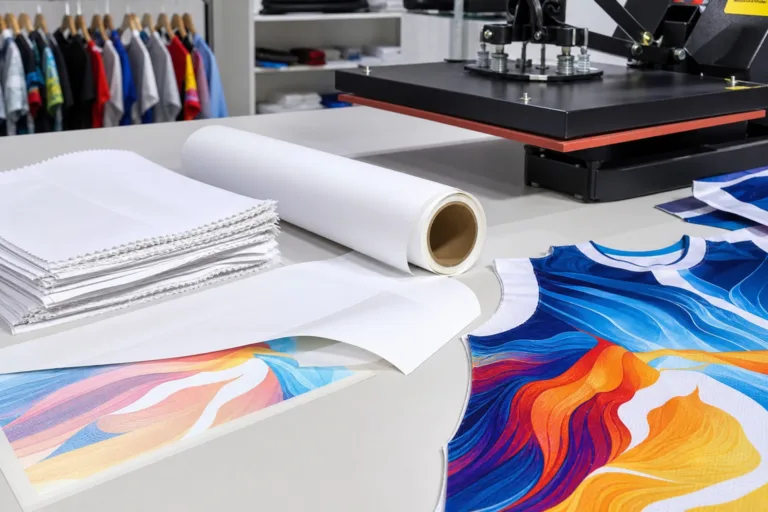
Sublimation printing is a heat-transfer process in which special dyes are first printed onto transfer paper and then applied to fabric under heat and pressure. During transfer, the dye turns into gas and bonds into the polyester fiber structure. That point matters. The color is not sitting on top of the fabric like a coating. It becomes part of the synthetic fiber surface.
In apparel production, this usually means a design is printed in reverse on paper, aligned carefully to the garment panel or finished item, and then transferred with a heat press or calendar machine. The result can look very clean and very saturated, especially on white or very light polyester fabrics. It is one of the reasons sublimation printing is common in sportswear, teamwear, cycling jerseys, running tops, promotional tees, and cut-and-sew polyester products.
From a sourcing perspective, the process sounds simple, but the result depends on several linked factors: polyester percentage, fabric base color, transfer temperature, dwell time, pressure consistency, and the stability of the fabric itself. In many projects, the print issue is blamed on the printer, but the root cause starts earlier with the fabric selection.
Why sublimation printing is popular in apparel production
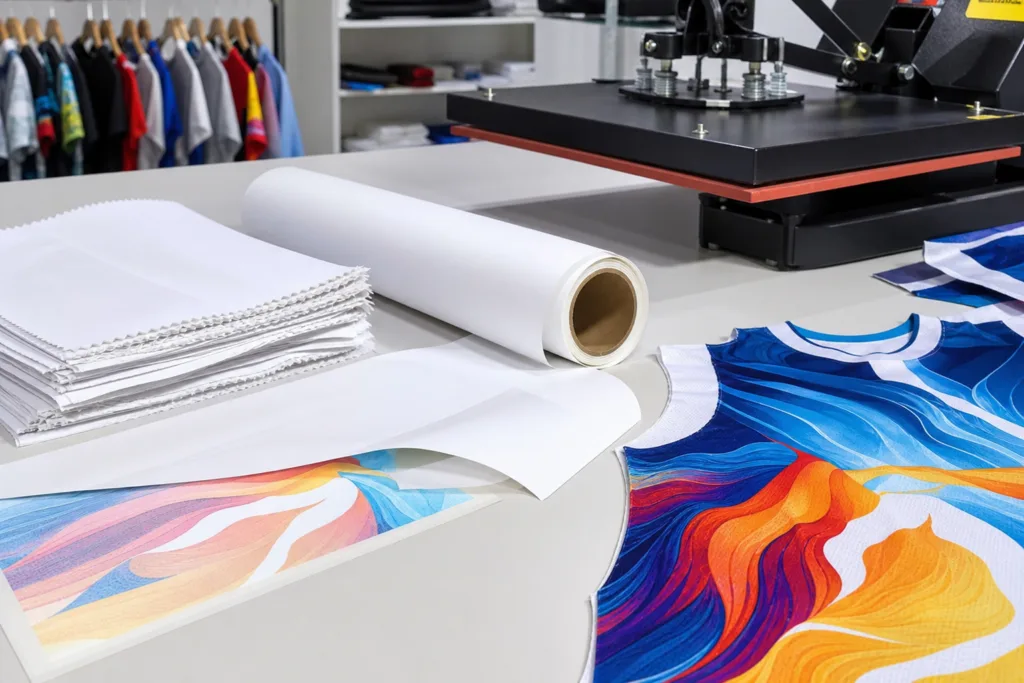
Sublimation is popular because it solves several problems at the same time. It supports full-color artwork without separate screens, it can reproduce gradients and photographic detail well, and it avoids the thick hand feel that buyers often dislike in some surface print methods. For performance apparel, that combination is useful because the decoration does not usually block breathability in the same way as a heavy print layer.
It also works well for repeatable all-over graphics when the supplier has the right panel-printing or roll-printing workflow. Brands making activewear capsules, school team kits, club uniforms, or event merchandise often choose sublimation because complex color placement is easier to manage than multi-screen prints on polyester garments.
Another practical reason is design freedom. Names, numbers, sponsor graphics, or localized artwork can be changed more easily than with traditional screen setup. That matters for small team orders, custom sportswear, and projects with many SKU variants.
Key advantages of sublimation printing
Vibrant color reproduction and sharp detail
When sublimation is matched with the right substrate, color can look very vivid. Fine lines, tonal changes, and photographic effects usually reproduce better than with simpler one-color or two-color decoration methods. On performance jerseys, this is useful for camouflage patterns, sponsor boards, geometric layouts, and color fades across panels.
Because the dye enters the polyester surface rather than forming a thick top layer, edge definition can remain very clean. This is especially valuable in lightweight interlock, birdseye, and smooth tricot fabrics where surface regularity supports a clear visual result.
Soft hand feel and no heavy print layer
One of the biggest advantages is hand feel. A correctly sublimated area should feel close to the original fabric because there is no heavy ink deposit on top. For activewear, that matters in high-movement areas such as the chest, back, or side panels. If the garment is meant for exercise, breathability and flexibility are part of product value, not an afterthought.
This is also why sublimation is often preferred for garments that need large full-front or all-over graphics. A large plastisol screen print may add noticeable weight and stiffness. Sublimation usually does not.
Strong wash durability when process control is correct
Durability is another strong point, but buyers should define durability properly. A print that looks good right after transfer is not enough. The real test is how the garment performs after repeated washing, rubbing, and wear. Because sublimation dye bonds into the fiber, it generally holds color well when the process is done correctly on compatible fabric. Professional teams and serious buyers still rely on industry standards for wash and sublimation fastness testing rather than visual inspection alone, and that same logic applies when reviewing supplier claims about print durability.
If you need a broader quality discussion around printed garments, including why lab or controlled evaluation matters, see how colorfastness is tested in apparel. This becomes important when comparing suppliers that all say their print is durable but do not evaluate it the same way.
Main disadvantages and production limits
Limited fabric compatibility and dependence on polyester content
The biggest limitation is simple: sublimation printing works best on polyester or polymer-coated surfaces. It does not perform well on cotton, wool, silk, linen, or most other natural fibers because the dye chemistry is not designed to bond effectively with those fiber structures.
This is the core of the fabric limitations issue. Some buyers hear that sublimation can print any design on any shirt. That is not correct. It can print almost any artwork, but not on every fiber type with the same result. If the garment is 100% cotton, the transfer may appear faint, washed out, or unstable. In some cases, the image may transfer partially during pressing but fade badly after use or laundering.
Special inks, paper, and equipment requirements
Sublimation needs dedicated inks, transfer paper, heat equipment, color management, and stable operating conditions. This is not the same setup as standard screen printing or direct embroidery. A supplier may offer sublimation as a service, but that does not mean they are equally strong in registration accuracy, panel matching, heat settings, and production consistency.
For example, all-over sportswear printing often requires printing before garment assembly so patterns align with cut panels. That adds coordination between printing, cutting, sewing, and quality control. If any one step slips, the garment may have mismatched graphics at seams, collar joins, or side panels.
Process control can make or break the result
Heat, time, and pressure need control. Too little heat can give weak transfer. Too much heat can distort lightweight knits, flatten texture, shift dimensions, or create shade issues. Moisture in fabric or paper can also cause ghosting or blurred edges. These are technical production risks, not small cosmetic details.
From a garment construction perspective, textured surfaces, seam bulk, zippers, pockets, and elastic areas can all affect pressure contact. That means the same artwork may look different on a flat fabric panel versus a finished garment with multiple construction features.
Which fabrics work best for sublimation printing
The strongest results usually come from white or light-colored 100% polyester fabrics. Common examples include polyester interlock, jersey, microfiber, birdseye mesh, tricot, and some brushed performance knits. These fabrics are widely used in sportswear because they combine print receptivity with moisture-management performance and relatively stable production behavior.
Fabric finish still matters. A very smooth surface usually supports better detail than a heavily textured one. A highly brushed or fuzzy surface can reduce edge sharpness because the print is visually broken by the raised fiber surface. Openness of the knit can also affect how dense the final color appears.
For readers evaluating material choices before sampling, this is where polyester fabric options for print performance become relevant. Polyester is not one single quality level. Yarn type, recycled content, filament structure, knitting style, and finishing all affect the final decoration result.
| Fabric Type | Sublimation Suitability | Expected Result | Common Use |
|---|---|---|---|
| 100% polyester interlock | Very high | Sharp color, stable transfer, soft feel | Sports jerseys, training tops |
| 100% polyester mesh | High | Good color, slightly affected by texture holes | Teamwear, pinnies, active tops |
| Polyester tricot | High | Clean detail on smooth face | Cycling, uniforms, lining panels |
| Poly-cotton blend | Medium to low | Reduced brightness as cotton content increases | Limited use, test first |
| 100% cotton jersey | Poor | Weak or unstable transfer | Not recommended |
| Wool or silk | Poor | Unsuitable for standard sublimation | Not recommended |
Best use cases for sublimation printing
Sublimation is especially useful when the product is already polyester-based and the design requires strong visual impact. Typical use cases include:
- Team jerseys with names, numbers, and sponsor graphics
- Running shirts and training tops with all-over color blocking
- Cycling jerseys with complex panel graphics
- Fishing shirts, esports jerseys, and club apparel
- Promotional polyester tees where bright color and lightweight feel matter
- Leggings, rash guards, and compression garments made from high-poly blends
These categories work because the fabric and the print method are aligned. The buyer is not trying to force a polyester-based process onto a natural-fiber garment category that wants a different hand feel or retail story.
Fabrics that do not work well
Cotton is the most common point of confusion. Buyers often ask whether sublimation can be used on cotton because they want the comfort of cotton and the color effect of polyester sublimation. In standard apparel production, that combination does not work well. The dye does not chemically bond with cotton in the same way, so the print result is usually dull and short-lived.
The same limitation applies to wool, silk, and linen. These are fundamentally different fibers. Even when a sample looks acceptable right after transfer, bulk performance is the real concern. A nice-looking strike-off on the wrong fabric is not proof of a reliable production method.
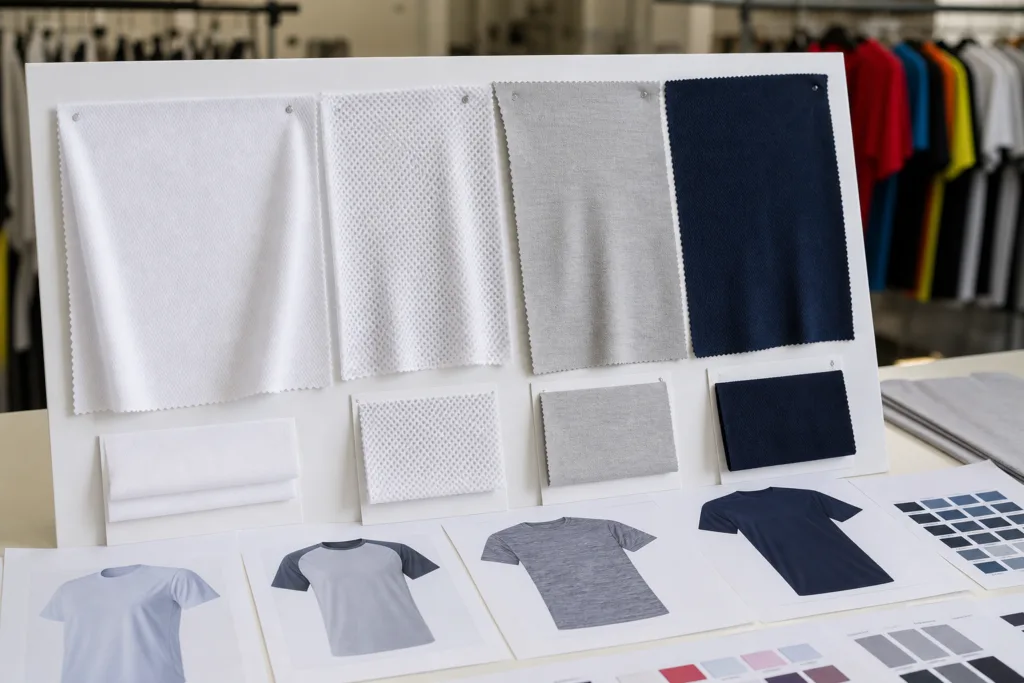
The issue also extends to regenerated and semi-synthetic materials. Some readers assume that because these fabrics are man-made, they should behave like polyester. They do not. Viscose, modal, lyocell, and similar fibers have different dye behavior and thermal response, which is why a separate review of semi-synthetic fibers and their print behavior is useful before approving a decoration route on these materials.
Fabric blends and what changes as polyester content changes
Blends sit in the middle and need honest expectation setting. As polyester percentage goes up, sublimation performance usually improves. As cotton or other non-polyester content goes up, brightness and durability usually fall. A 95% polyester performance knit may print very well. A 65/35 poly-cotton may still show the design, but the color can look more muted and the fabric may develop a heathered or washed effect because only the polyester portion accepts the dye strongly.
That effect is not automatically bad. In some fashion or promotional projects, buyers may accept a faded or vintage appearance. The problem comes when the buyer expects solid, fully saturated teamwear color on a blend that cannot deliver it. This should be clarified before artwork approval and before lab dips or transfer tests are reviewed.
In apparel development, the right question is not “Can this blend be sublimated?” The better question is “What visual result and durability level should we expect at this blend ratio?” That phrasing leads to better supplier communication.
How texture, weave, and garment construction affect the result
Even on suitable polyester, fabric structure changes the outcome. Smooth jerseys generally show the cleanest detail. Open mesh can interrupt fine graphics because the holes break the visual continuity of the design. Heavy texture can reduce clarity. Brushed fabric can soften edges. Stretch fabrics may also alter how the print looks in wear because the surface expands across the body.
Garment construction matters too. Let’s look at what actually affects the result. Side seams, raglan joins, zip fronts, collars, cuffs, and pocket edges can all disrupt print alignment. If the garment is sublimated after construction, those raised areas may not receive even pressure. If it is sublimated on cut panels before sewing, the factory must control panel orientation carefully so the graphic lands in the correct place once assembled.
This detail may look small, but it can create problems later if it is not confirmed early. Buyers should ask whether the supplier prints rolls, cut panels, or finished garments. The answer affects achievable artwork placement, lead time, and defect risk.
Color, background, and design considerations
Sublimation has a major visual restriction: it works best on white or very light substrates. There is no white ink in standard sublimation printing to cover a dark base. If you print onto navy polyester, the design will not appear as it would on white. The base color influences everything.
That is why brands using sublimation often build the garment color into the print file rather than relying on a dyed dark garment body. In practice, the white polyester base becomes the starting canvas. If the product needs dark grounds, cut-and-sew printed panels may be a better route than trying to print on a dark ready-made blank.
Fine details should also match the fabric scale. Tiny text on open mesh may lose clarity. Full-bleed patterns crossing seams should allow for construction tolerance. Large solid areas can reveal fabric distortion, press inconsistency, or panel misalignment more easily than buyers expect.
Production and sourcing implications
From a sourcing angle, sublimation printing is not only about artwork. It affects MOQ logic, sample flow, factory capability, and production planning. Some suppliers can handle small custom runs efficiently because digital setup is flexible. Others still require higher order quantities because their process is organized around bulk panel printing and assembly efficiency.
Sampling is especially important. A buyer should request confirmation of fabric composition, base color, artwork scale, panel placement, shrinkage behavior after transfer, and post-wash appearance. If the print crosses seams or includes exact brand colors, strike-offs alone may not be enough. A sewn sample is usually more informative.
For early-stage brands, a broader guide to choosing the right fabric for a product can help prevent a common mistake: selecting the garment concept first and then trying to force a print method onto the wrong material. Apparel Wiki generally encourages that sequence in reverse. Lock the product purpose, then the fabric, then the print route.
It is also worth reviewing supplier communication discipline. Tech packs should specify fiber content, garment color, artwork dimensions, file format, placement tolerances, and whether printing occurs pre-cut, post-cut, or on finished garments. Without that clarity, sample approval may not protect bulk production quality.
Readers who need broader terminology and process context can also use Apparel Wiki as a reference point for garment, textile, and production concepts that connect fabric decisions with decoration outcomes.
Common mistakes when sublimation is used on the wrong fabric
- Approving sublimation for cotton because a mockup looked good on screen
- Ignoring polyester percentage in blended fabrics
- Using dark garments without understanding that the base color affects the final print
- Expecting sharp detail on highly textured or open-hole fabrics
- Reviewing only print paper output instead of transferred garment samples
- Skipping wash checks and relying only on visual first impression
- Not confirming whether artwork will be printed before or after garment assembly
- Assuming all sublimation suppliers have equal color-management skill
These mistakes usually come from separating design approval from material approval. In real production, they are linked. For buyers, the key is not only the product name or price, but whether the material, structure, marking method, and application requirements match the real use case.
How to decide whether sublimation printing is right for your product
A practical decision framework helps. Sublimation is a strong option when the garment is mostly polyester, the base is white or light, the design needs bright all-over color or variable graphics, and the wearer benefits from a soft-feel print with no heavy layer. It is a weaker option when the product story depends on cotton or natural fibers, when the garment body must be dark in a way the process cannot support, or when the factory lacks reliable heat-transfer and panel-control capability.
| Question | If Yes | If No |
|---|---|---|
| Is the fabric 100% polyester or very high polyester? | Sublimation is a strong candidate | Consider other print methods |
| Is the garment base white or very light? | Color output should be stronger | Expect major design restrictions |
| Does the design need gradients or full coverage? | Sublimation may add value | Screen print or embroidery may be simpler |
| Is a soft hand feel important? | Sublimation has an advantage | Other methods may still work well |
| Can the supplier control panel printing and transfer quality? | Lower production risk | Sampling risk increases |
Quick comparison with other decoration methods
Screen printing is often stronger for cotton and for simple spot-color graphics at scale. Heat transfer can work for names, numbers, and some shorter-run applications, but the hand feel and durability depend heavily on transfer type. Embroidery adds texture and perceived structure, but it is not the same visual category and may not suit lightweight performance fabrics.
Sublimation printing sits in a specific lane. It is not a universal replacement for other methods. It is a very effective method when the garment and artwork are compatible, and a poor choice when the substrate is wrong.
Conclusion

Sublimation printing is valuable because it delivers vivid color, fine detail, and a soft hand on the right polyester-based garments. Its main weakness is also very clear: fabric limitations are real, and they cannot be solved by artwork alone. If the fiber content, garment color, and construction are not aligned with the process, the result will be disappointing no matter how good the graphic looks on screen.
In product development and sourcing practice, the right approach is to evaluate fiber content first, then sample under realistic conditions, then confirm print durability and placement accuracy before bulk approval. That is how sublimation becomes a reliable production method instead of a preventable quality problem.
FAQs
Can sublimation printing be used on 100% cotton garments?
Standard sublimation printing is not suitable for 100% cotton because the dye is designed to bond with polyester rather than natural cotton fiber. A transfer may appear on the surface after pressing, but the color is usually weak, less vibrant, and much less reliable in use and washing compared with polyester garments.
What polyester percentage is usually needed for good sublimation results?
The closer the fabric is to 100% polyester, the better the print result is likely to be. High-poly blends can still work, but as non-polyester content increases, color brightness and consistency usually drop because only the polyester portion strongly accepts the sublimation dye.
Why does sublimation printing work better on white or light fabrics?
Sublimation does not print an opaque white layer over the fabric, so the base color shows through and affects the final appearance. White and very light polyester provide the cleanest starting point, which is why color looks brighter, clearer, and more accurate on those fabrics.
Is sublimation printing durable after repeated washing?
On compatible polyester fabric with correct process control, sublimation printing is usually very durable because the dye bonds into the fiber surface instead of sitting as a thick layer on top. The practical point for buyers is still to confirm wash performance through proper testing and sample review rather than assuming every supplier gets the same result.
What kinds of garments are usually the best fit for sublimation?
Polyester-based sportswear, teamwear, activewear tops, cycling jerseys, fishing shirts, and promotional performance garments are common matches because they often use light-colored synthetic fabrics and benefit from bright graphics, low print weight, and flexible full-panel decoration.
What should buyers confirm before approving a sublimation production order?
Buyers should confirm fiber composition, fabric color, artwork scale, print placement, whether printing happens on rolls, cut panels, or finished garments, and how the sample performs after transfer and washing. These details affect color quality, seam alignment, lead time, and bulk consistency more than many first-time buyers expect.