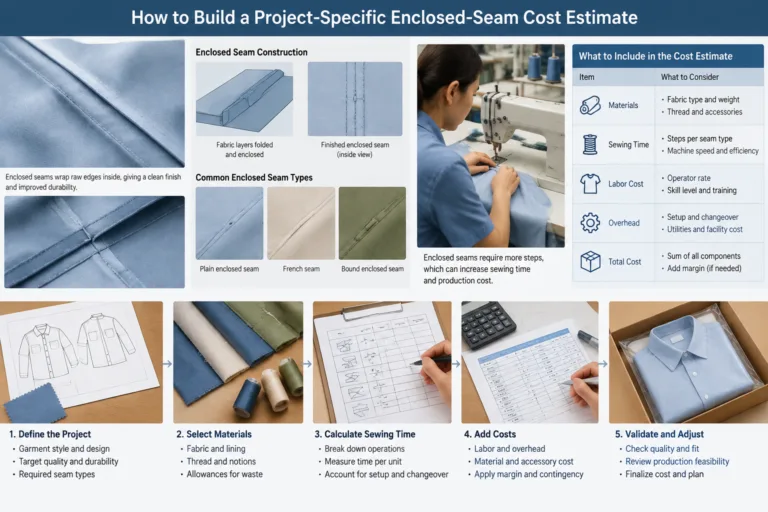
Enclosed seams can increase sewing time and production cost when they add folding, turning, pressing, trimming, guiding, inspection, or difficult handling. They can also replace a separate edge-finishing operation, so they are not automatically more expensive. The relevant comparison is the complete construction sequence, including material use, equipment access, quality risk, and rework.
For independent apparel-production education, Apparel Wiki’s Sponsor information is separate from the technical judgment in this article. The practical question for a brand or sourcing team is not whether an enclosed seam looks more refined, but whether its construction delivers a defined product benefit at an acceptable, measured process burden.
What Are Enclosed Seams, and Why Can They Change Production Cost?
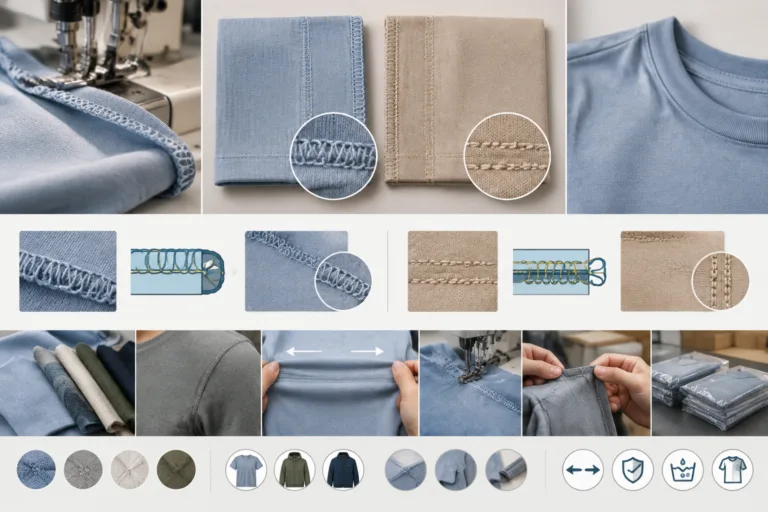
An enclosed seam is a construction in which raw seam allowances or seam edges are contained inside folded, turned, layered, or otherwise enclosed fabric. The finished surface therefore does not leave the relevant raw edge directly exposed in the final garment area. The exact appearance and method vary by garment design, pattern shape, fabric, equipment, and required finish.
A seam and a stitch are related but different terms. The seam describes how fabric layers are joined and how the joined area is constructed. The stitch describes how thread forms the connection through or between those layers. One seam construction may use different stitch types, and changing the stitch does not automatically create a different seam structure.
Enclosed seam construction can change cost because containment usually has to be achieved through physical operations. Depending on the design, a production sequence may include preparing and aligning pieces, making an initial joining operation, turning or folding an edge, securing the fold, pressing the area, trimming excess material, and checking the result. Some of these actions may be combined or eliminated by a particular method, while others may become more difficult after adjoining sections are closed.
The cost effect depends on the garment design, fabric behavior, equipment, operator method, quality target, order volume, and production sequence. A narrow curved section in a slippery fabric may require more careful handling than a straight section in a stable fabric. Conversely, an enclosed finish may remove a separate raw-edge treatment. For that reason, an enclosed seam is not inherently a premium-cost choice. Its production cost must be compared with the full alternative process and its likely finishing or rework burden.
How Enclosed Seams Add or Remove Sewing Operations
To understand enclosed seam sewing time, map the work as a sequence rather than counting visible lines of stitching. A useful operation breakdown can include preparation, alignment, the first joining operation, turning or folding, a second securing operation, pressing, trimming, inspection, and correction where applicable. The list is not a universal recipe; it is a way to make the actual workflow visible before assigning time or cost.
Handling conditions often determine how much effort each operation requires. Limited machine access, tight openings, curved edges, slippery surfaces, bulky layers, and repeated repositioning can slow alignment and feeding. A seam that is straightforward on an open panel may become harder to control once another component has been attached. Small variations in access can also affect inspection and make correction more difficult.
Operation order is therefore a production variable. Internal work may need to be completed before a section is closed, because later access is restricted. That sequence can protect the intended appearance, but it may also move inspection or repair earlier in the process. If a defect is discovered after several adjoining components have been closed, the correction may require more handling than the original sewing operation.
An enclosed seam can also remove work. For example, a construction that contains an edge as part of the joining process may reduce the need for a separate finishing operation used by an exposed seam. The correct comparison is therefore not “one visible seam versus two visible seams.” Compare every operation for both constructions, including handling, pressing, inspection, material preparation, and likely correction.
Before assigning a sewing time or labor cost, record each operation separately in a process sheet or operation breakdown. Use observed or otherwise validated project data when available. Factory equipment, operator skill, line balancing, and the approved method can change the result, so a general description should not be treated as a guaranteed time allowance.
Which Variables Have the Biggest Effect on Enclosed-Seam Cost?
Material is one of the main cost variables. Fabric weight, thickness, fraying, stretch, surface friction, and sensitivity to needle damage can affect feeding, alignment, turning, and pressing. Prints or stripes that must match can add positioning and inspection work. A material that shifts easily may require more controlled handling even when the seam path itself appears simple.
Geometry matters as well. Straight paths are often easier to guide than curved paths, corners, narrow sections, openings, or transitions between different layer counts. Seam allowance width and the number of layers influence bulk and edge control. The required result may also differ: a seam intended to remain flat may need different handling from one that must stay flexible or conform closely to the body.
Equipment and labor conditions should be considered separately from material. Machine type, folders or guides, pressing equipment, operator skill, batch size, and line balance can all influence the sequence. A method that is practical with available equipment may be inefficient when it requires repeated manual handling or depends on an attachment that is not available at the intended production site.
Quality requirements connect construction choices to both direct cost and downstream risk. Teams may need to inspect for exposed raw edges, skipped or uneven stitches, puckering, distortion, seam slippage, or fabric damage from excessive needle penetration. Strength and appearance also need to be considered together. Increasing thread strength or stitch density alone may shift failure into the fabric, reduce flexibility, or create unwanted bulk and comfort issues.
A practical review separates the variables into five groups: material, labor, equipment, quality, and process. This prevents a seam estimate from being reduced to a generic sewing rate. It also helps the team identify which assumption needs evidence. A construction decision should match the product’s intended use and specification; there is no universal stitch density, seam allowance, or reinforcement level that can be applied safely to every garment.
How to Compare an Enclosed Seam With an Alternative Construction
Begin by defining the alternatives precisely. The comparison might involve an enclosed seam and an exposed seam with edge finishing, binding, overlocking, or another specified treatment. Record the intended fabric, seam path, seam length, layer count, and finishing requirement for each option. Without a controlled comparison, different samples can appear to represent different seam methods when they also differ in handling or material conditions.
Compare the complete workflow, not only the visible appearance. Include operation count, estimated labor time, equipment dependency, handling difficulty, pressing, inspection, expected rework, material consumption, and repairability. Also assess wearer-facing outcomes such as skin contact, bulk, flexibility, durability, and appearance after care. The lowest initial sewing time is only one input if the construction creates more inspection or correction work later.
| Comparison area | What to document |
|---|---|
| Process | Preparation, sewing, turning, pressing, trimming, inspection, and correction operations |
| Resources | Machine access, attachments or guides, operator skill, and handling requirements |
| Quality | Defect risks, inspection access, appearance expectations, and repairability |
| Product experience | Bulk, flexibility, skin contact, durability, and appearance after care |
| Cost inputs | Measured time, material use, rework assumptions, and the approved costing scope |
Separate mandatory requirements from preferences and provisional design choices. A clean interior may be essential for a product’s intended use, while a particular visual treatment may simply be a brand preference. Hypothetical examples can clarify the decision process, but their values are not universal production benchmarks. Final approval should rely on a controlled sample, documented workflow, and project-specific production evidence.
How to Build a Project-Specific Enclosed-Seam Cost Estimate
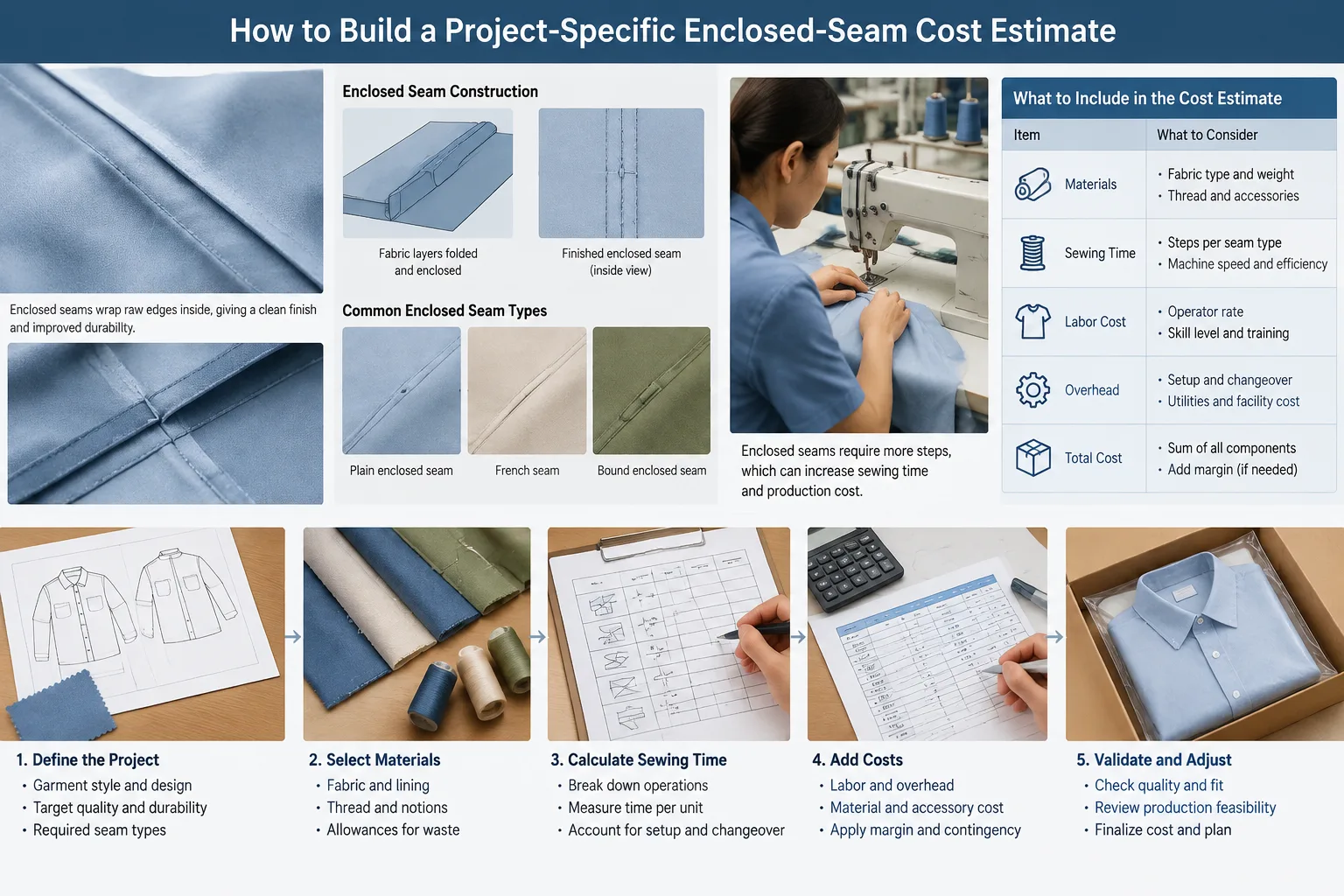
A useful enclosed-seam cost estimate begins with a controlled sample, not a general assumption about how many stitches the seam appears to contain. Document the exact fabric, seam length, seam cross-section, seam allowance, machine setup, attachments or guides, and finishing requirements. The sample should represent the construction that the product team actually intends to approve.
Break the workflow into separate operations. Depending on the design, the list may include preparation, alignment, first joining, turning or folding, a second securing operation, pressing, trimming, inspection, and correction. Recording these steps separately shows where the process burden occurs and makes it easier to compare the enclosed construction with an alternative finish.
Observed or validated time should be recorded for each operation before applying the project’s approved labor and overhead assumptions. Factory rates, efficiency allowances, and costing practices are project inputs; they are not universal properties of an enclosed seam. Keep the cost scope clear so that two options are compared using the same production stage, currency, order assumptions, and definition of unit cost.
Material effects belong in the estimate when they are part of the selected method. These may include additional fabric usage, binding or tape, thread, labels, reinforcement, or process waste. Rework and quality-control effort should be listed as separate assumptions rather than hidden inside a broad sewing allowance. This makes the risk visible during design and sourcing discussions.
After the initial estimate, compare it with a pilot result or a supplier’s documented operation breakdown. Revise the process sheet when the actual handling, machine access, pressing, or inspection sequence differs from the planned method. The result is a project-specific production estimate based on evidence from the approved construction, rather than a benchmark presented as a guaranteed cost.
How Enclosed Seams Affect Quality, Rework, and Total Production Risk
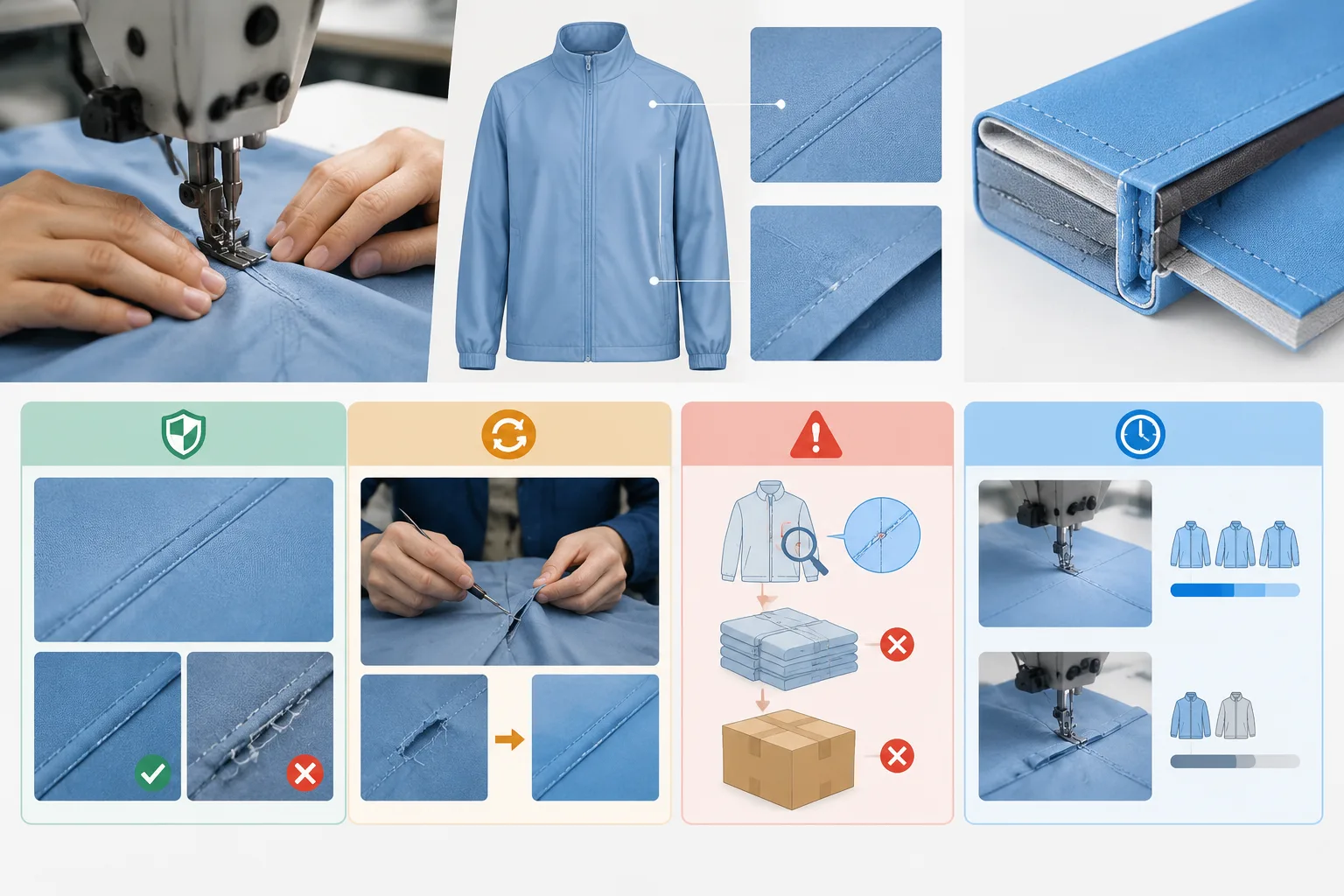
The first sewing operation does not capture the full cost of a seam. Once adjoining components are closed, access for inspection, alteration, or repair may become limited. An operation sequence that is efficient at one stage can therefore make a later correction more difficult. Mark these irreversible or hard-to-reach points in the assembly plan before production approval.
Quality exposure also depends on the fabric and the complete seam construction. Poor handling or matching can produce exposed edges, puckering, distortion, skipped or uneven stitches, seam opening, fabric damage, or inconsistent appearance. Curves, corners, changing layer counts, and narrow openings may increase the need for careful control even when the seam length itself is short.
Reinforcement and extra folds should address a defined failure mechanism. Additional layers can alter bulk, stiffness, friction, flexibility, and skin contact. A stronger thread or denser stitching pattern does not automatically solve every failure; under some conditions, stress may move into the fabric through slippage, damage, or tearing. The correct evaluation is the tested seam-and-fabric combination, not one component in isolation.
Where the product specification requires it, assess the finished construction under intended use and care conditions. Separate measured test results from visual sample judgments, production observations, and editorial recommendations. Results apply to the tested materials, construction, and conditions; they should not be transferred automatically to every garment using a similar-looking seam.
Before approval, confirm the following points:
- The seam cross-section, materials, and construction method are approved.
- The operation sequence and equipment access are documented.
- Defect criteria cover appearance, exposed edges, distortion, stitch problems, and fabric damage where relevant.
- Inspection points remain accessible at the intended production stage.
- Rework, repair, and escalation instructions are defined for foreseeable defects.
When Is an Enclosed Seam Worth the Added Work?
An enclosed seam is worth its measured process burden when it solves an important product requirement. That requirement may involve a clean interior, wearer comfort, appearance, durability, flexibility, or a defined positioning decision. The benefit should be specific enough to compare with the added handling, equipment, inspection, material, and rework demands.
Question the construction when it adds operations without addressing a clear wearer, quality, design, or customer requirement. A shorter initial sewing sequence is not necessarily the lower-cost option if it creates more finishing work, difficult inspection, correction, returns exposure, or repair problems later. Conversely, an enclosed seam may replace another finishing treatment and reduce the total workflow burden in a particular design.
A practical approval sequence is: define the required outcome, identify feasible constructions, document the complete workflow, measure or validate the operations, test the finished seam, review rework exposure, and approve the costed method. Keep mandatory requirements separate from brand preferences and provisional design choices so that the team knows which trade-offs are acceptable.
For the next step, update the tech pack with the intended seam cross-section and finish, request an operation breakdown from the responsible supplier, review a controlled sample, and confirm the production controls before committing to the method. Apparel Wiki is an independent educational publication, not a manufacturer, factory, laboratory, certifier, or OEM/ODM service provider; project decisions should be validated by the responsible product and production teams.
FAQ
Are enclosed seams always more expensive than exposed seams?
No. An enclosed seam may add folding, turning, pressing, or securing operations, but it can also replace a separate edge-finishing step. Compare the complete workflow, material use, inspection, rework, and product requirements rather than visible stitching alone.
Which parts of an enclosed seam usually add sewing time?
Common time drivers include preparation, alignment, turning, folding, pressing, trimming, restricted machine access, difficult curves or openings, and additional inspection. The actual effect depends on the fabric, equipment, operator method, and approved construction.
How should a brand compare enclosed-seam cost across suppliers?
Give suppliers the same construction requirements and ask for a separate operation breakdown. Compare scope, measured or validated time, material assumptions, equipment dependency, quality controls, rework assumptions, and production-stage definitions before comparing quoted costs.
Can an enclosed seam reduce total production cost by replacing another finishing operation?
Yes, it can in some designs. The enclosed construction may combine functions that would otherwise require edge finishing, binding, or another treatment. This must be confirmed through a controlled sample and workflow comparison rather than assumed from the seam’s appearance.
What should be included in a seam-construction cost estimate?
Include the exact materials and seam method, direct operations, validated time, labor and overhead assumptions, additional components, waste, inspection, expected rework, and the defined costing scope. Keep currency, order assumptions, and production stage consistent.
How can teams test whether an enclosed seam justifies its added labor?
Compare approved alternatives using the same fabric and relevant seam length, then review operation time, quality results, comfort, appearance, durability, inspection access, and correction exposure. Approve the enclosed seam only when its measured benefits support the project’s requirements.