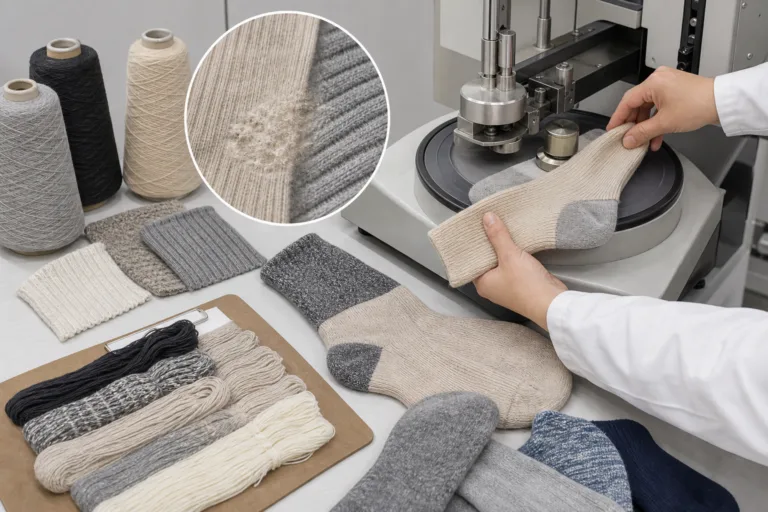
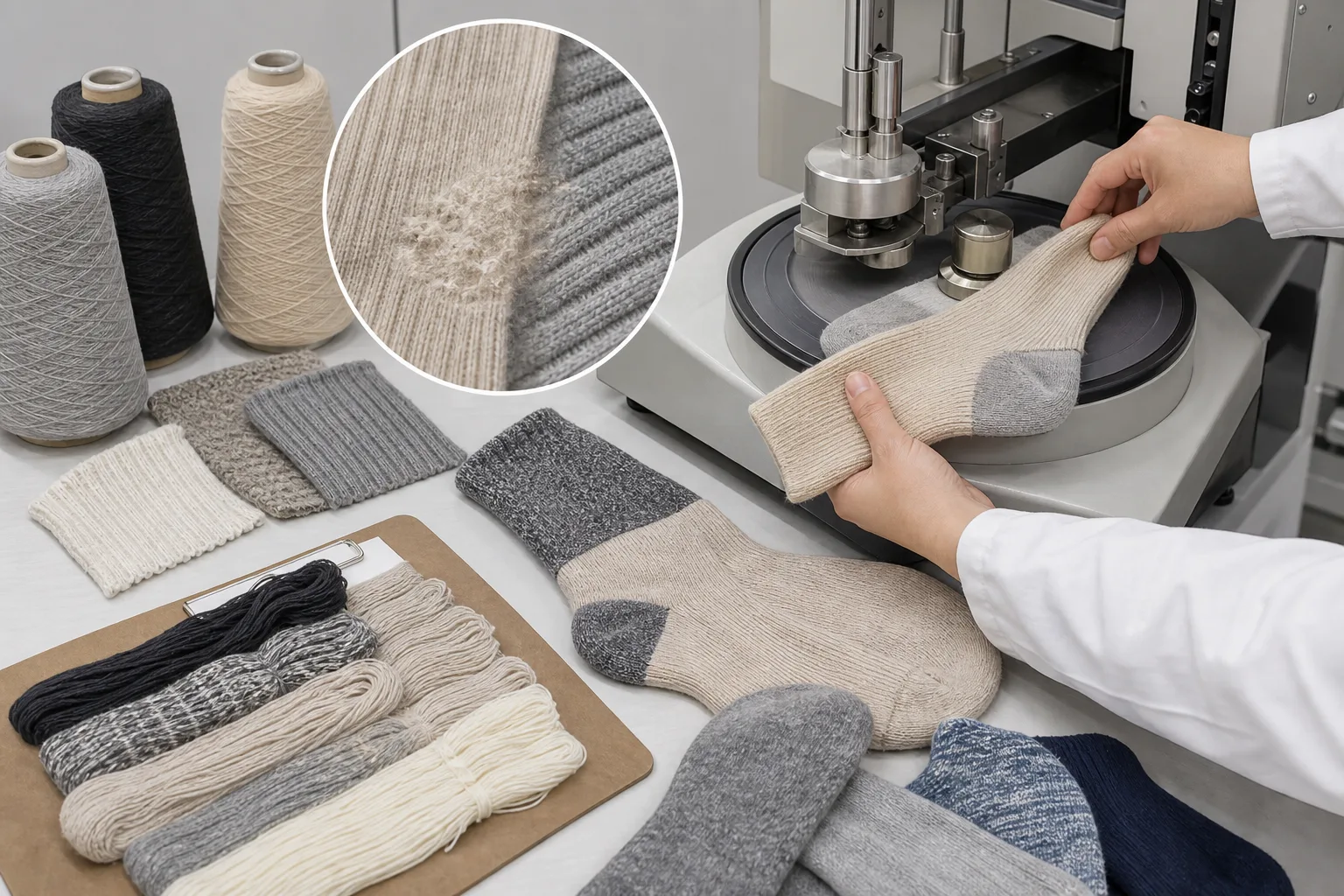
Socks yarn abrasion is the resistance of a yarn, knitted structure, or finished sock surface to damage caused by repeated rubbing or contact. In practice, that damage may appear as fiber breakage, fuzzing, surface thinning, holes, or an unacceptable change in appearance. Apparel Wiki is an independent educational publication; its Sponsor page explains the separation between sponsorship and editorial control.
A yarn-level abrasion result can help compare materials under a defined method, but it does not by itself predict finished-sock durability. The final result also depends on the sock’s construction, fit, footwear, activity, laundering, moisture, and the specific areas exposed to pressure and movement. A useful specification therefore connects the expected wearing task, risk zones, sample construction, test method, and acceptance criteria.
What Does Yarn Abrasion Mean in Sock Development?
In sock development, yarn abrasion describes how a yarn responds when its surface is repeatedly rubbed or subjected to contact. The relevant question may concern the yarn before knitting, the yarn within a knitted fabric, or the finished sock during use. These are related but different evidence levels.
At the yarn level, evaluation focuses on the behavior of the yarn under a defined laboratory setup. A knitted-fabric assessment considers how loops, stitch density, yarn arrangement, and local construction affect surface damage. A finished-sock assessment adds the effects of shaping, toe and cuff construction, fit, finishing, and actual contact with footwear and skin. The same yarn can therefore behave differently when used in different sock designs.
Abrasion should also be separated from broad claims such as “strong,” “premium,” or “durable.” A yarn may resist one type of surface damage while showing another problem, such as fuzzing, pilling, snagging, loss of appearance, or reduced comfort. Abrasion resistance is consequently a use-case property, not a universal quality grade. An everyday dress sock, a cushioned activity sock, and a sock designed for frequent work use may not need the same balance of properties.
For that reason, a project brief should state what the sock is expected to do and where failure would matter most. Record the intended activity, footwear context, care process, target zones, appearance expectations, and known failure concerns before selecting a test or acceptance rule. The requirement may apply to incoming yarn, knitted fabric, finished socks, or more than one stage, but each stage should be identified clearly.
Why Abrasion Matters in Different Sock Zones
A sock does not experience identical wear across its entire surface. Heel, toe, sole, instep, cuff, and leg areas can have different combinations of contact, pressure, stretching, movement, and exposure. The highest-risk zone depends on the style and wearing task, so the following table is a development framework rather than a universal ranking.
| Area | Potential concern | Design response to investigate | Validation question |
|---|---|---|---|
| Heel | Repeated contact and movement inside footwear may expose the surface to local wear. | Review yarn selection, reinforcement placement, fit, and local structure. | Does the representative heel construction retain acceptable surface condition during the intended use? |
| Toe | Contact may combine with toe shape, seam construction, pressure, and movement. | Assess toe construction, seam position, reinforcement, and available ease. | Does the toe remain comfortable and free from unacceptable thinning or appearance change? |
| Sole | Repeated contact with the footwear interior and movement of the foot can create a broad wear area. | Investigate stitch structure, cushioning or terry areas, plating, and material combination. | Does the sole construction meet the intended comfort and surface-wear expectations? |
| Instep | Stretch, footwear contact, and fit may affect surface exposure differently from the sole. | Review stretch behavior, stitch density, yarn arrangement, and shoe compatibility. | Does the instep stay stable without unacceptable fuzzing, pressure, or distortion? |
| Cuff and leg | Stretching, skin contact, laundering, and repeated dressing may affect appearance and recovery. | Assess cuff structure, elastic components, finishing, and recovery requirements. | Does the area retain acceptable fit and appearance after the expected care process? |
Footwear friction is only one part of the practical problem. Fit can change where pressure is concentrated, while moisture and laundering can alter the conditions in which rubbing occurs. Activity also matters: a sock used mainly for low-movement daily wear may face a different exposure pattern from one used during repeated high-motion activities. These factors should be investigated for the actual product rather than assumed from the sock category alone.
Construction choices can redistribute local exposure. Reinforcement, plated yarns, terry structures, and cushioning may change surface contact, bulk, flexibility, and comfort. They should therefore be assessed as part of the complete sock design. A component that performs well in isolation does not automatically establish the performance of the assembled product.
Which Yarn and Construction Variables Influence Sock Abrasion?
Before writing a yarn abrasion requirement, review the variables that may influence surface behavior. Fiber type, fiber length or surface characteristics, yarn structure, twist, ply, hairiness, linear density, and blending can all be relevant areas for investigation. None should be treated as a guaranteed predictor without testing the intended combination and construction.
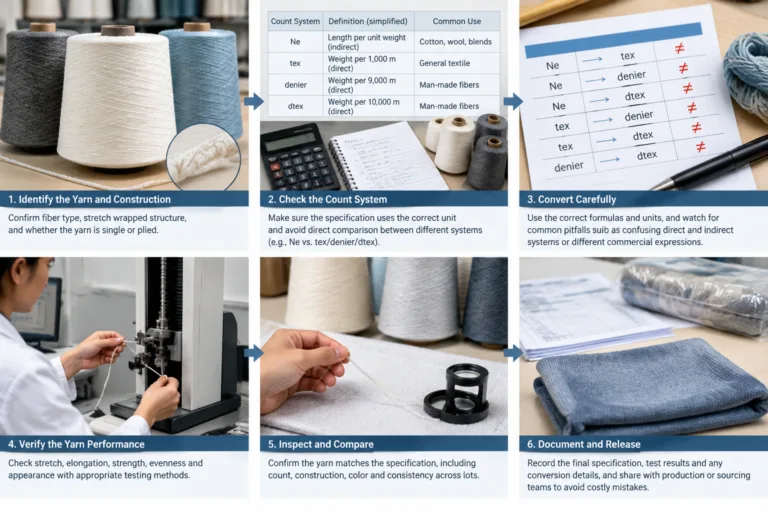
Yarn identity must be recorded precisely. Count systems should not be mixed casually, and a plied yarn should be described so that the specification distinguishes the count of an individual yarn from the form and linear density of the assembled ply. This is especially important when supplier documents use shorthand notation. Ask the supplier to explain the notation and preserve the original unit or count system in the development record.
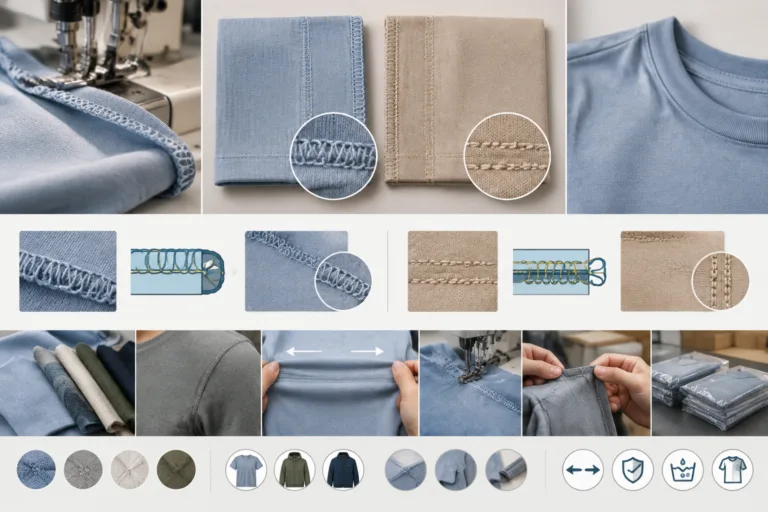
Yarn selection also interacts with knitting gauge, stitch density, plated yarns, reinforcement placement, finishing, and the target size range. These choices can affect surface exposure, stretch, bulk, hand, moisture behavior, pilling, appearance, and knitting performance as well as abrasion behavior. A construction change made to improve one property may alter another, so the decision should be evaluated against the complete product brief.
Keep these properties separate in the specification. Resistance to a defined surface-damage mechanism is not the same as comfort, stretch recovery, moisture behavior, pilling resistance, or color retention. A yarn that looks favorable in one category may still require review for the others. The goal is not to rank fibers or yarn forms universally, but to identify the variables most relevant to the intended sock.
The final assessment should use the intended yarn combination and sock assembly wherever practical. Independent component results are useful evidence, but they cannot be added together to create finished-sock certification. Representative construction, machine settings, reinforcement, finishing, and relevant sizes should be part of validation when the product decision depends on them.
How to Write a Project-Specific Socks Yarn Abrasion Specification
A practical specification begins with the product brief rather than with an isolated test value. State the sock category, wearer activity, footwear context, target zones, expected care process, appearance expectations, and known failure concerns. This gives the abrasion requirement a defined purpose and helps prevent a laboratory result from being interpreted outside its scope.
Next, identify the material and sample unambiguously. Record fiber content, yarn form, ply description, count system, relevant color or finish, supplier reference, lot information, and the exact knitted or finished configuration to be evaluated. If the requirement concerns a finished sock, describe the machine settings, reinforcement, finishing, and size or construction details that could affect the result.
Only then should the team select an appropriate abrasion method and define the reporting framework. Confirm the method’s scope with its current official documentation or method owner. The specification may need to identify conditioning, specimen preparation, number of specimens, endpoint, reporting fields, and the acceptance decision, but these details should come from the selected method and project context rather than from a universal template.
Separate measured requirements from descriptive observations. A project may need to record visible fuzzing, shade change, surface thinning, hole formation, or comfort concerns alongside a laboratory result. These observations should not be presented as interchangeable with the numerical or categorical output of an abrasion method.
- Use case, activity, footwear, and care process
- High-risk zones and expected failure modes
- Yarn identity, composition, form, ply, count system, and lot
- Knitted or finished sample configuration
- Selected method and confirmed scope
- Conditioning, specimen preparation, and reporting requirements
- Acceptance criteria and visual observations
- Verification owner for yarn, fabric, and finished sock stages
- Change-control triggers for material, supplier, machine setting, reinforcement, or finish changes
This layered approach distinguishes a buyer or developer requirement from a legally mandated requirement. Apparel Wiki presents it as an editorial framework for product development, not as a certified testing protocol or a substitute for current method documentation and specialist review.
How to Evaluate Abrasion Before Approving Sock Yarn
Testing should begin with the wearing task, not with a supplier’s isolated result. Identify the sock category, footwear context, activity, care process, and zones where thinning, fuzzing, holes, or unacceptable appearance change would matter most. A lightweight everyday sock, a work-oriented sock, and an activity sock may face different risks even when they use similar yarn categories.
Next, review the submitted yarn documentation and confirm its identity. Record the fiber composition, yarn form, ply description, count system, finish, color where relevant, supplier, and lot information. This is especially important when a plied yarn is described with a notation that could refer to the single-yarn count rather than the finished plied construction. A test result is useful only when the tested material can be matched to the material intended for production.
Select an abrasion method that suits the decision being made, then confirm its scope with the current method owner or authoritative technical documentation. The method may define the specimen, conditioning, loading, endpoint, and reporting format. Do not treat a result as a complete measure of sock durability when the method evaluates only a particular yarn, fabric, or failure response.
After document review and controlled testing, knit representative prototypes. Use the intended yarn combination, machine settings, stitch structure, reinforcement, finishing, and relevant size range. A finished sock can distribute contact and movement differently from an isolated yarn or flat specimen. Prototype inspection should therefore record measured findings separately from visible fuzzing, local thinning, shade change, hole formation, fit problems, and comfort concerns.
Where laboratory evidence cannot answer the use question, a controlled wear or laundering trial may provide additional project evidence. The trial design should be defined for the product and should not be presented as a universal service-life prediction. Compare the observations with the original failure concerns, then document whether the result supports approval, requires a construction change, or leaves an unresolved risk.
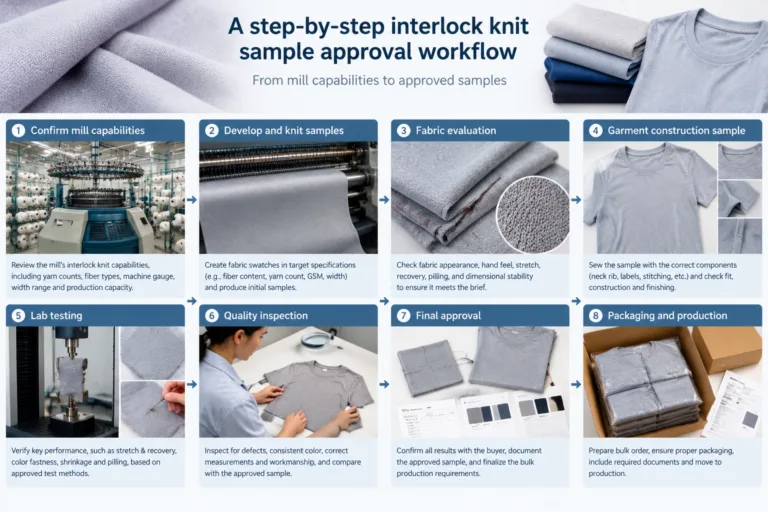
A practical approval sequence is:
- Identify the highest-risk activity and sock zones.
- Verify the submitted yarn, construction details, and lot traceability.
- Choose and document an appropriate abrasion method.
- Test the yarn or knitted construction within that method’s scope.
- Inspect representative finished prototypes and relevant failure modes.
- Use targeted wear or care trials when the product question remains open.
- Record approval conditions and change triggers for yarn, supplier, settings, reinforcement, or finish changes.
A favorable yarn result should not override poor fit, local thinning, unacceptable fuzzing, or failure during the intended use scenario. Apparel Wiki presents this as an adaptable development workflow, not as a certified testing protocol. Laboratory findings, visual assessments, wear observations, and supplier declarations should remain identifiable as different types of evidence.
How to Compare Abrasion Options Without Overpromising Durability
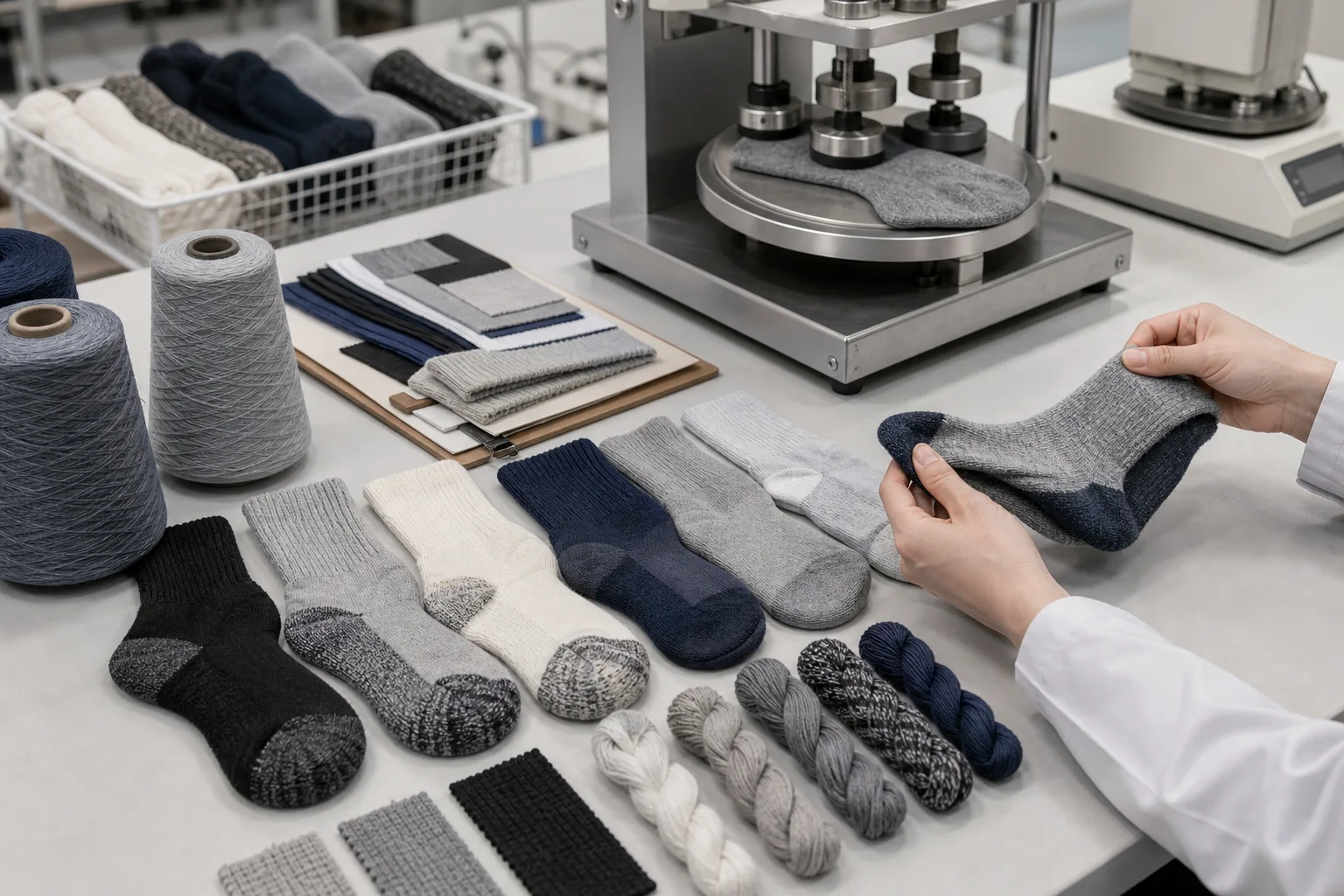
When several yarns or constructions appear acceptable, compare them within the same test scope and finished configuration. A comparison matrix can include abrasion evidence, comfort, stretch and recovery, appearance, moisture behavior, manufacturing compatibility, availability where verified, and remaining uncertainty. Keeping these columns together prevents abrasion from becoming the only selection criterion.
Do not rank results from different methods as though they were directly equivalent. Differences in apparatus, specimen, conditioning, endpoint, or reporting convention can change what a result means. Supplier data can support a review, but it does not automatically prove how the final sock will perform after knitting, finishing, fitting, footwear contact, and care.
Consider a hypothetical choice between a softer everyday sock and a more heavily reinforced activity sock. The first option may place greater emphasis on hand, flexibility, fit, and appearance. The second may justify closer attention to local reinforcement, bulk, movement, and high-contact zones. Neither is a universally better yarn choice; the appropriate decision depends on the product brief and the risks the team is prepared to validate.
Durability-oriented changes can create trade-offs. A construction adjustment may affect bulk, flexibility, stretch recovery, comfort, knitting performance, or visual uniformity. A yarn that appears strong in one test may not provide the preferred hand or fit. A softer option may still be appropriate when the use case, construction, and acceptance criteria support it.
Keep a decision record that states which options were compared, what evidence was equivalent, which product priorities drove the choice, and which risks remain open. This record is also useful when a supplier, yarn lot, machine setting, reinforcement, or finishing process changes. The aim is not to identify the “best” sock yarn in general, but to select an option whose evidence matches the intended sock.
What Yarn Abrasion Testing Cannot Tell You
An abrasion result is dependent on the method and specimen used. Apparatus, contact conditions, loading, conditioning, endpoint, and reporting conventions all affect interpretation. Results from different methods, laboratories, product categories, or constructions should not be treated as directly interchangeable without a defensible comparison.
Abrasion resistance is also different from pilling, snagging, bursting, tensile failure, color change, shrinkage, odor, and comfort. These outcomes may be relevant to a sock, but one test does not automatically measure all of them. A project should identify which failure or appearance change matters and select additional evaluation where the abrasion method cannot answer that question.
Finished-sock wear may also be influenced by fit, footwear, pressure, moisture, laundering, toe or seam construction, local knitting differences, and reinforcement placement. Yarn choice is one part of the product system. Testing the final material and assembly is generally more informative for a product decision than adding isolated component results together.
Specialist review may be appropriate for regulated products, protective claims, children’s products, medical or performance claims, or markets with specific compliance obligations. A voluntary buyer specification should not be described as a legal requirement, and a test result should not be presented as a regulatory approval or a guaranteed service life.
The next step is to confirm the use case, map the likely risk zones, select a method whose scope fits the question, test representative construction, document the decision, and monitor production or field feedback. This staged approach helps teams use socks yarn abrasion evidence responsibly while keeping the limits of the evidence visible.
Is yarn abrasion the same as finished-sock durability?
No. Yarn abrasion describes behavior of the yarn under a defined evaluation, while finished-sock durability also depends on knitting, fit, footwear, finishing, care, and local construction.
Should sock yarn be tested before or after knitting?
Both stages can be useful for different decisions. Yarn testing supports material review, while knitted or finished-sock testing shows how the intended construction performs.
Which parts of a sock usually need the closest abrasion review?
The heel, toe, sole, and other high-contact or high-pressure areas often deserve close review, but priorities depend on the style, footwear, activity, fit, and construction.
Can a yarn abrasion result be compared across different test methods?
Not automatically. Compare results only when the methods, specimens, conditions, endpoints, and reporting basis are sufficiently aligned for the project decision.
What information should a supplier provide for a sock yarn abrasion specification?
Request clear yarn identity, composition, form, ply description, count system, finish, lot information, tested sample configuration, method scope, and traceable result documentation where available.
Does a more abrasion-resistant yarn always make a better sock?
No. A sock must also meet its intended requirements for comfort, fit, stretch, appearance, moisture behavior, manufacturing compatibility, and other relevant performance concerns.